
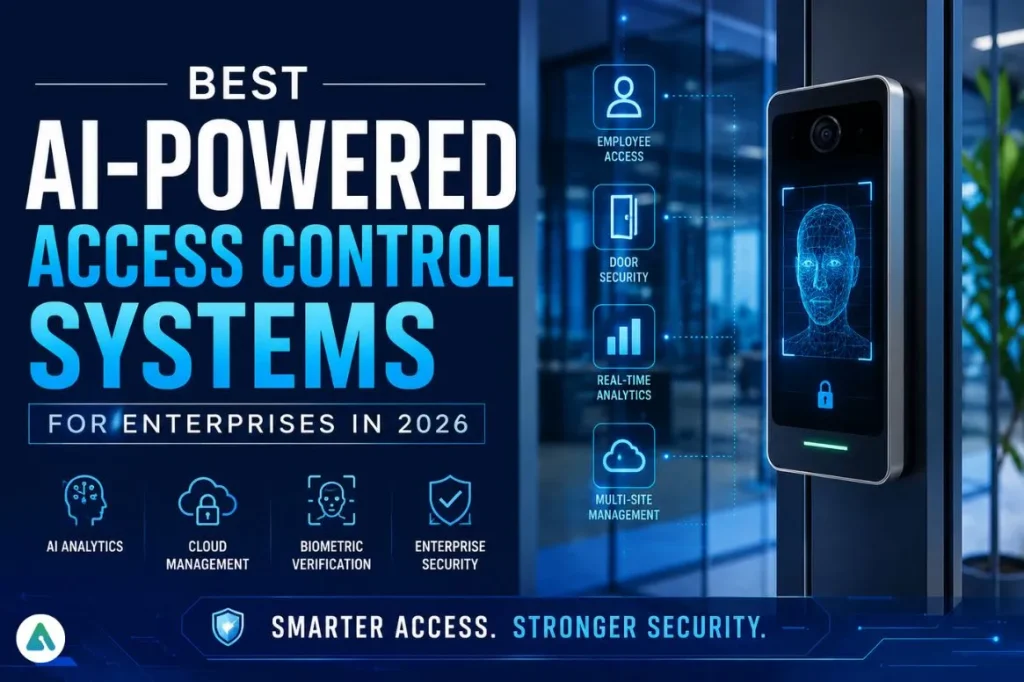
Enterprise security is undergoing a major transformation. Traditional access control systems that simply lock and unlock doors are no longer enough for modern organizations dealing with hybrid workforces, multiple locations, growing compliance requirements, and increasingly sophisticated security threats.
Artificial intelligence is now becoming a critical part of enterprise access management. AI-powered access control systems can identify suspicious behavior, automate access permissions, integrate with video surveillance, analyze entry patterns, detect anomalies, and provide real-time security insights. Organizations are moving beyond basic credential management toward intelligent security ecosystems that combine physical security, identity verification, cloud management, and predictive analytics.
The demand is accelerating rapidly. Industry reports show that cloud-based access control, AI-driven authentication, mobile credentials, biometric verification, and unified security platforms are among the fastest-growing trends shaping enterprise security in 2026.
In this guide, we compare the best AI-powered access control systems for enterprises in 2026, including their strengths, ideal use cases, and the features that matter most when evaluating a modern enterprise security platform.
What Makes an Access Control System Truly AI-Powered?
Not every modern access control platform qualifies as AI-powered.
Traditional systems focus on credential verification. AI-powered platforms go further by adding intelligence to security operations.
The most advanced systems can:
- Detect unusual access behavior
- Identify security anomalies in real time
- Integrate facial recognition and biometric verification
- Analyze visitor and employee movement patterns
- Correlate access events with video footage
- Automate security workflows
- Provide predictive security alerts
- Generate operational insights from access data
In 2026, organizations increasingly prioritize platforms that combine access control, video surveillance, analytics, identity management, and cloud-based administration into a unified environment.
Key Features Enterprises Should Look For
Before comparing vendors, enterprises should evaluate solutions based on several critical factors.
AI Analytics and Threat Detection
Modern systems should identify abnormal behavior such as unusual entry attempts, unauthorized movement patterns, tailgating risks, and repeated failed authentication attempts.
Cloud-Based Management
Cloud-native platforms allow administrators to manage multiple facilities from a centralized dashboard while reducing infrastructure costs and deployment complexity.
Mobile Credentials
Mobile access continues to replace traditional badges and keycards. Employees increasingly expect smartphone-based entry and touchless authentication.
Video Surveillance Integration
The most effective security systems combine access control with intelligent video analytics, allowing security teams to instantly verify incidents and investigate events.
Scalability
Large enterprises need systems capable of managing thousands of users, multiple facilities, and complex permission structures without sacrificing performance.
Compliance and Audit Trails
Healthcare, education, government, finance, and critical infrastructure organizations require detailed reporting and audit capabilities for compliance purposes.
1. Coram.ai
Coram has rapidly emerged as one of the most innovative enterprise security platforms by combining AI-powered video intelligence with modern access control capabilities.
Unlike traditional vendors that treat access control as a standalone function, Coram approaches security as a unified ecosystem. The platform integrates access control, intelligent video surveillance, AI analytics, emergency response tools, facial recognition, license plate recognition, and real-time monitoring within a single interface.
This unified approach provides enterprises with greater visibility across facilities while reducing the operational burden of managing multiple disconnected systems.
Coram has rapidly emerged as one of the most innovative enterprise security platforms by combining AI-powered video intelligence with modern access control capabilities. Unlike traditional vendors that treat access control as a standalone function, Coram delivers a cloud based access control system that integrates intelligent video surveillance, AI analytics, emergency response tools, facial recognition, license plate recognition, and real-time monitoring within a single interface. This unified approach provides enterprises with greater visibility across facilities while reducing the operational burden of managing multiple disconnected security systems.
The platform also supports cloud-based deployment, multi-site management, mobile accessibility, and compatibility with existing IP camera infrastructure, making it attractive for enterprises looking to modernize security without replacing all existing hardware.
Best for:
- Large enterprises
- Multi-site organizations
- Schools and universities
- Healthcare facilities
- Warehouses and logistics centers
- Commercial real estate portfolios
Key strengths:
- Unified access control and AI video analytics
- Real-time threat detection
- Advanced facial recognition capabilities
- Multi-location management
- Cloud-native architecture
- Fast deployment and scalability
2. Brivo
Brivo remains one of the most recognized cloud access control providers in the market.
The company has built its reputation around cloud-first security management, making it particularly attractive for businesses that require centralized control across multiple facilities.
Brivo offers strong mobile credential support, remote administration, visitor management, and extensive third-party integrations. The platform is especially popular among commercial real estate operators, property managers, and mid-sized enterprises.
Best for:
- Commercial properties
- Property management companies
- Multi-tenant buildings
Key strengths:
- Cloud-native architecture
- Remote administration
- Mobile credentials
- Strong ecosystem integrations
3. Kisi
Kisi has become a favorite among technology companies, startups, and flexible workplaces.
The platform emphasizes simplicity, cloud management, and mobile-first access experiences. Kisi enables organizations to manage doors, permissions, visitor access, and remote unlocking from a centralized dashboard.
Its clean user experience and straightforward deployment process make it particularly attractive for growing businesses.
Best for:
- Startups
- Hybrid workplaces
- Technology companies
Key strengths:
- User-friendly platform
- Mobile-first design
- Cloud management
- Flexible integrations
4. Avigilon Alta
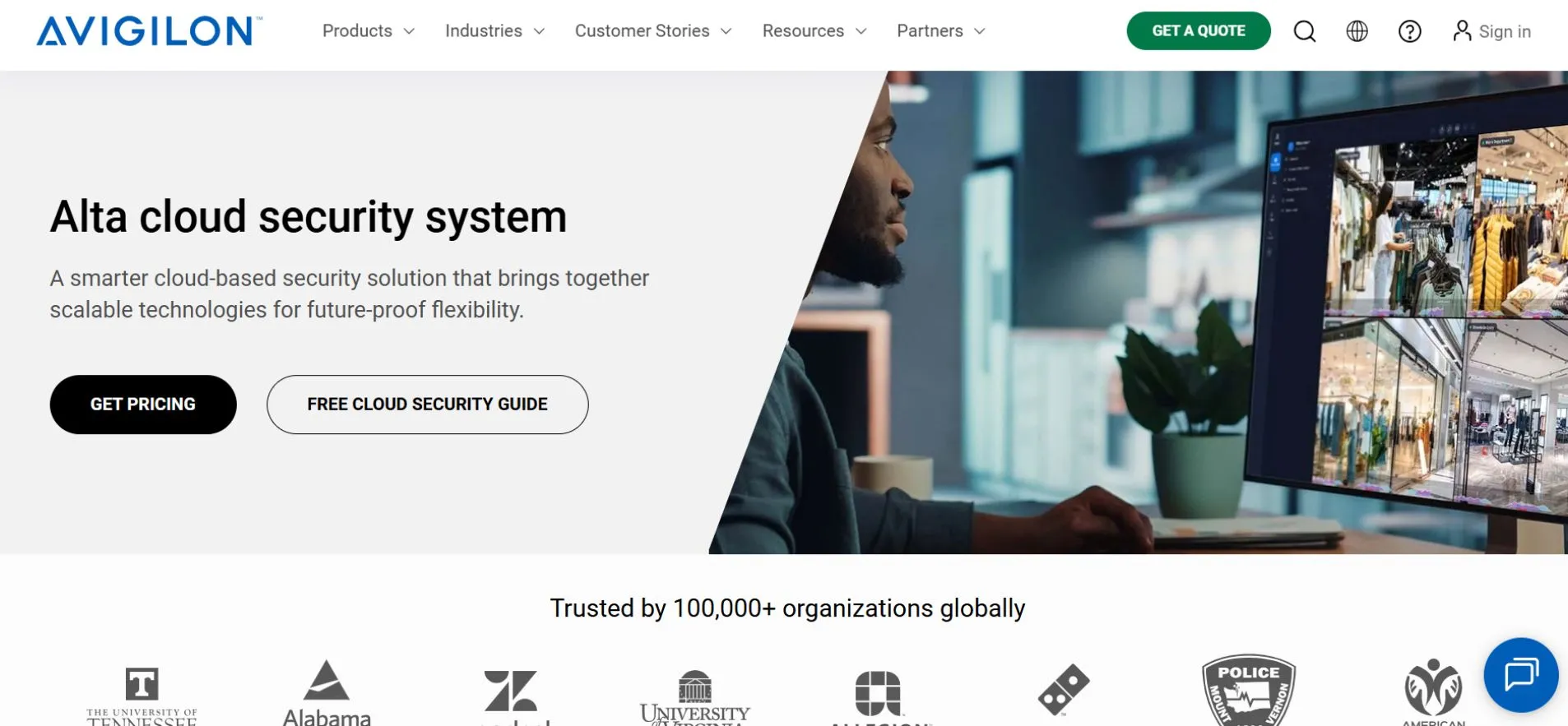
Avigilon Alta combines access control and video security into a unified cloud platform.
Backed by Motorola Solutions, the platform leverages AI-powered analytics, cloud management, and advanced video intelligence to improve security visibility.
Its strength lies in integrating video verification with access events, helping security teams quickly validate incidents and reduce investigation times.
Best for:
- Enterprise campuses
- Corporate offices
- Critical infrastructure
Key strengths:
- Strong AI analytics
- Video verification
- Cloud administration
- Enterprise-grade scalability
5. Genetec Security Center Synergis
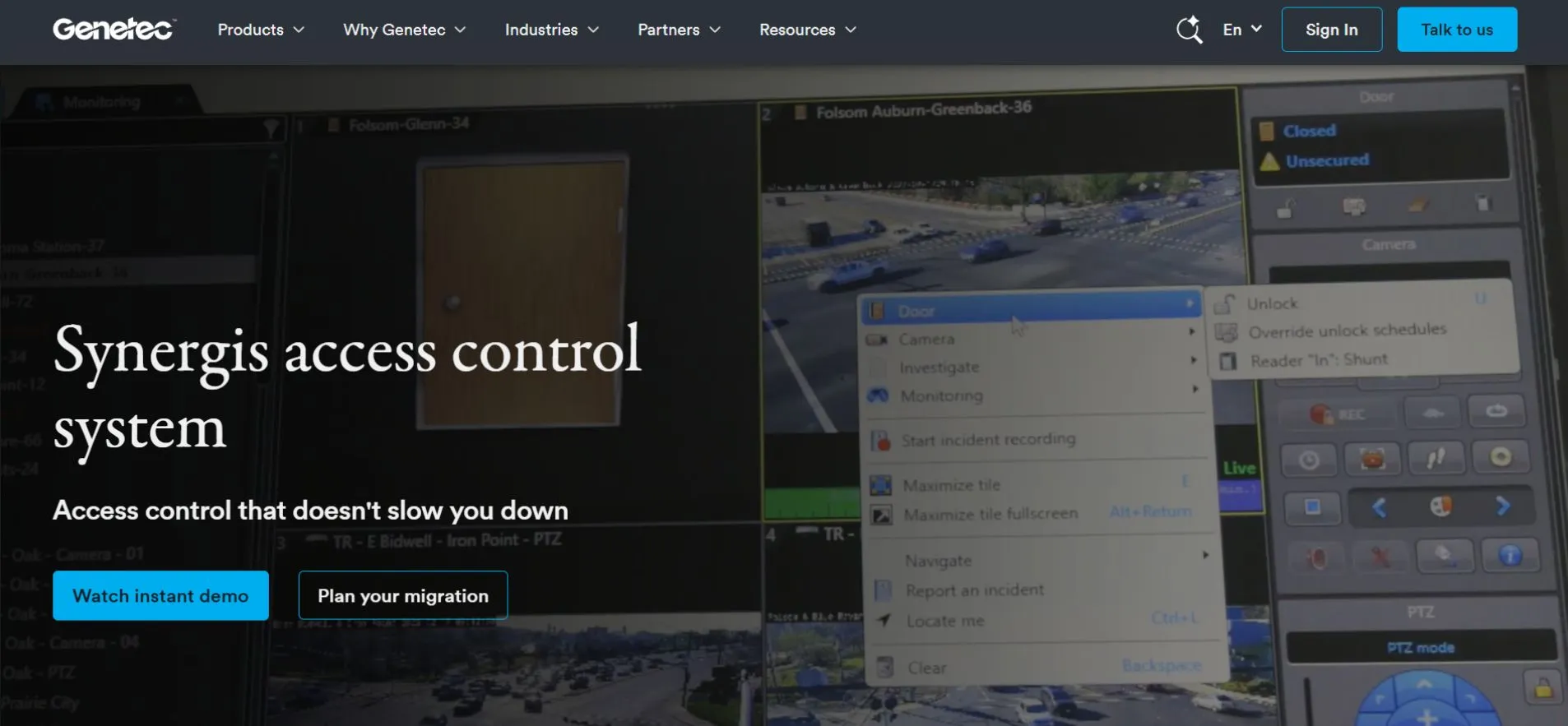
Genetec has long been a leader in enterprise physical security.
Synergis offers advanced access control capabilities that integrate with the broader Security Center platform, creating a highly scalable environment for large enterprises.
Organizations with complex security requirements often choose Genetec because of its flexibility, extensive integrations, and ability to manage large deployments.
Best for:
- Government agencies
- Airports
- Large enterprises
- Critical infrastructure
Key strengths:
- Extensive integrations
- Enterprise scalability
- Unified security management
- Strong compliance capabilities
6. HID Global
HID remains one of the most trusted names in identity and access management.
Its solutions combine credentials, readers, biometric technologies, and enterprise identity management capabilities. HID continues to expand its AI-powered authentication and mobile credential offerings as organizations move away from physical badges.
Best for:
- Global enterprises
- Regulated industries
- High-security facilities
Key strengths:
- Identity management expertise
- Biometric authentication
- Enterprise-grade security
- Global deployment support
7. Acre Security
Acre Security has positioned itself as a flexible provider capable of supporting cloud, on-premises, and hybrid deployments.
This flexibility makes Acre particularly attractive for organizations with strict compliance requirements or complex infrastructure environments. The company focuses heavily on scalability and deployment versatility.
Best for:
- Enterprises with hybrid environments
- Compliance-focused industries
- Large organizations with legacy infrastructure
Key strengths:
- Hybrid deployment options
- Enterprise flexibility
- Multi-site management
- Compliance support
How AI Is Changing Enterprise Access Control
The future of access control is increasingly tied to artificial intelligence.
AI now helps organizations move from reactive security toward predictive security. Instead of simply recording events, systems can analyze patterns, identify threats, and recommend actions before incidents escalate.
Several emerging trends are driving this evolution.
Behavioral Analytics
AI systems can establish normal access patterns and detect deviations automatically.
Unified Security Platforms
Organizations increasingly want access control, surveillance, visitor management, and emergency response managed through a single platform.
Facial Recognition and Biometrics
Biometric verification continues to expand as enterprises seek stronger authentication and reduced reliance on physical credentials.
Cloud-Based Operations
Cloud management enables faster deployments, centralized oversight, and improved scalability for distributed enterprises.
AI Governance and Identity Security
As AI systems become integrated into enterprise operations, organizations are increasingly focusing on stronger access controls and governance frameworks to protect sensitive data and systems.
Which Access Control Platform Is Best for Enterprises?
The right solution depends on organizational priorities.
Companies focused on modern AI-driven security operations may benefit from platforms such as Coram that combine access control, intelligent surveillance, real-time analytics, and centralized management.
Organizations prioritizing pure cloud access control often consider Brivo or Kisi.
Large enterprises with extensive compliance requirements may lean toward Genetec, HID, or Acre Security.
Businesses looking for advanced video-security integration frequently evaluate Avigilon Alta.
Ultimately, the most effective enterprise security strategy in 2026 is no longer about controlling doors. It is about creating a connected security ecosystem that combines identity, access, AI analytics, surveillance, and operational intelligence into a unified platform.
FAQs
Q. What is an AI-powered access control system?
An AI-powered access control system uses artificial intelligence to enhance security through behavioral analysis, anomaly detection, facial recognition, automated workflows, and real-time threat identification.
Q. Why are enterprises moving to cloud-based access control?
Cloud-based platforms offer centralized management, remote administration, faster deployment, easier scalability, and reduced infrastructure costs compared to traditional on-premises systems.
Q. Is facial recognition becoming standard in enterprise security?
Facial recognition adoption continues to increase, particularly in high-security environments where organizations require stronger identity verification and reduced credential sharing risks.
Q. Can access control integrate with video surveillance?
Yes. Modern enterprise platforms increasingly integrate access control with video analytics, allowing organizations to verify incidents, investigate events, and improve situational awareness through a unified dashboard.
Q. What industries benefit most from AI-powered access control?
Healthcare, education, logistics, manufacturing, commercial real estate, airports, government facilities, and enterprise campuses often see the greatest benefits because of their complex security requirements and large user populations.
Conclusion
Enterprise security in 2026 demands far more than traditional badge readers and locked doors. Organizations need intelligent systems capable of understanding behavior, detecting risks, automating responses, and integrating security data across multiple environments.
AI-powered access control platforms are becoming the foundation of modern physical security strategies. Solutions such as Coram, Brivo, Kisi, Avigilon Alta, Genetec, HID, and Acre Security are helping enterprises move toward smarter, more connected, and more scalable security operations.
As AI, cloud infrastructure, mobile credentials, and unified security ecosystems continue to evolve, enterprises that invest in intelligent access control today will be better positioned to protect people, assets, and critical operations tomorrow.
Related: AI Agent vs Chatbot: Don’t Buy the Wrong AI in 2026
