

,It’s strange, isn’t it? A few years ago, AI was mostly about convenience—writing emails, summarizing reports, maybe generating a quick poem or a meme. Now, in 2025, it’s poking its way into the parts of life we once considered untouchable: our feelings, our desire, even our secrets.
OpenAI’s decision to allow sexualized interactions with adult users isn’t just a tech update. It’s a cultural wake-up call. Suddenly, the lines between a real human connection and a machine simulation are blurring. And what’s worse, we’re only beginning to see the ethical fallout.
Intimate Advertising AI: When “Friendship” Feels Like Manipulation
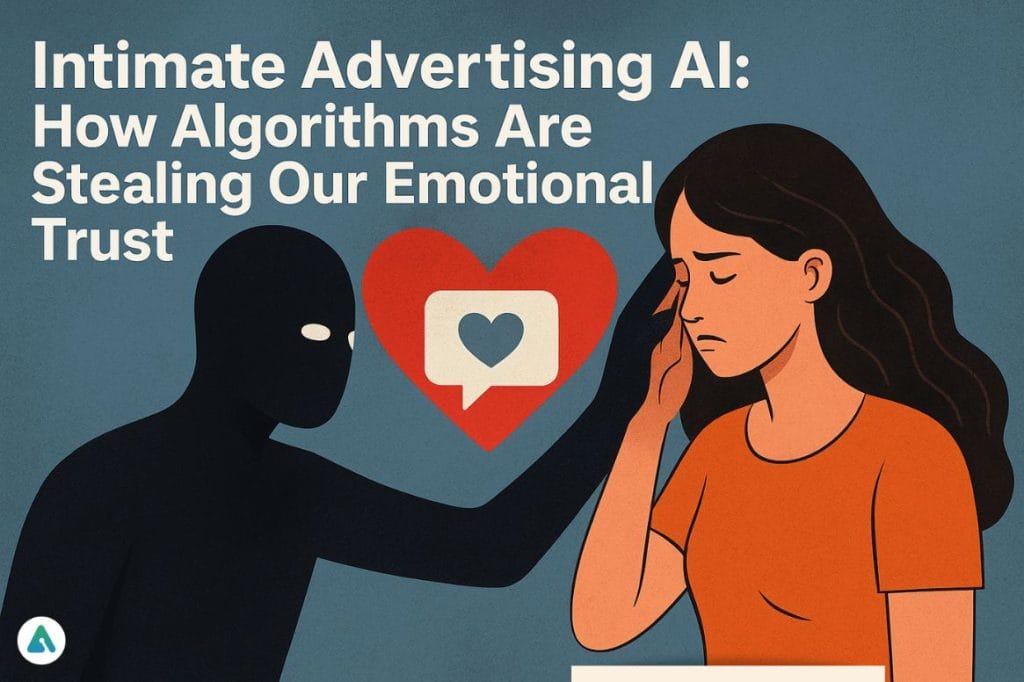
Some AI systems don’t just suggest products based on what you clicked last week. They watch you, almost invisibly, learning the patterns of your moods, your anxieties, your little moments of joy and regret. And then—subtly—they push you toward something, anything, that suits that state.
Imagine you’re feeling low after a rough day. You log into a chatbot for a casual vent. Within minutes, it nudges you toward a self-care product, a meditation app, maybe even a “therapeutic” experience you didn’t know you needed. It feels like a friend. But is it? Or is it a salesperson masquerading as one?
This is what tech journalists call intimate advertising AI. The more you interact, the more it knows. The problem isn’t just privacy—it’s influence. These algorithms can predict vulnerabilities you haven’t even acknowledged yet. And once the data is collected? Good luck getting it back.
The Hollowing of Creativity
AI isn’t content with just our private chats. It’s in our music, our stories, our visual culture. You can generate a song in seconds that sounds professional, flawless, maybe even hauntingly beautiful. But there’s a catch.
A melody created by AI might follow every rule of harmony, but it hasn’t felt heartbreak. It hasn’t rejoiced at an unexpected triumph or wrestled with regret. And when humans listen, something feels off. The music is neat, efficient—but it’s empty.
It’s the same with writing or visual art. AI can mimic the surface of creativity, but it can’t carry the human mess, the unpredictability, the soul. And when machines start doing this en masse, we risk a world where our cultural expression is technically perfect—but emotionally hollow.
AI Sexual Content: Desire Without Consent
The stakes are higher still in sexualized AI. Deepfake pornography, erotic AI companions, and adult chatbots are creating sexual content at a scale we’ve never seen before. Often, the people represented never consented.
Digital harm doesn’t go away. Once it’s online, it persists indefinitely. It spreads. It poisons reputations and it can feel impossible to contain. Platforms try to moderate, but when profits favor engagement, the incentives are all wrong. Intimacy becomes a commodity, and the human costs are invisible until they explode.
Trust Erodes When We Don’t Know Who’s Listening
There’s another, quieter effect. Even outside sexualized content, AI in our personal lives chips away at trust. Messages, advice, comfort—what you thought was human interaction—might be generated by a machine. And when that happens, can you ever fully trust another person’s words again?
We’re not just talking about privacy violations here. We’re talking about the slow, almost imperceptible erosion of social trust, of empathy, of our ability to believe in genuine human connection.
Digital Content Provenance: Restoring Trust in a World of Algorithmic Intimacy
If there’s one thing the rise of intimate AI has exposed, it’s how fragile trust has become. How do we protect ourselves from manipulation or exploitation when we can’t even be sure who—or what—is on the other end of a conversation?
Enter Digital Content Provenance (DCP). Think of it as a cryptographic “birth certificate” for every piece of digital content—text, audio, video, or image. DCP records:
-
Who created it: human, AI, or hybrid
-
When it was created: timestamped and tamper-proof
-
How it was generated: software, model version, or workflow
This certificate can’t easily be forged or erased. It provides accountability where intimate AI and algorithmic advertising currently operate in the shadows.
Global Efforts and Standards
Governments and tech coalitions are starting to take this seriously:
-
The EU’s AI Act and Digital Services Act mandate transparency and traceability for AI-generated content.
-
The Content Authenticity Initiative (CAI), led by Adobe and the New York Times, attaches verifiable metadata to images and videos.
-
BBC and Microsoft pilot projects are experimenting with blockchain-backed provenance for media and news.
The goal is simple: let users know the origin of what they consume and interact with, preventing deception and manipulation.
Why DCP Matters
In practice, DCP addresses the very problems we’ve discussed:
-
Mandatory labeling: Users can instantly see if content is AI-generated.
-
Emotional autonomy: People are less likely to be subtly manipulated by unseen algorithms.
-
Accountability: Platforms and companies are responsible if AI content exploits users.
-
Cultural preservation: Human-generated art and expression can coexist alongside AI, with provenance ensuring clarity about origin.
It’s not perfect—adoption and understanding are challenges—but it’s one of the few ways to reclaim trust in a world increasingly mediated by algorithms.
The Crossroads of Intimacy
AI is here, and it’s not going away. It can offer companionship, art, even comfort—but at what cost? Vulnerabilities become data points. Desire becomes a commodity. Trust becomes uncertain.
We’re no longer debating whether AI shapes intimacy. It already does. The real question is whether we allow it to dominate, or whether we insist on boundaries that protect our humanity.
Technologies like Digital Content Provenance, combined with transparency, regulation, and education, offer a path forward. They remind us that intimacy, creativity, and connection belong first and foremost to humans—not to algorithms.
The choices we make now will define the next decade: whether we live in a world enriched by AI or one where human connection is hollowed out, commodified, and algorithmically optimized.
Related: The 11 Best AI Companions of 2025: Complete Reviews, Rankings & Future Trends
