

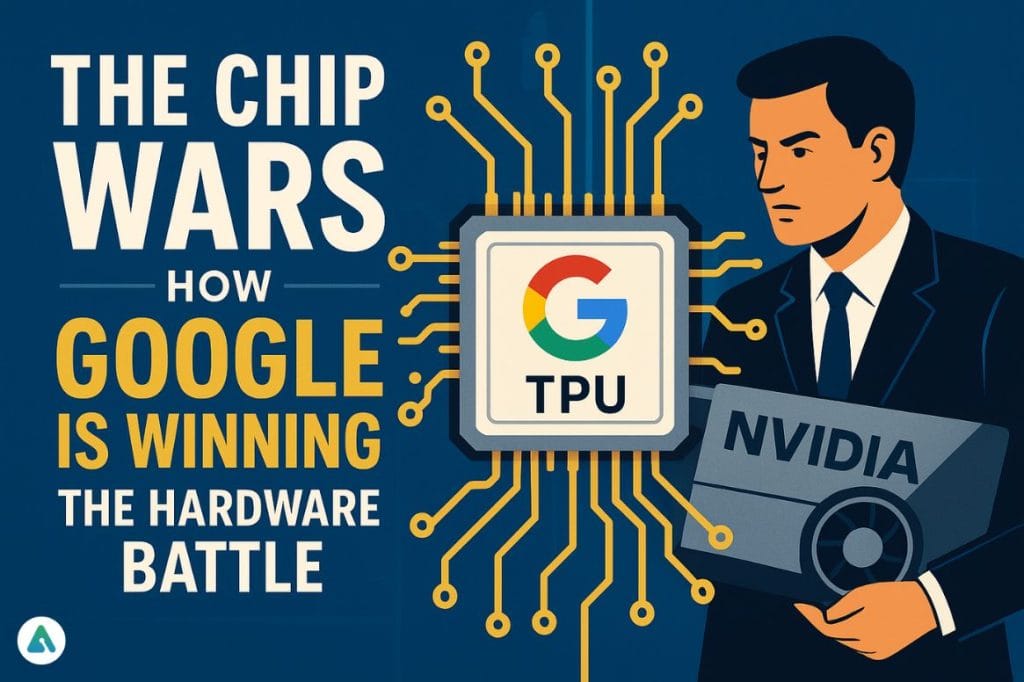
For years, tech news has obsessed over programs, algorithms, and software that promise to do more, faster, and smarter. But the real drama? It’s not in the code. It’s in the machines that make it all possible.
Nvidia’s graphics cards have quietly powered the biggest computing projects for years. They’ve been the silent backbone behind everything from research labs to big tech servers. Now, Google is quietly shaking things up. Their custom-built chips, called TPUs, aren’t general-purpose—they’re made for heavy-duty computing. Early tests show Google’s systems running on TPUs may outperform others in ways that matter. In short, in the latest chip wars, owning the right hardware is becoming a serious advantage.
Why Chips Actually Matter
It might sound boring—chips? Really? But in today’s world, efficiency isn’t optional. It’s everything. A standard GPU is flexible and good at a lot of things—but it wasn’t designed for nonstop, massive calculations. Google’s TPUs, on the other hand, were made for this exact kind of work. That means faster results, lower energy costs, and a real edge over competitors.
Google isn’t keeping this advantage to itself. By teaming up with other companies, they’re hinting at something simple but powerful: controlling both the machines and the systems that run on them might be the biggest lever in tech right now. Companies relying on off-the-shelf chips could suddenly find themselves slowed down, paying more, or waiting longer for results.
Who’s Winning and Who’s Not
Nvidia has dominated this space for a decade. They’ve been the go-to supplier, raking in profits while everyone needed their chips. Now, they’re facing a company that controls both hardware and the software running on it. That’s more than competition—it’s a structural shake-up.
Other companies are stuck choosing between two hard paths: keep buying expensive chips, or try to build their own hardware. Both options are costly, slow, and risky. Meanwhile, Google can tweak hardware and software together, iterate faster, and scale smarter. In computing, small improvements multiplied across massive systems often matter more than flashy programs.
Why This Matters Beyond Tech
This story isn’t just for engineers or investors. Better, more efficient chips mean less wasted energy in massive data centers. They make computing cheaper, faster, and more accessible for everyone.
But there’s a catch. When only a few companies control both machines and systems, competition shrinks—and innovation could slow. On top of that, a lot of this growth is backed by borrowed money. If the market stumbles, the ripple effects could be big.
Emerging markets may quietly become the real opportunity. Affordable, high-performance computing could open doors for new ideas, innovation, and companies outside the usual tech hubs.
Takeaways
-
Control the machines, control the game: Owning both hardware and systems is a huge advantage.
-
Big players consolidate power: Large companies with diverse revenue streams are harder to beat.
-
Efficiency matters more than size: The next breakthroughs will depend on smarter hardware, not bigger programs.
-
Think globally: Emerging markets could surprise with cost-effective adoption.
-
Speed and cost shape access: Faster, cheaper computing decides who gets to compete.
The next big chip wars in tech won’t be about flashy programs or clever algorithms. They’ll be fought over the silicon underneath—and the companies that know how to use it best.
Related: The $Trillion Question: Is the 2025 Spending Boom Building the Future—or a Bubble?
