
A suspicious mole appears overnight. An angry patch of skin refuses to calm down after a week of home treatment. Acne spreads despite consistent routines.
Most people reach for their phone before they call a clinic.
That shift isn’t random. AI-powered skin scanner apps now return risk assessments in seconds, cost far less than a specialist visit, and sit in every pocket on the planet. The convenience argument is essentially won. The accuracy question is not.
This guide examines what AI dermatologist apps actually get right in 2026, where they still fail in ways their marketing materials won’t tell you, and how to use them without mistaking a screening signal for a clinical diagnosis.
How AI Dermatology Works: What Skin Scanner Apps Actually Analyze
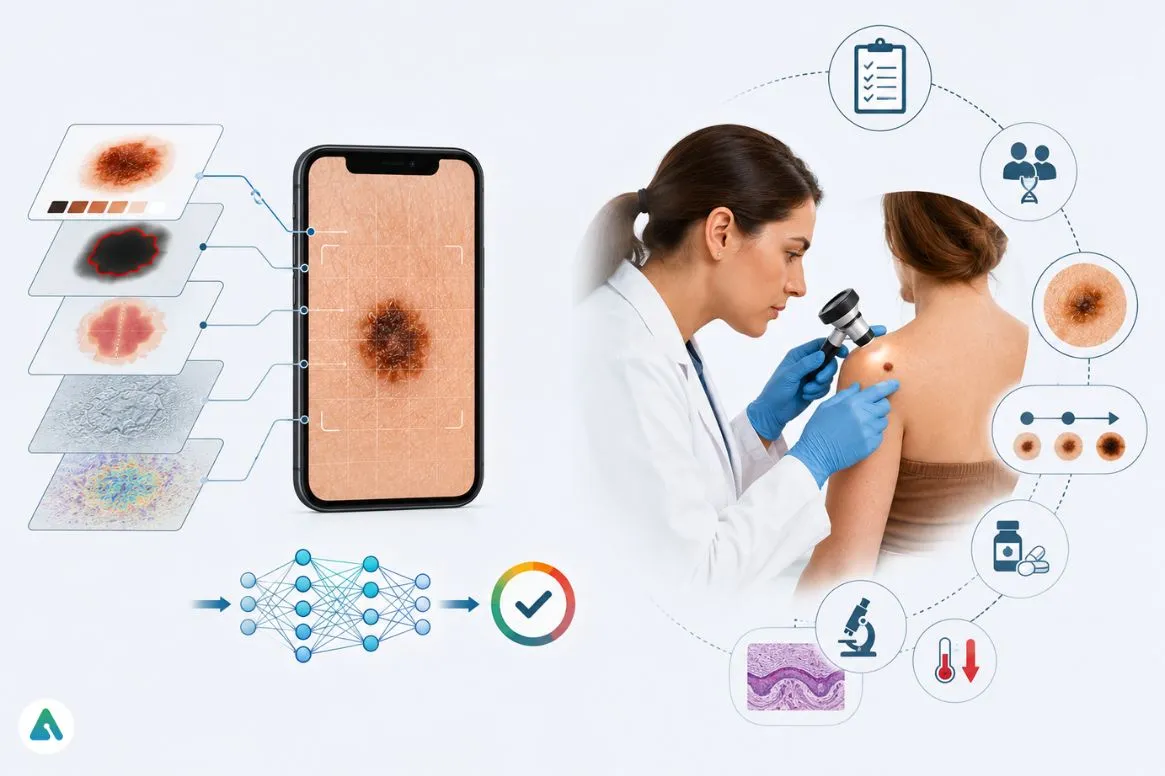
AI dermatologist software uses computer vision and machine learning to analyze photographs of skin. The user submits an image. The system examines visual features — color distribution, border regularity, lesion symmetry, surface texture, pigmentation variation — and compares those features against its training dataset. A risk classification comes out the other end.
That process sounds straightforward. The gap between it and clinical diagnosis, though, runs deeper than most users realize.
A board-certified dermatologist examines far more than an image. They assess symptom timeline, medication history, family predisposition, dermoscopic findings, lesion evolution, and sometimes pathology results from a biopsy. They feel whether a lesion is indurated. Also, they know whether a sudden rash appeared alongside a fever or joint pain — a detail that entirely changes a differential diagnosis.
An AI skin scanner sees only what the camera captures. That constraint shapes everything about its accuracy ceiling.
AI Dermatology Accuracy in 2026: How Reliable Are Skin Scanner Apps?
Accuracy isn’t one number. It shifts depending on the model architecture, the training dataset, the condition being evaluated, and — critically — the quality of the image submitted.
The strongest AI systems in 2026 show impressive sensitivity for common dermatological conditions with consistent surface patterns. Clinical performance evaluations from platforms using advanced convolutional frameworks report triage sensitivity above 94% for well-characterized conditions like psoriasis, seborrheic dermatitis, and atopic eczema under controlled imaging conditions.
Acne and rosacea perform even better. Both present with predictable geometric distributions — comedone clusters, papule density, vascular erythema — that edge-detection models map with high tracking precision.
The picture gets less impressive at the edges.
Where AI Skin Analysis Fails: Limits of Accuracy in Real-World Cases
When an algorithm faces a typical clinical presentation, overlapping pathologies, or rare cutaneous disorders, it tends to force-fit the image into the nearest common category in its training data. A rare drug eruption might return as eczema. An early-stage cutaneous lymphoma might not flag at all.
The deeper problem is systemic context blindness. No photograph carries constitutional symptoms. AI cannot assess whether a lesion is tender to touch or whether the patient is immunocompromised. Those factors don’t appear in pixels.
Diagnostic sensitivity and specificity — the measures clinicians use to evaluate any screening tool — vary significantly between platforms and aren’t always disclosed transparently to consumers. A tool with high sensitivity catches more true positives but may also generate more false alarms. High specificity reduces false alarms but can miss real concerns. Neither extreme serves users well without proper clinical framing.
The Hidden Image Quality Problem in AI Skin Scanning Apps
Published AI validation studies almost always use high-quality images captured under controlled conditions by trained photographers or clinicians.
Real-world users rarely provide anything close to that.
Prospective diagnostic trials reveal a consistent discrepancy: when calibrated clinical photography feeds an algorithm, classification accuracy holds up. When everyday consumers snap photos on smartphones at home, up to 70% of highly concerning skin areas fail to be accurately categorized due to focal length blur, off-angle shadows, lens distortions, and inadequate lighting.
The algorithm depends entirely on the data it receives. A user’s photographic technique affects the output almost as much as the underlying model does. This gap between lab benchmarks and real-world performance rarely appears in app store descriptions.
How to Take Accurate Photos for AI Skin Scanner Apps (Step-by-Step Guide)
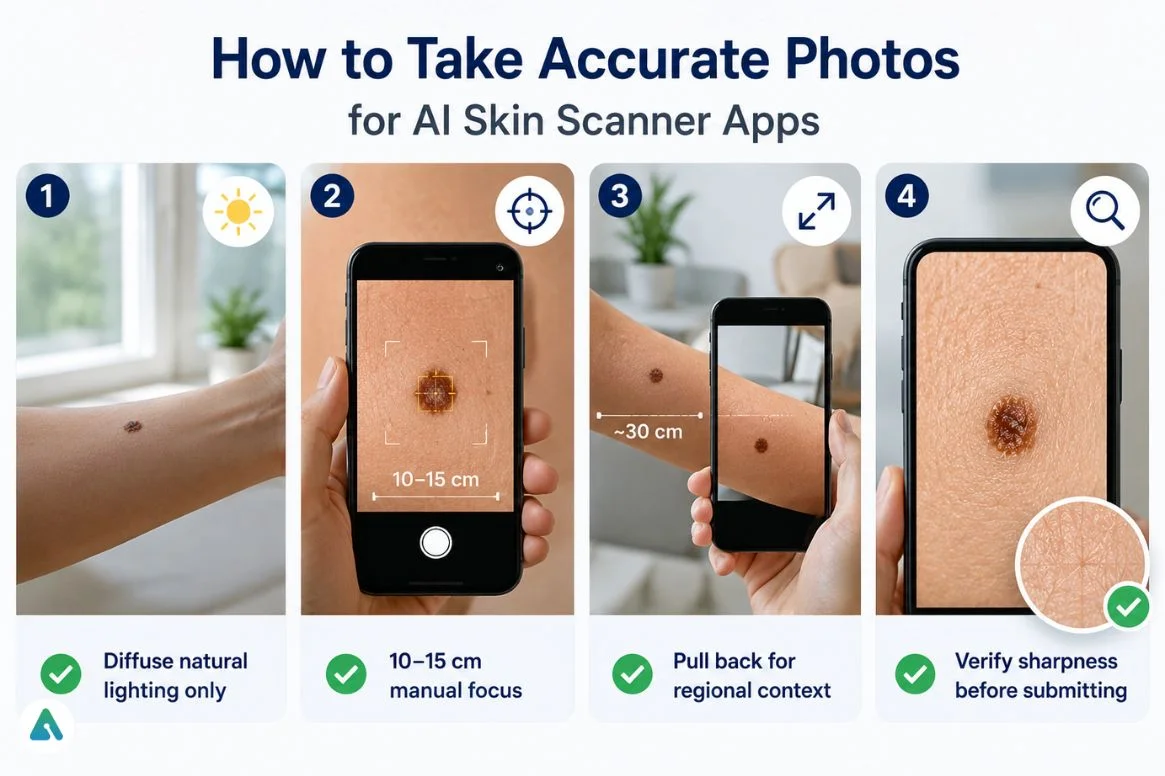
Most people take skin photos the same way they’d photograph anything else — whatever angle, whatever light is available. That approach fails algorithmic analysis consistently. These four steps close most of the capture gap:
Step 1 — Diffuse natural lighting only. Avoid direct sunlight, which blows out surface texture, and yellow incandescent indoor bulbs, which distort pigmentation readings. Position in a room with abundant indirect daylight and kill the overhead lighting if it casts shadows across the lesion’s borders.
Step 2 — 10 to 15 centimeters, manual focus. Don’t use macro-zoom — it introduces edge lens distortion that mimics border irregularity. Hold the camera at a fixed 10–15 cm distance and tap the screen to force manual focus on the center of the lesion, not the surrounding skin.
Step 3 — Pull back for a regional context shot. Take a second photo at approximately 30 centimeters. AI models use surrounding healthy tissue as a baseline control to calculate contrast, localized erythema, and pigmentation density. Without that reference frame, the algorithm loses its calibration anchor.
Step 4 — Verify sharpness before submitting. Review the image before sending it. Any motion blur from an unsteady hand or focal drift should disqualify the shot. Edge-detection models rely on micro-texture pixel variations — minor blur mimics the smooth anatomy of benign lesions, which creates dangerous false negatives.
Can AI Detect Skin Cancer? What It Can and Cannot Diagnose
AI skin analysis tools can identify visual features associated with melanoma, basal cell carcinoma, and squamous cell carcinoma. They function best as early-warning systems — not as diagnostic conclusions.
A low-risk output doesn’t mean the lesion is safe. A high-risk output doesn’t confirm malignancy. What a high-risk result should do is accelerate a dermatology referral.
Definitive skin cancer diagnosis requires histopathological examination, meaning a biopsy. AI can raise or lower suspicion. Only tissue analysis confirms.
The strongest role for AI in this context is triage: identifying lesions that warrant professional evaluation sooner rather than later, particularly for people who face long specialist wait times or limited access to dermatology services.
AI Dermatology in 2026: Clinical Devices vs Consumer Apps vs Screening Tools
One of the biggest misconceptions about AI dermatology is that all tools operate at the same level of clinical credibility. They don’t. The 2026 market separates clearly into three tiers.
Tier 1 — FDA-Cleared AI Dermatology Devices (Clinical-Grade Tools)
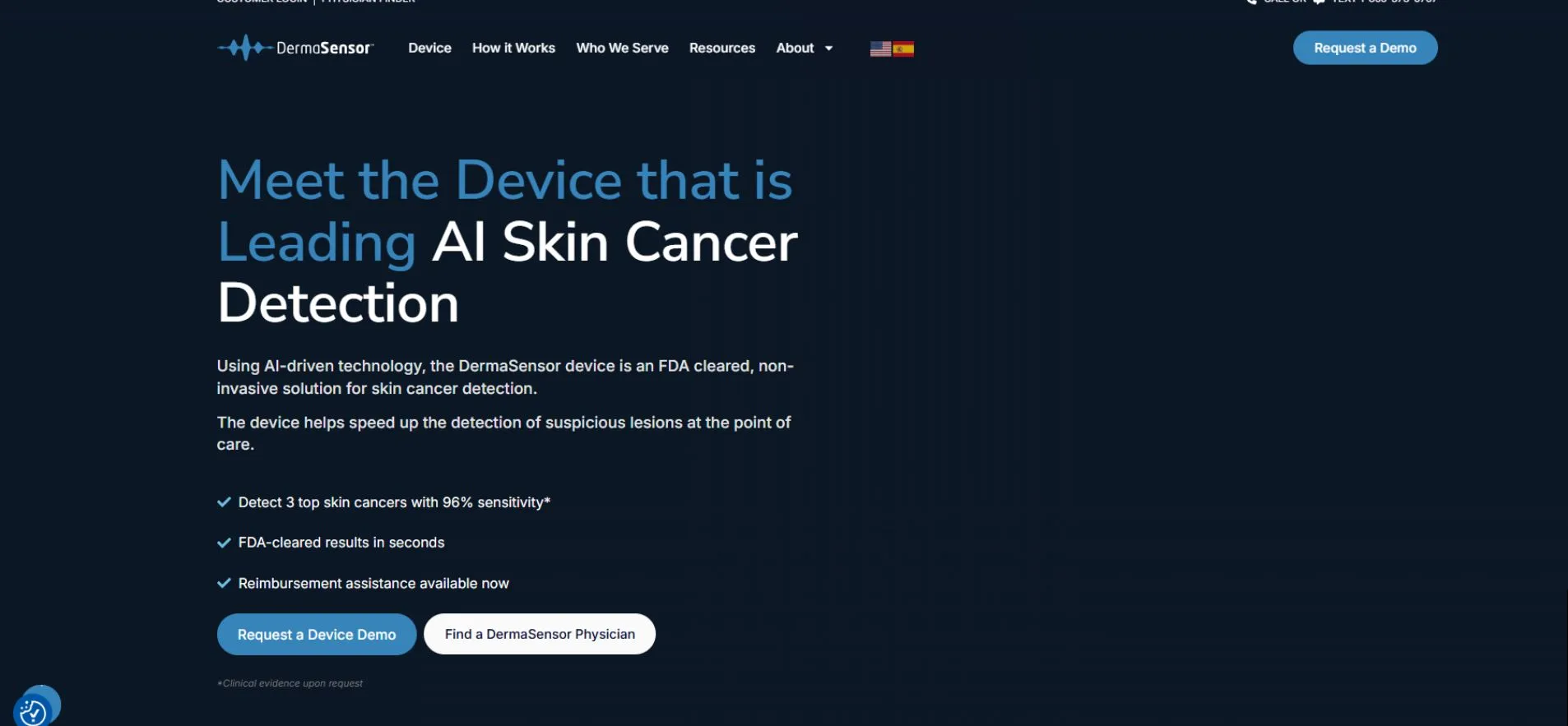
DermaSensor occupies a category that no consumer app does: FDA-cleared, handheld, point-of-care hardware designed specifically for primary care physicians.
Rather than relying on standard camera optics, DermaSensor uses Elastic Scattering Spectroscopy (ESS) — firing pulses of light into tissue and recording how that light scatters at a cellular and sub-cellular level. The underlying ML model reads those micro-structural variations and delivers an immediate risk classification. Published clinical data shows 96% sensitivity across melanoma, basal cell carcinoma, and squamous cell carcinoma. In primary care settings, it roughly halves the rate of missed cancers compared to unaided physician assessment.
This isn’t a consumer product. It doesn’t belong in the same conversation as smartphone apps, and conflating the two misleads users about what’s actually available on both ends.
Tier 2 — CE-Marked AI Skin Analysis Apps: Consumer Medical Software Explained
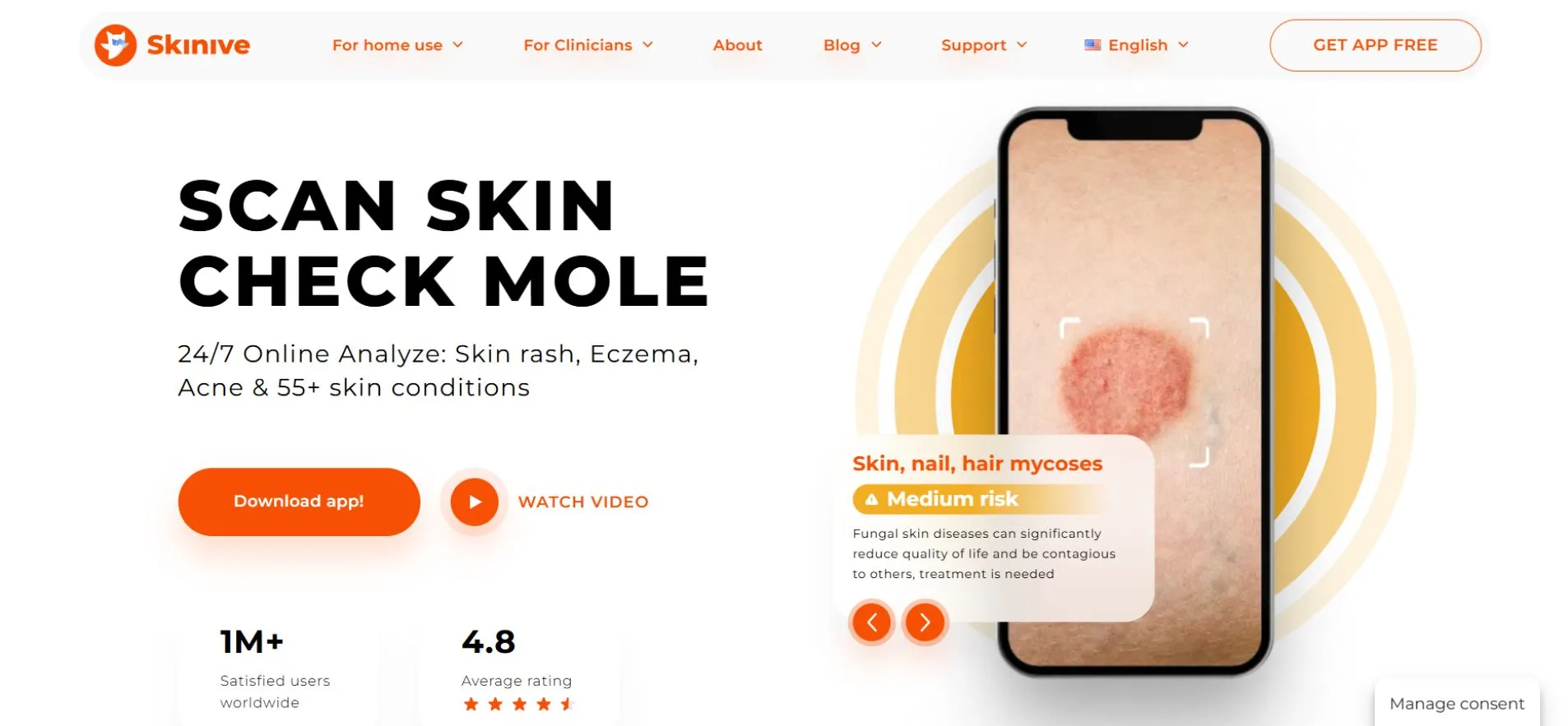
Skinive represents the current ceiling for consumer-facing AI dermatology. Registered as a CE-Marked Class I medical software in the EU, its architecture shifted significantly in 2026 — moving to Dino v3 Convnext backbones combined with mobile YOLO11 for real-time, on-device edge analysis. The training dataset now exceeds 3.5 million images, including 250,000 annotated strictly by clinical dermatologists. Real-world test conditions report 97.4% sensitivity for papulosquamous and viral disorders, with 94.2% overall accuracy. The platform also supports 3D body mapping for longitudinal mole tracking.
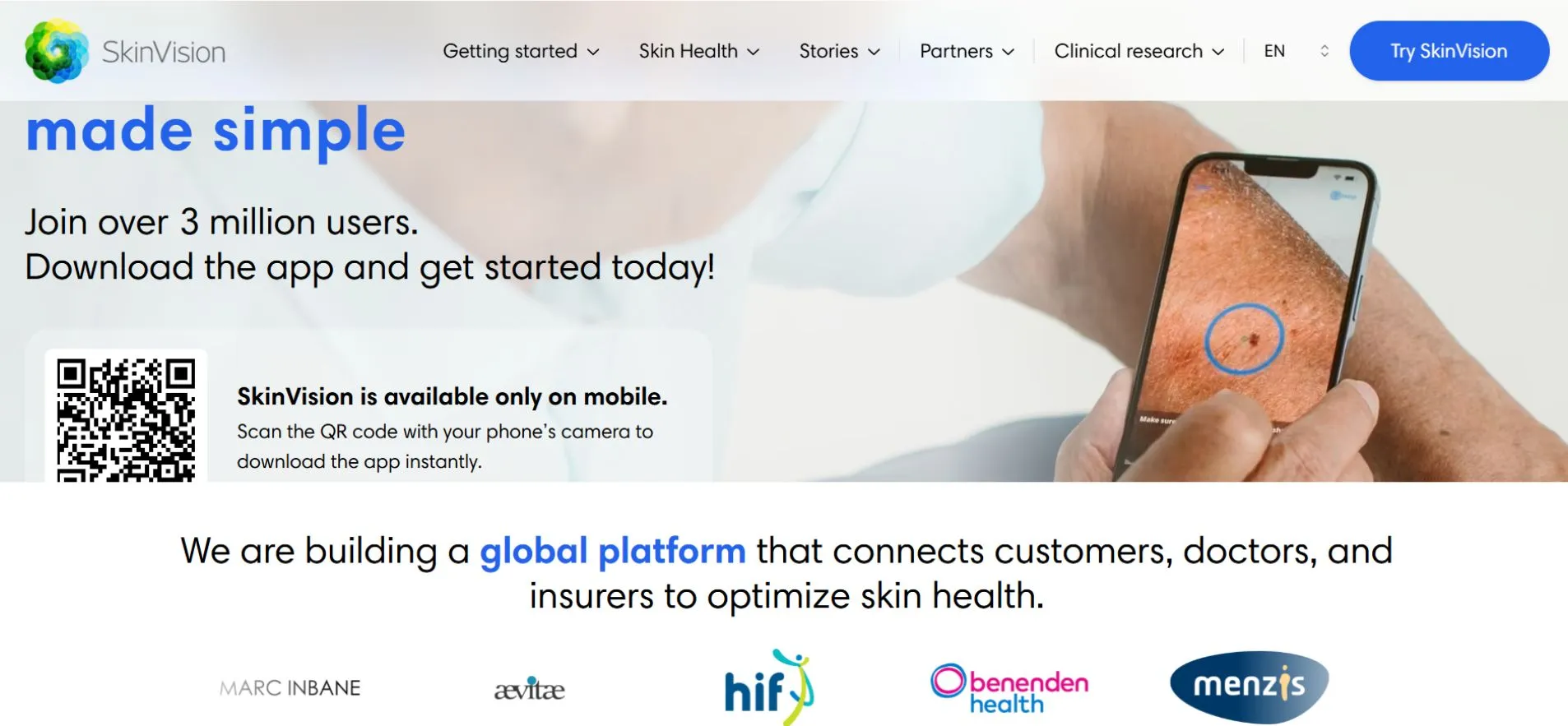
SkinVision holds a more established European regulatory footprint — CE Class IIa certified, with direct health insurance integration in several markets. The landmark UZ Gent academic clinical study captured an 83% sensitivity figure in a high-risk population, but subsequent algorithm updates within SkinVision’s Class IIa framework have elevated their real-world validated sensitivity to approximately 90% in 2026 disclosures. It functions less as a standalone diagnostic tool and more as a risk-pathway guide, routing high-risk users toward clinical evaluation through insurer-linked channels.
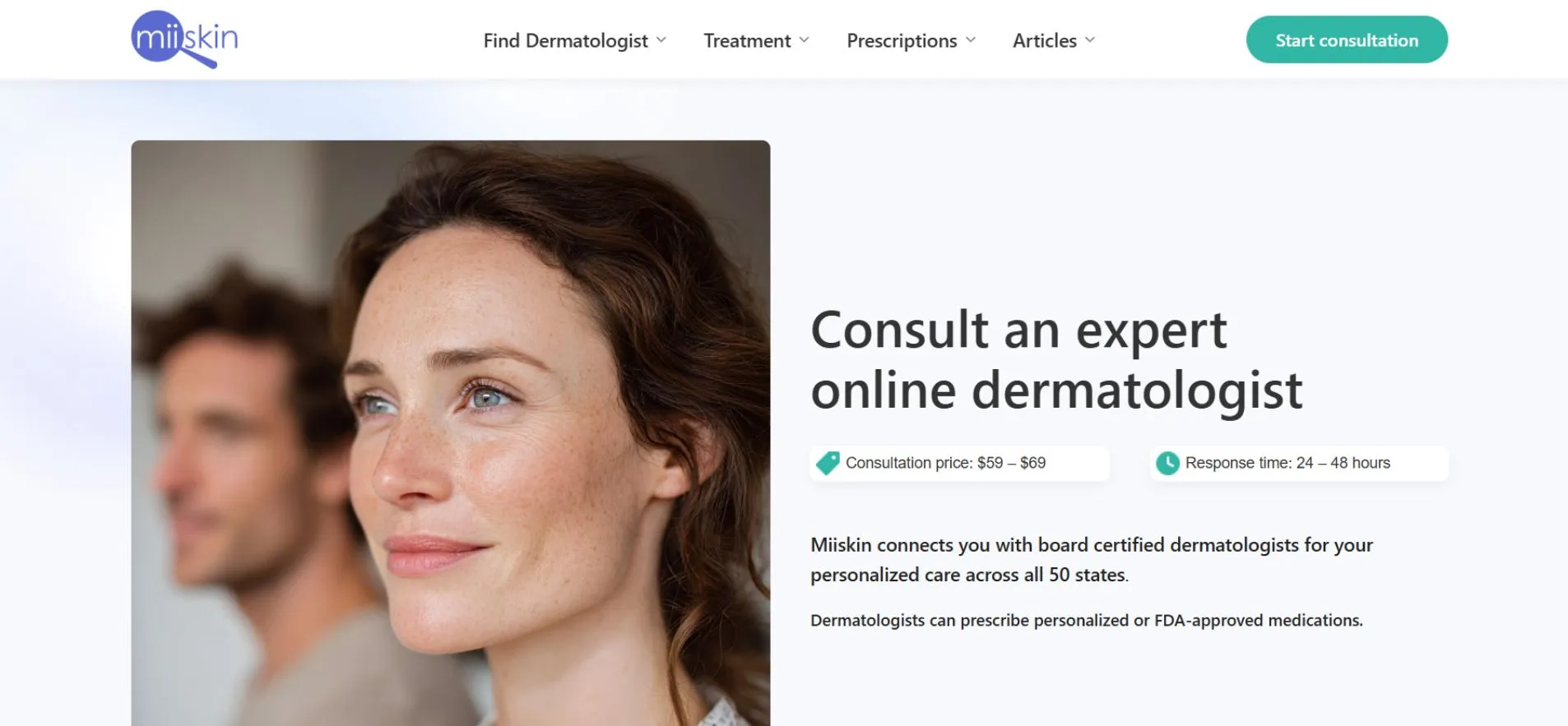
Miiskin focuses on sequential photographic timelines rather than autonomous classification. Side-by-side comparisons over weeks or months let users and clinicians see structural changes that static assessments miss.
Tier 3 — AI Skin Screening Apps: Consumer-Level Risk Detection Tools
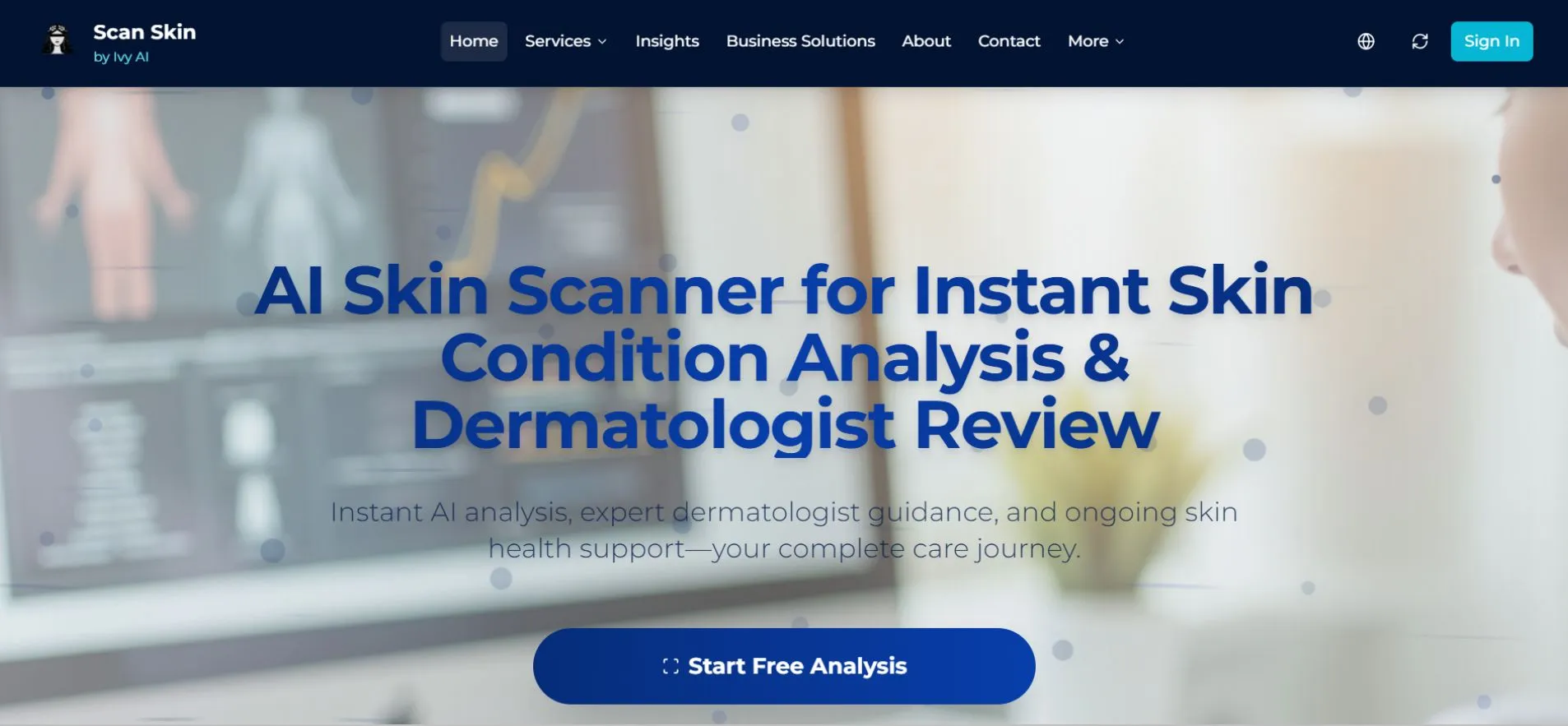
ScanSkinAI addresses a data gap that plagued early dermatology AI: the underrepresentation of darker skin tones in training datasets. The platform built a two-tier vision model validated across all six Fitzpatrick Skin Types (I–VI), covering more than 80 conditions, including regional fungal infections and pigmentation disorders common in tropical and humid climates. Algorithmic fairness across demographics is a competitive differentiator that few other platforms can substantiate with equivalent validation depth.
AI Dermatology Market Overview 2026: Key Platforms and Performance Comparison
| Platform | Regulatory Classification | Core AI Architecture | Primary Validation Metric | Target User |
|---|---|---|---|---|
| DermaSensor | FDA-Cleared Class II Medical Device | Elastic Scattering Spectroscopy + ML Micro-structural Analysis | 96% sensitivity across Melanoma, BCC, SCC | Primary Care Physicians |
| Skinive | CE-Marked Class I Medical Software | Dino v3 Convnext + Mobile YOLO11 Edge Processing | 97.4% sensitivity for papulosquamous/viral conditions | Consumers & Clinical Personnel |
| SkinVision | CE-Marked Class IIa Medical Service | Deep Convolutional Networks + In-App Workflow Triage | ~90% validated sensitivity (2026 updated model) | Consumers via Health Insurer Channels |
| ScanSkinAI | Unregulated Consumer Screener | Two-Tier Vision Model (Fitzpatrick Types I–VI calibrated) | Validated across 80+ conditions across demographics | Consumer Demographic Screening |
AI Skin Cancer Screening Trade-Off: Sensitivity vs False Positives
Here’s something the product pages won’t feature: high sensitivity produces false positives, and false positives drive unnecessary biopsies.
DermaSensor’s published Positive Predictive Value (PPV) translates to a Number Needed to Biopsy (NNB) of roughly 6:1. For every confirmed malignancy the device catches, approximately five additional patients undergo biopsy procedures that return benign results. That ratio compares favorably against unaided clinical assessment, which typically runs far higher — but it’s still a real-world cost that patients and clinicians absorb.
This doesn’t mean high sensitivity is bad. Missing a melanoma carries consequences that far outweigh an unnecessary biopsy. The point is that AI-assisted screening shifts clinical workflow in concrete ways: more referrals, more procedures, more follow-up appointments. Health systems integrating these tools need to plan for that volume, and individual users should understand that a high-risk flag from an algorithm means “get this examined” — not “you have cancer.”
AI Dermatology and Skin Tone Bias: How Accurate Is It Across All Skin Types?
The historical underrepresentation of darker skin in medical imaging datasets created measurable performance disparities in early AI systems. The field has progressed, but not uniformly — and the reason the gap exists runs deeper than simple dataset size.
In Fitzpatrick Types V and VI, several clinically significant conditions present at a pixel level in ways that confuse models trained predominantly on lighter skin. Post-inflammatory hyperpigmentation — extremely common in darker skin tones — can visually overlap with early hyperpigmented malignancies. Acral lentiginous melanoma, a subtype disproportionately affecting people of African, Asian, and Hispanic descent, appears on palms, soles, and nail beds rather than sun-exposed surfaces, which standard edge-detection models weren’t architected to prioritize. An algorithm optimized on European dermatology datasets will systematically underweight these presentations.
Platforms that explicitly validate across Fitzpatrick skin types and publish demographic performance breakdowns occupy a meaningfully different position than those citing aggregate accuracy numbers. When evaluating any AI dermatology tool, the demographic validation question isn’t just a fairness consideration — it’s a clinical reliability one.
What Dermatologists Say About AI Skin Diagnosis Tools
Most practicing dermatologists don’t frame AI as a competitive threat. They treat it as a triage layer.
In clinical workflows, AI tools assist with documentation, lesion flagging, pattern recognition across large patient cohorts, and screening prioritization for high-volume practices. The consensus among healthcare professionals runs roughly in the same direction: AI contributes speed and pattern recognition at scale. The dermatologist contributes clinical context, physical examination, patient communication, and diagnostic judgment.
Those aren’t overlapping skillsets. They’re complementary ones.
Legal Risks of AI Dermatology Apps: Liability and Regulation Gaps
There’s a regulatory vacuum sitting at the center of consumer AI dermatology, and it deserves more transparency than it currently gets.
No unified legal framework exists for malpractice liability when a consumer skin scanner issues a false negative and a patient delays seeking care as a result. A CE-marked application or an FDA-cleared device carries regulatory status for its intended use — but “intended use” in consumer-facing screening tools stops well short of clinical diagnosis. When the gap between that intended use and a user’s actual behavior produces a harmful outcome, the liability question remains largely unanswered in most jurisdictions.
This matters in practice. A user who receives a low-risk classification from an unregulated app, delays a dermatology visit for six months, and then receives a late-stage melanoma diagnosis occupies legally ambiguous territory. The regulatory frameworks governing AI medical devices are evolving rapidly, but consumer-facing screening platforms currently sit in a space where oversight lags behind deployment.
Will AI Replace Dermatologists? The Future of Skin Diagnosis in Healthcare
No, and the reasoning goes beyond technology capability.
Medicine involves physical examination, dermoscopic evaluation, biopsy performance, treatment planning, longitudinal risk monitoring, and patient counseling. AI currently handles a fraction of that workflow, and expanding its role into diagnostic territory raises liability, consent, and equity questions that technology alone can’t resolve.
The realistic trajectory for AI in dermatology involves earlier detection, better screening access, and more efficient triage — all of which extend the reach of human clinical expertise rather than substitute for it. If you’re thinking about how AI is reshaping healthcare roles more broadly, the pattern mirrors what’s happening across medical AI applications, where augmentation consistently outperforms replacement as a real-world outcome.
How to Use AI Skin Scanner Apps Safely and Effectively
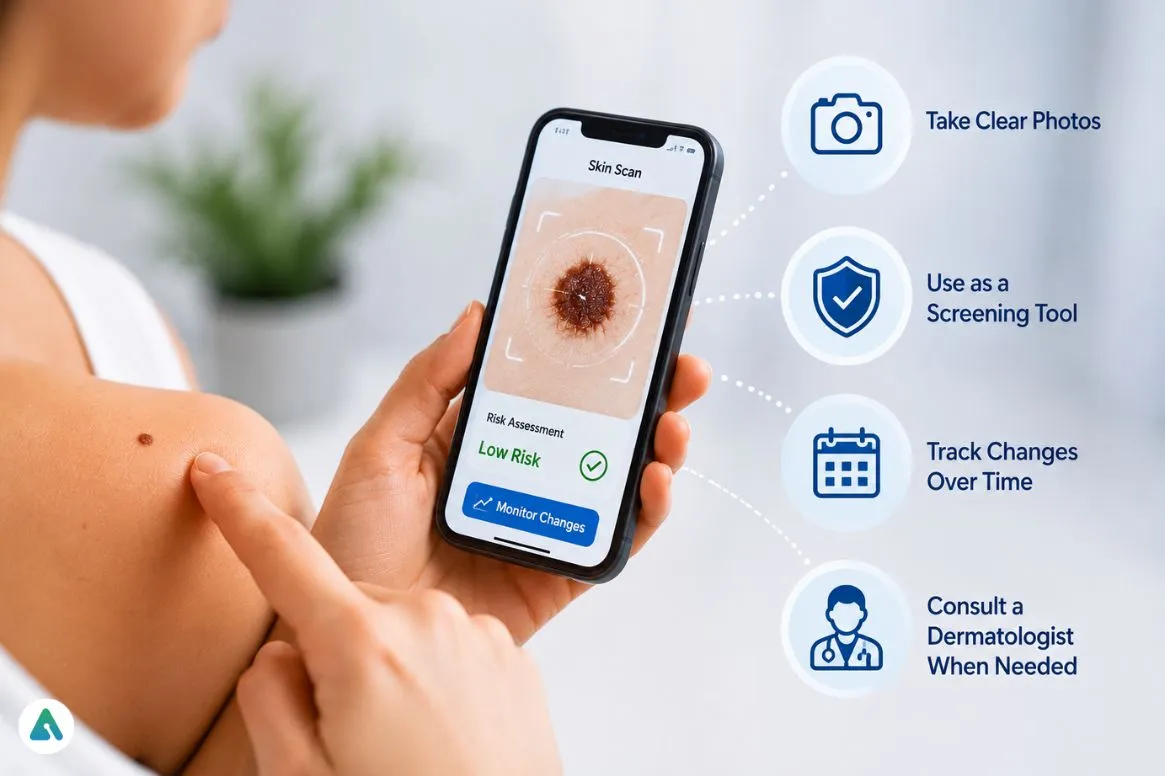
Getting useful output from these tools requires discipline on the user’s end — starting with image capture, which the protocol above addresses in detail.
Treat the output as a screening signal, not a verdict. A risk classification tells a user whether to seek evaluation sooner rather than later. It doesn’t tell them what the condition is, and it can’t account for the clinical context a dermatologist would factor in during an examination.
Track changes over time. Size, color, shape, or surface changes that accumulate over weeks deserve attention regardless of what a single scan returns. Longitudinal monitoring — the kind Skinive and Miiskin specifically support — is where consumer AI tools genuinely earn their keep.
Understand what a high-risk flag actually means. Given the NNB dynamics discussed above, a high-risk output means “this warrants professional evaluation” — not “this is malignant.” False alarms are a feature of high-sensitivity tools, not evidence of malfunction.
Never delay care because an app returned a low-risk result. If a lesion grows, bleeds, becomes irregular, or changes rapidly, seek professional evaluation. The broader risks of over-trusting AI outputs extend into healthcare contexts just as they do elsewhere — AI outputs fail quietly, and in dermatology, quiet failures carry serious consequences.
Frequently Asked Questions
Q. Is an AI dermatologist app legitimate?
Yes. Many AI dermatologist apps use machine learning to analyze skin images and assess risk levels. However, they are screening tools, not replacements for professional medical diagnosis.
Q. Can AI accurately diagnose skin conditions?
AI can identify patterns linked to common skin conditions, but it cannot provide a definitive diagnosis. Medical evaluation is still needed for confirmation and treatment planning.
Q. What is the most accurate AI for skin analysis?
There is no single most accurate AI dermatologist. Performance depends on image quality, clinical validation, training data, and the specific skin condition being assessed.
Q. Can AI detect melanoma?
AI can flag suspicious lesions that may resemble melanoma, but it cannot confirm skin cancer. A dermatologist and, if necessary, a biopsy are required for diagnosis.
Q. How accurate are AI dermatologist apps?
Accuracy varies by platform and condition. Many apps perform well for common skin issues, but results can be affected by poor image quality and unusual presentations.
Q. Will dermatologists be replaced by AI?
No. AI can support screening and early detection, but dermatologists provide diagnosis, treatment, biopsies, and clinical judgment that AI cannot replace.
Q. Are AI skin analysis apps free?
Many AI dermatologist apps offer free basic assessments. Advanced features, ongoing monitoring, or professional consultations often require a paid subscription.
Final Verdict: Are AI Dermatologist Apps Reliable in 2026?
AI dermatologist tools in 2026 have real value for preliminary screening, early detection, and long-term monitoring — particularly for people who can’t access specialist care quickly. The tools at the top of the market combine regulatory validation, diverse training data, and clinical-grade sensitivity in ways that weren’t available even two years ago.
What they don’t do is replace dermoscopy, clinical examination, or pathological confirmation.
The most useful framing: AI is a first filter, not a final answer. A smartphone scan can tell someone whether a lesion deserves urgent attention. A dermatologist determines what it actually is and what to do about it.
In 2026, the question isn’t AI versus dermatologists. The smarter question is how each layer of detection — algorithmic screening, clinical triage, specialist assessment — hands off to the next without leaving gaps.
Related: Best AI Friend Apps in 2026: Ranked for Emotional Support
| Editorial Note: This article is intended to inform, not diagnose. We are not affiliated with the AI dermatology platforms mentioned unless stated otherwise, and our goal is to provide balanced, independent information. AI skin analysis tools can be helpful for screening, but they should never replace professional medical advice. If a skin concern appears unusual, changes over time, or causes discomfort, consult a qualified dermatologist. |
