What Is Same.new AI and How Does It Build Websites?
Same.new AI is a browser-based builder that turns a pasted URL or a written prompt into an editable Next.js project. It suits designers, founders, and marketers who need a fast landing-page draft. It fits poorly if you need a data-heavy dashboard or custom authentication.
Quick verdict: Start on the free plan with one simple page. Pay for Basic ($10) only if you iterate weekly. Choose another tool for complex apps.
Quick facts (November 2026)
Former name
Same.dev
Output
Next.js project, built with React
Input
Public URL, image, or text prompt
Free tier
500,000 tokens per month
Paid plans
$10 to $100 per month
Deployment
Netlify
Best for
Landing pages and UI cloning
Plans change often, so treat every price here as a snapshot. Pricing comes from Same’s documentation. Stack and deployment details come from third-party reviews and are labeled as such.
What Is Same.new AI?
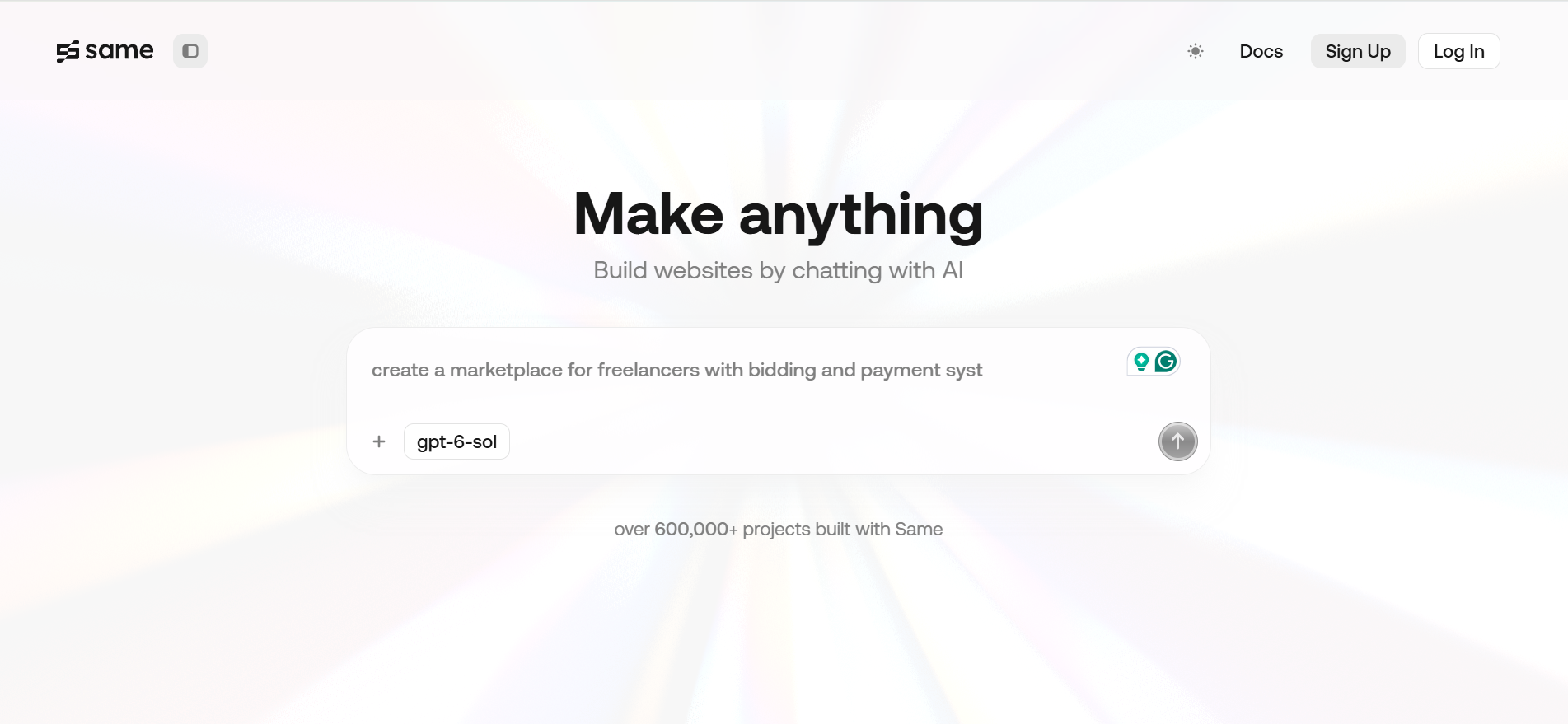
Same.new is the newer name for Same.dev. It started as a free site-cloning agent, and it now builds apps from prompts too. It belongs to the vibe coding category, where you describe the result and the AI writes the code.
It works as an agent rather than a chatbot. It plans the project, writes each section, and fixes problems on request. Its homepage claims more than 600,000 projects built. That figure comes from the vendor.
Same.new Features
URL cloning. Same scans a public page, extracts its layout, styles, and images, and rebuilds it as a project you can edit.
Prompt-to-app. Describe a freelancer marketplace, and Same drafts the pages and logic.
Next.js output. Third-party reviews report that Same generates Next.js with shadcn/ui rather than a plain React app. A case study of a cloned personal site found that Same swapped the original site’s stack for its own defaults. Compare the generated stack with the source before you build on it.
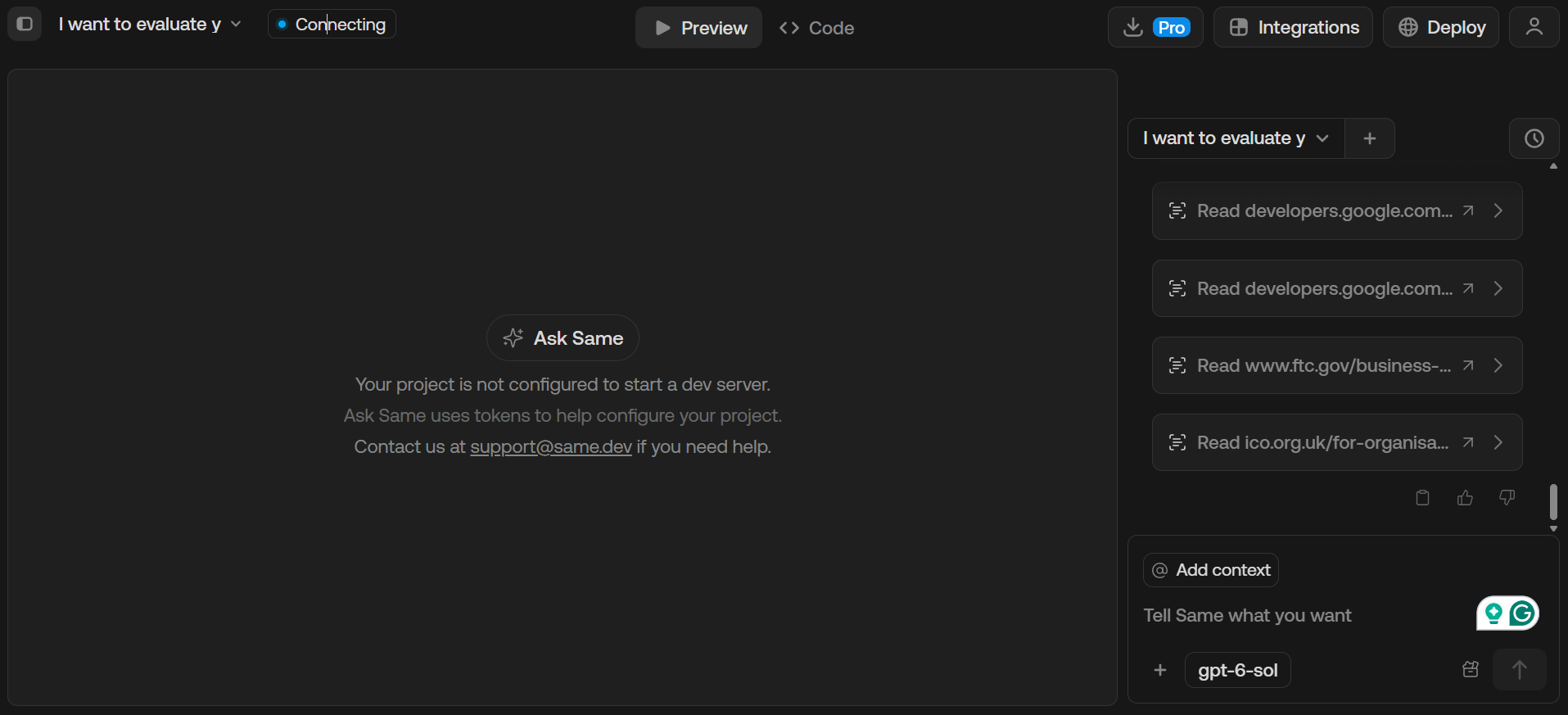
Hybrid editing. You can steer by chat or edit the generated code directly. The Code tab lists the project files. Non-coders can stay in chat, and developers can work in the files.
Model picker. Premium models sit on paid plans. Strapi’s integration page says Same generates code with Claude models. If model choice matters to you, the Claude vs ChatGPT trade-offs apply.
Download and fork. Paid plans let you export the project and branch it.
How Deployment Works
Same deploys to Netlify. According to aipedia’s review, you must claim the deployment before you can control a custom domain.
Netlify assigns a subdomain based on the chat ID. A 2025 Netcraft analysis found that new projects were public by default. Confirm your project’s visibility settings before you build anything private.
MCP Integrations: A Starting Wire, Not a Backend
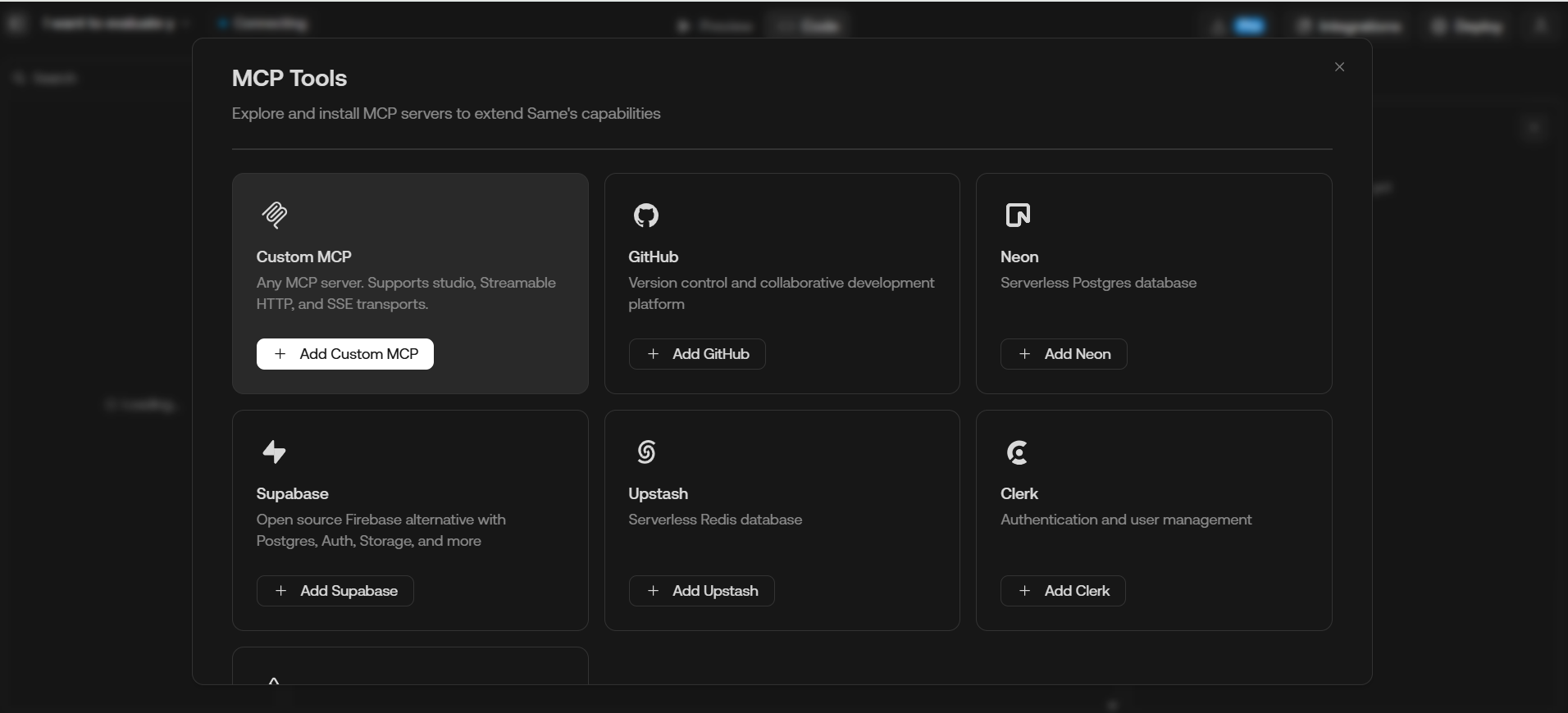
MCP stands for Model Context Protocol, an open standard that connects an AI tool to outside services. The same MCP window lists these options:
Integration
Function
Supabase
Postgres, auth, and storage
Neon
Serverless Postgres
Upstash
Serverless Redis
Clerk
Sign-in and user management
GitHub
Version control
Custom MCP
Any server over studio, Streamable HTTP, or SSE
Connecting Supabase or Clerk adds the plumbing. It doesn’t write your row-level security policies, database migrations, or production auth rules. You own the backend security.
Custom backends need manual work. Strapi’s guide says you export the Same project and add the Strapi API code by hand.
Same.new AI Pricing in 2026
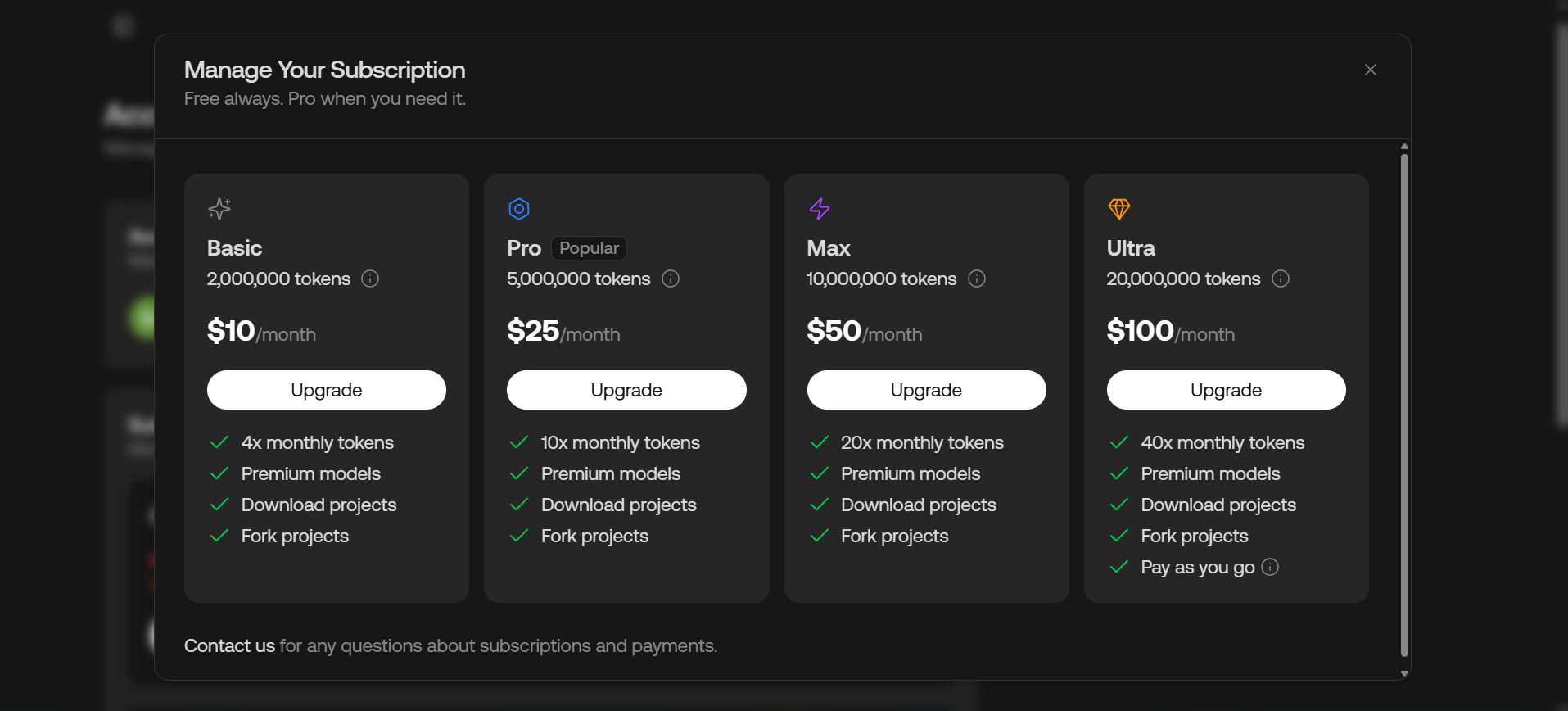
Per Same’s pricing documentation, tokens reset each billing cycle, and unused tokens expire.
Plan
Price (monthly)
Tokens per month
Best for
Free
$0
500,000
Testing one landing page
Basic
$10
2,000,000
Occasional builders who need code export
Pro
$25
5,000,000
Weekly work on client sites
Max
$50
10,000,000
Freelancers running several projects
Ultra
$100
20,000,000
Heavy use. Overage costs $10 per 2M tokens
Every paid plan works out to $5 per million tokens, so a bigger plan buys room, not a discount.
Tokens don’t measure value on their own. Retries, setup failures, and Ask Same debugging all draw from the same pool. If a project can’t start its dev server, you pay tokens to fix it. Companies fight this waste at scale, a pattern called tokenmaxxing. Cost per finished page tells you more than cost per token.
Same.new vs Bolt, Lovable, and v0
These tools bill in different units, so their allowances don’t compare 1:1.
Tool
Billing unit
Entry paid plan
Best for
Runtime and stack
Same.new
Tokens
$10 for 2M
URL cloning
Next.js, with integrations
Bolt
Tokens
$25 for 10M (nocode.mba)
Full-stack MVPs
In-browser WebContainer sandbox
Lovable
Credits
About $25 for 100 credits
Chat-driven apps
Supabase-first stack
v0 by Vercel
Credits
About $30
UI components
Vercel, shadcn/ui, Next.js
Bolt still bills in tokens, with a free tier of 1M tokens per month and a 300K daily cap. Lovable and v0 use credits. A cheaper token rate doesn’t mean a cheaper project, because each agent burns tokens at its own pace. Confirm every figure on the vendor’s pricing page before you buy.
Where Same Struggles
Same copies simple, static pages well. Script-heavy tools, dashboards, and logged-in apps often come back incomplete. Some users also report builds that hang or fail.
Cloning copies how a page looks. Logic, data, and payments need separate setup.
Avoid these mistakes:
Cloning a complex app. Start with a landing page.
Writing vague prompts. “Make the hero look modern” triggers broad rewrites. “Change primary buttons to #00FF00” doesn’t. Negative prompting helps here. Tell Same what to build and what to leave out.
Skipping mobile. Desktop clones often break on phones. Toggle the mobile preview before you export.
Ignoring the stack. Compare the generated framework with the original.
Is It Legal to Clone a Website?
Cloning sits in a gray zone. Studying a layout carries low risk. Copying text, images, logos, or brand identity can create copyright and trademark problems. This is general information, not legal advice, and rules vary by country.
The Netcraft analysis above also showed attackers using Same to clone login pages. Never clone a login or payment page.
Clone your own sites or sites you have permission to copy.
Replace all text, images, logos, and brand names.
Read the source site’s terms of use.
Ask a lawyer before you launch anything that resembles a competitor.
What Happens After Same Builds Your Site?
You hold a Next.js project you can edit, export on paid plans, and host anywhere. Four jobs remain:
Open the Code tab and judge whether the code is maintainable.
Replace every copied asset.
Build the backend: data, auth rules, and payments.
Test every page on a phone.
Same doesn’t publish documentation on code quality, so inspect the output yourself. Look for reusable components and clean styling.
The 4P Method
Pick a simple source page or write a one-paragraph brief.
Prompt with exact sections, color codes, and what to leave out.
Prune small bugs by hand in the file editor instead of paying for agent retries.
Publish after you swap cloned assets for original ones and test on mobile.
Example: Pick a plain bakery landing page. Prompt: “Rebuild this with a green palette and three sections. Skip testimonials.” Prune the placeholder copy. Publish after a phone test.
Is Same.new Worth Paying For?
Your situation
Best choice
You want to test one landing page
Free plan
You iterate weekly on cloned layouts
Basic at $10
You run several projects a month
Pro or Max
You need a complex dashboard, or custom auth
Another builder
Lean teams already ship with fewer people, as AI-native pods show. A tool like Same suits that style of work when the output is a front-end draft.
Run a test before you pay. Log your own numbers:
FAQs
Q. Is Same.new free?
Yes, within limits. The free tier gives 500,000 tokens per month. Premium models, downloads, and forking need a paid plan.
Q. How much does Same. new cost?new cost?
Plans cost $10 (2M tokens), $25 (5M), $50 (10M), and $100 (20M). Ultra overage costs $10 per 2M tokens.
Q. Do unused tokens roll over?
No. They expire at the end of the billing cycle.
Q. What stack does Same generate?
Third-party reviews report Next.js with shadcn/ui.
Q. Where does Same deploy?
To Netlify. Claim the deployment to control a custom domain.
Q. Does Same connect to databases and login tools?
Yes, through MCP: Neon, Supabase, Upstash, Clerk, GitHub, and Custom MCP. You still configure security yourself.
Q. Can Same clone any website?
No. Simple pages work best.
Q. What are the best alternatives?
Bolt, Lovable, v0, and Replit. Bolt suits full-stack MVPs, v0 suits UI work, and Lovable suits chat-driven apps.
Disclaimer: This article is based on our research and review of Same.new’s features, pricing, and available documentation as of November 2026. We are not affiliated with Same.new. Pricing and features may change, so check the official website for the latest information before subscribing.
Tags:
Maliha Irfan
Maliha Irfan is an AI and technology writer specializing in AI tools, AI agents, automation, and emerging software. Her work explores how AI technologies perform in real-world scenarios, what features they offer, and where their limitations lie. She focuses on practical reviews, hands-on testing, and evidence-based insights to help readers understand AI products, compare available solutions, and make informed decisions about adopting new technologies.