How Can You Improve Brand Visibility in AI Search Engines in 2026?
Ask ChatGPT to suggest a payroll tool for a ten-person startup, and you’ll see two or three names. Every other vendor in the category might as well not exist. That short list is the new page one, and a strong Google ranking no longer gets you onto it.
Three things decide who makes the list. Crawlers need to reach your pages. Your company has to come across as one clear entity with consistent facts. And trusted outsiders, especially reviewers and YouTube creators, have to back up your claims.
Good SEO still does most of the heavy lifting; Google admits as much. The strongest signals, though, sit off your website. I’ll cover how these engines pick sources and what to fix on your own pages. Then we’ll get to outside coverage and tracking. Where the evidence is thin, I’ll tell you. Fair warning: some of the most popular GEO advice doesn’t hold up once you look at the data.
What does brand visibility in AI search engines mean?
In short, it’s how often generative engines bring up your company when they answer a question. That happens in three ways: they mention you by name, cite one of your pages as a source, or recommend you as the best fit. Each one takes different work.
These outcomes don’t always travel together. A review site can earn the link while the answer still names you as the pick. An engine might quote a number from your spec sheet and point buyers to a competitor anyway. And “also worth a look” sits a long way from “best for agencies under 20 people.” In my view, that last gap matters most, because it’s the one buyers act on.
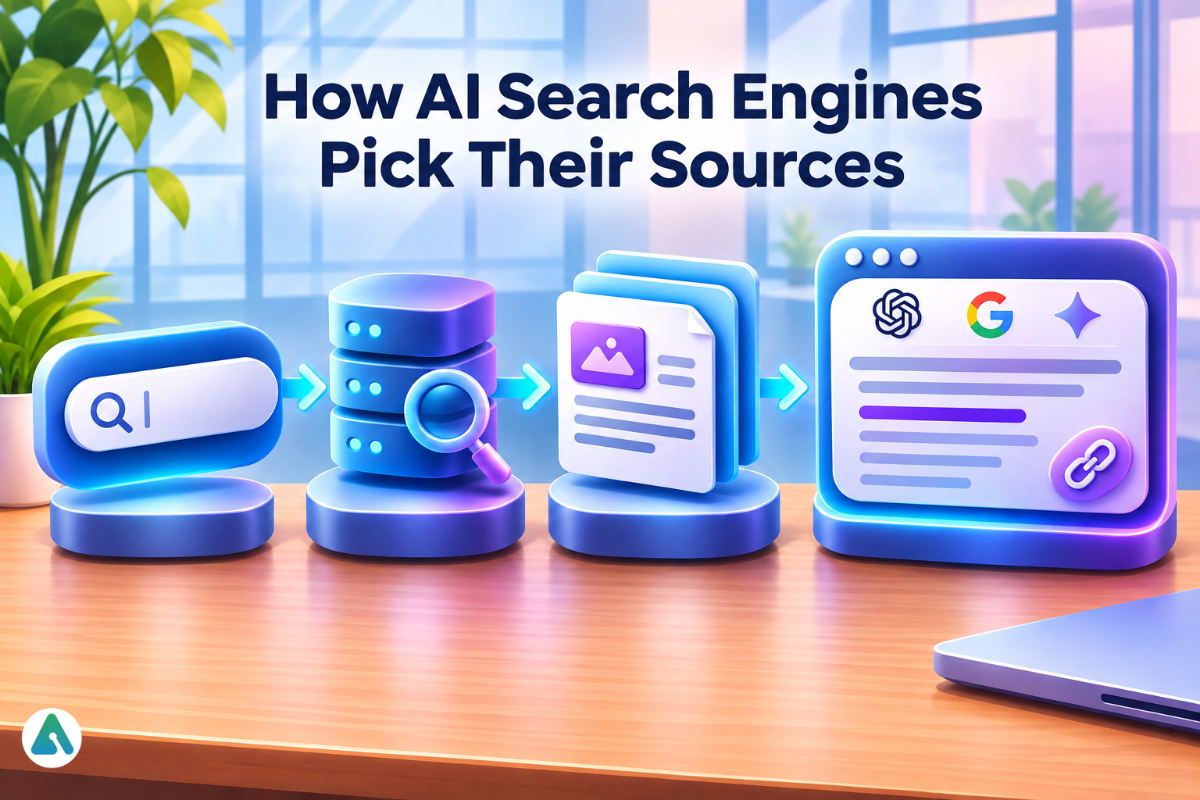
There’s no single ranking moment, either. A crawler has to find your page. The engine then has to pull it for a specific prompt and prefer it over rivals. Only then does it reach the answer. Miss any step, and you’re out.
You’ll hear this called GEO (generative engine optimization), AEO, or LLMO. The GEO name comes from a research paper led by Princeton researchers. The team posted it in 2023 and presented it at KDD 2024.
Why should brands care about this right now?
Because these answers now sit on top of billions of searches, and they eat clicks. In May 2026, Google put AI Overviews at more than 2.5 billion monthly users and AI Mode past 1 billion. When the answer box settles the question, few people bother scrolling down.
Pew Research Center measured the drop. Its team tracked 68,879 Google searches by 900 U.S. adults during March 2025:
Results page
Clicked a regular result
Clicked a link inside the summary
Ended the browsing session
With an AI summary
8%
1%
26%
Without one
15%
n/a
16%
Google disputes part of this. It says people who click through from an AI Overview stay on the site longer. You may get fewer visits, but better ones. Many publishers aren’t convinced, and the fight over AI search keeps heating up.
Length makes a big difference. In Pew’s data, only 8% of one- or two-word searches triggered a summary. For searches of ten words or more, that jumped to 53%. Those long, chatty questions are where buyers ask for recommendations. If your content only chases two-word keywords, you’re playing on the shrinking part of the board.
How do these engines pick their sources?
Answers reach people by two routes. Most search-backed responses come from live retrieval. The engine checks an index, grabs a few useful passages, and writes a reply with citations. Others come purely from what the model absorbed in training. You can move the first route this month. The second shifts only when a provider ships a new model.
People usually call live retrieval RAG (retrieval-augmented generation). Most of these systems mix two kinds of matching: plain keywords, plus embeddings that compare meaning. That’s why a page can rank for a phrase yet lose out when its passage misses what the searcher meant.
Term
What it means in practice
Embedding
A numeric fingerprint of a passage’s meaning, used to match it to a question
Passage
The slice of a page a system retrieves, often a section under one heading
Grounding
Tying a reply to retrieved sources so it can cite them
Knowledge graph
A database of entities and their links, such as Google’s Knowledge Graph or Wikidata
Why training data moves slower
Training data, sometimes called parametric memory, moves far more slowly. Many large language models learn from huge public web collections such as Common Crawl, along with sources like Wikipedia. If you launched or rebranded last year, the model may barely know you. Your brand can then show up with search switched on and disappear without it.
Clean, well-sourced pages gain value here, as AI labs face a shrinking supply of usable data. Over time, a steady footprint across the open web feeds that memory.
Platform by platform
Each platform runs its own stack, so one prompt can surface different brands on different engines. Here’s what each draws from and what reporting you get; the full ranking systems stay under wraps.
Platform
Draws from
Owner reporting
Google AI Overviews and AI Mode
Google Search index
Search Console generative AI report
Gemini app
Google index via grounding, plus training data
None
ChatGPT search
OpenAI’s search crawl
Referral data only
Perplexity
Perplexity’s index
Referral data only
Microsoft Copilot
Bing index
Bing Webmaster Tools AI Performance
Google’s AI features also split one question into related sub-searches, a process Google calls query fan-out. Take “best payroll tool for a ten-person remote team.” It might branch into searches on small-business payroll, multi-state compliance, and pricing for tiny teams. A page that answers each of those cleanly gets more chances to be pulled in. Local firms feel this sharply, since one accident question can fan out into several searches about fault, deadlines, and insurance.
Can AI crawlers actually reach your site?
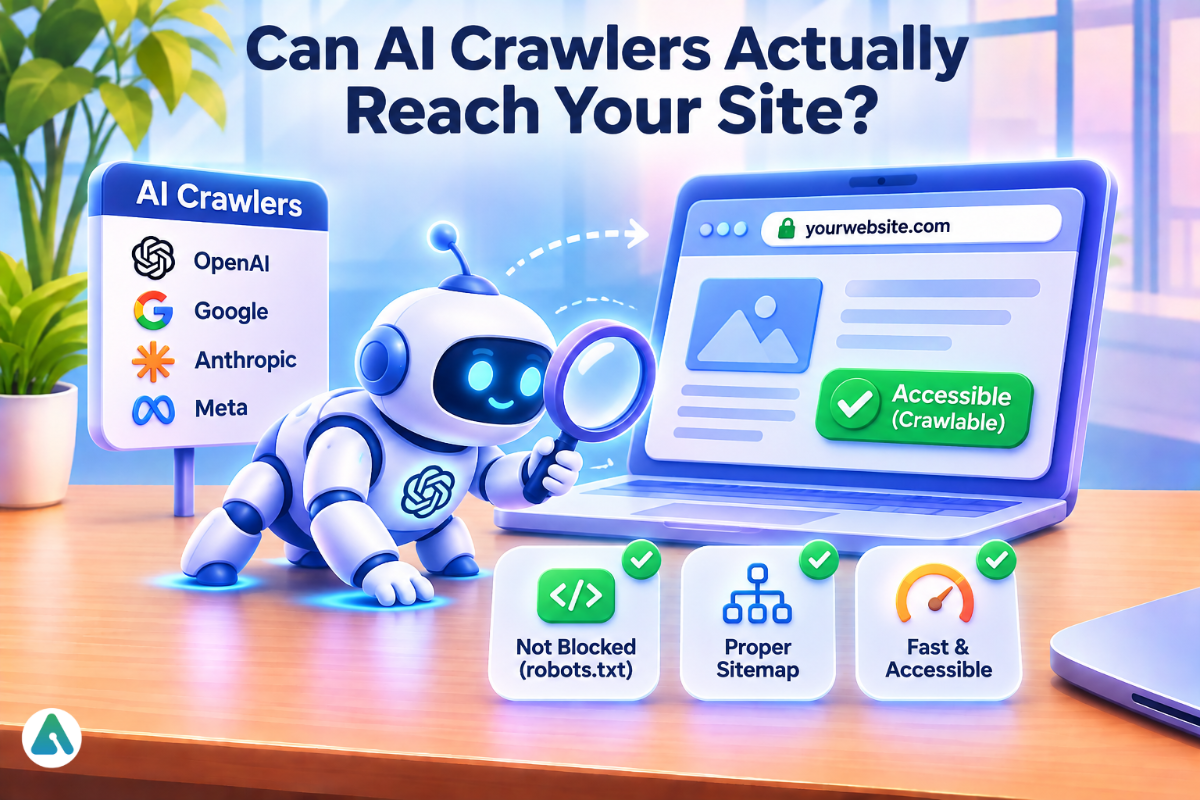
Start here, because nothing else counts if bots can’t get in. Google only shows a page in AI Overviews or AI Mode if it’s indexed and eligible for a snippet. ChatGPT and Perplexity send their own crawlers, and one heavy-handed firewall rule can lock both out without anyone noticing.
The rules differ by company. OpenAI’s crawler documentation asks you to allow OAI-SearchBot for ChatGPT search. GPTBot handles training, and you can block it on its own. Perplexity’s search crawler goes by PerplexityBot. Both companies say robots.txt changes take up to about a day to register. Big publishers already split access this way. FT Strategies found 23 of 70 blocking GPTBot while leaving OAI-SearchBot partly or fully open.
Google-Extended trips up a lot of teams. Blocking it won’t pull you out of AI Overviews or AI Mode, and Google says it isn’t a ranking signal. But Google ties it to both Gemini training and grounding in Gemini Apps. A block also keeps you out of grounded Gemini answers. Make that call on purpose, not through a blanket “block AI” rule.
Google also offers a Search Console switch that removes your site from its generative features. Leave it on if you want in.
Two quick checks finish the job. Look for these user agents in your server logs, because CDN rules often block bots without marketing knowing. And make sure your main content loads as plain HTML instead of depending on JavaScript.
The short version: allow the search bots, decide on the training bots separately, and verify both in your logs.
What makes a page worth citing?
Give a direct answer, add facts nobody else has, and name the source behind each claim. The Princeton-led GEO team ran controlled tests on this. Adding statistics, quotations, and source citations lifted visibility in generated answers by up to 40%. Keyword stuffing barely moved the needle.
That 40% came from a lab. The team tested about 10,000 queries and saw results swing by topic. Read it as a direction, not a forecast for your site.
Engines usually lift one passage rather than a whole page, so write each section to stand alone. Keep it to a few hundred words on a single idea. Give it a heading that says what it covers. Name the product instead of leaning on “it” or “as mentioned above.” That way, the passage still reads as a full answer when an engine pulls it out of context.
Small habits that add up
A few habits make the biggest difference. Open each section with the answer and save the background for after. Publish numbers only you hold, like survey results, usage data or a benchmark you ran yourself. When you cite a study, link the study itself rather than the publisher’s homepage.
Tables earn their keep here. Specs, prices, and feature lists come out of rows far more cleanly than out of a paragraph. And keep your figures identical across the site. If the pricing page lists $29 and an old blog post says $25, the engine has to pick one, and it might pick wrong.
Text isn’t the only input, either. Google’s guide notes its generative features can pull in images and video too. Write accurate alt text, and fix your video captions instead of trusting the auto-generated ones.
Google adds one caution: unique, helpful content beats any formatting trick. Write for people first, and review drafts before publishing to catch the vague claims and missing sources that engines pass over anyway.
How do you make your brand one unambiguous entity?
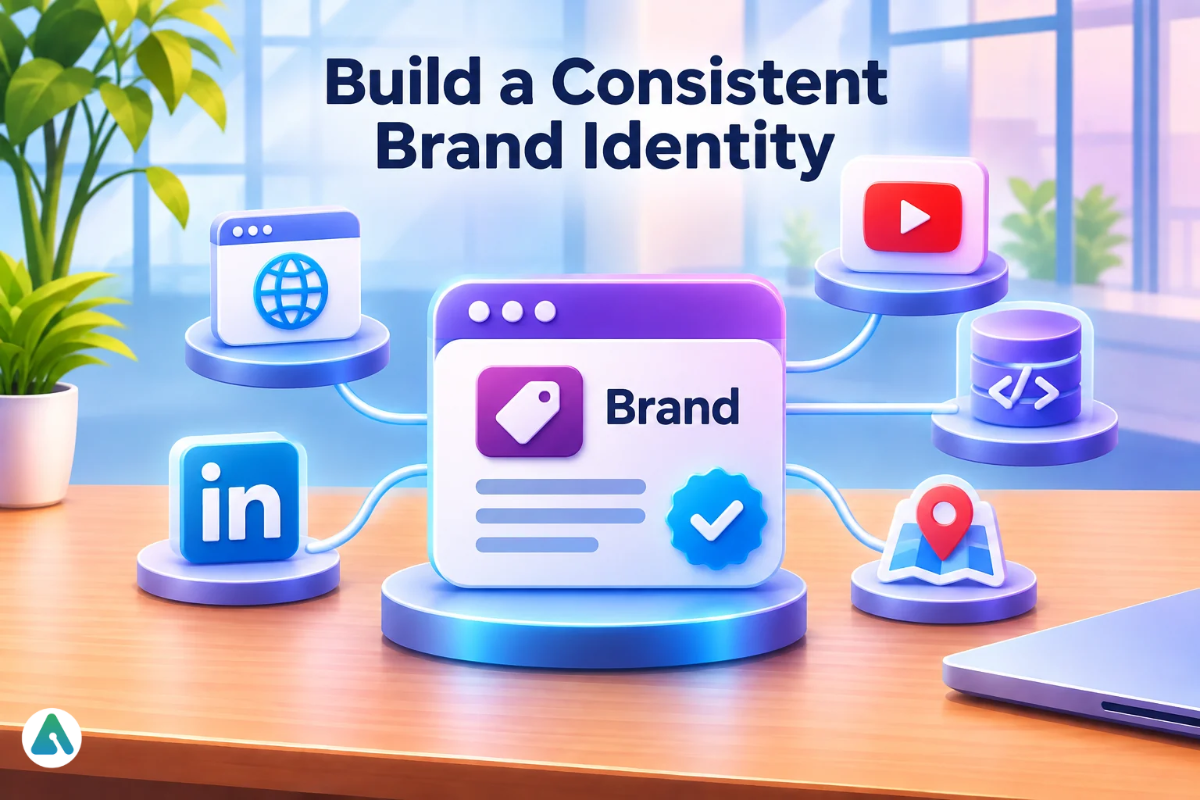
Use the same name, category, and core facts everywhere you appear. If your name matches another firm, a town, or an everyday word, engines may blend your facts with theirs or skip you.
Solve that with a consistent descriptor: “Atlas Payroll,” never plain “Atlas.” State your category, city and founding year on your About page.
Next, add Organization schema with sameAs links to your official profiles. Reuse one short company description on every directory and profile. Keep your Google Business Profile current, and add a Wikidata item if you meet its notability bar.
Don’t expect schema to win citations, though. A controlled Ahrefs test of 1,885 pages found no meaningful lift. Its job is identity, so machines know which Atlas you mean.
How do mentions and backlinks work together?
They work at different stages. Links get a page onto the shortlist an answer draws from, since Google ties its AI features to its core ranking systems. Mentions help the engine pick you from that shortlist.
Mentions show the stronger tie. In Ahrefs research on 75,000 brands, unlinked mentions correlated with AI Overview visibility at 0.664, about three times the 0.218 for backlinks.
A December 2025 follow-up put YouTube mentions on top, at about 0.737. Web mentions held at 0.66 to 0.71.
These are correlations, not proof. Brands that shine on YouTube usually invest in PR and reviews too. Data deals matter as well: Reddit licenses its content to both Google and OpenAI.
Context counts too. When your name keeps turning up beside “CRM for agencies” on review sites and in trade press, engines learn to tie you to that use case.
The best coverage comes from original research, expert commentary, independent roundups, podcasts, and customer write-ups. Skip fake reviews and sock-puppet posts; they backfire.
How does sentiment change what AI says about you?
Volume gets you named; tone decides how. A generated reply summarizes what its sources say, complaints included. Suppose reviews and forum threads keep calling a product overpriced or hard to learn. The response may name it and then repeat the warning. That can hurt more than silence.
Platforms don’t disclose how they weigh tone, so this reflects how summaries behave rather than a published rule.
Log tone in your prompt tests, not just whether you showed up. When the same complaint keeps coming back, trace it to the reviews or threads behind it. Fix the product problem first, then say so in public, in your changelog and in replies to reviewers. That gives future summaries something newer to quote. Happy customers help too, as long as their reviews describe real outcomes. “Great tool!” doesn’t move anything.
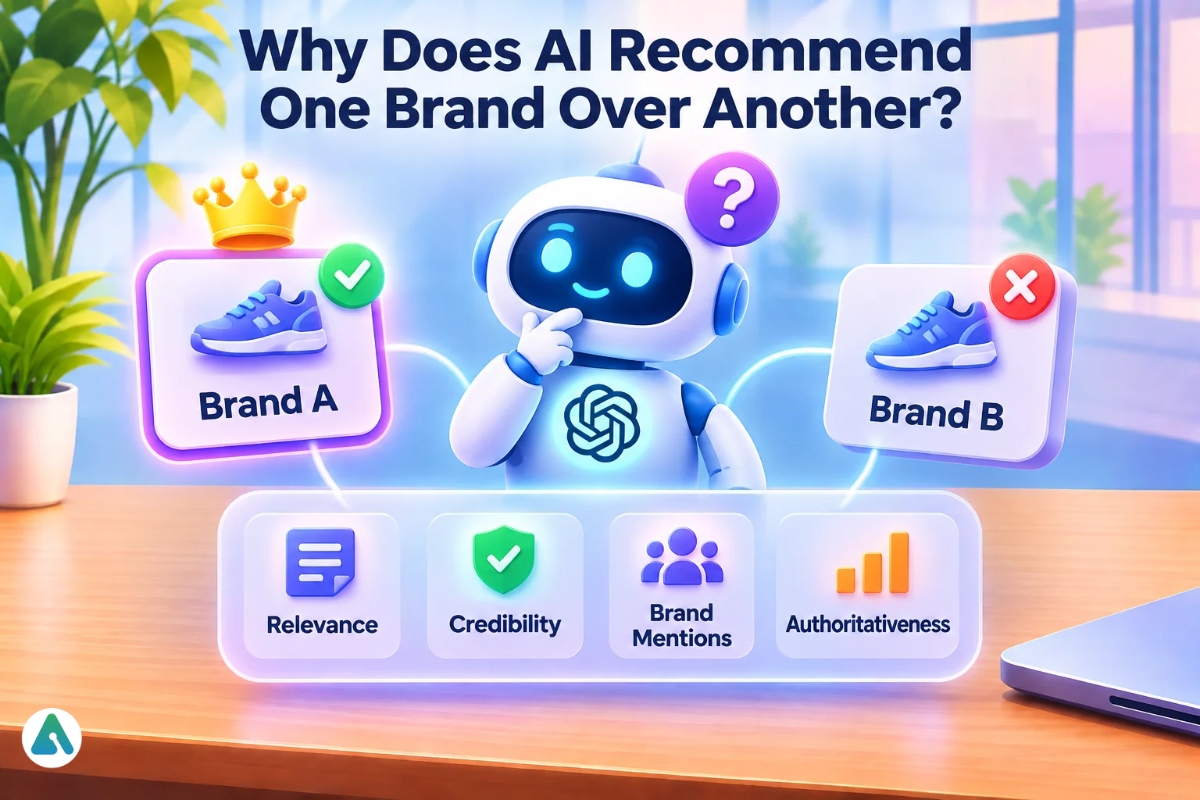
Why does AI recommend one brand over another?
It picks whichever option its sources tie most closely to the request. Ask for “the best CRM for a five-person agency” and the engine hunts for pages linking a product to that team size, budget, and workflow. Buyers rarely stop there. They add “cheaper” or “must work with Xero.” Those later turns often decide the sale, so cover common follow-up constraints on your pages too.
Recommendation logic stays private, so treat this as a working model. One likely wrinkle: when retrieved sources run thin or disagree, a model may fall back on its training. That tends to favor established names. Strong, consistent sources are your best defense.
In practice, the brands that get picked look alike in several ways. They have use-case pages that name the customer, the problem, and the result. They show a price, or at least a range. Their comparison pages admit where a rival fits better, which makes the rest of the page easier to believe. Their customer stories carry real numbers. Independent reviews describe them the way they describe themselves.
Which third-party platforms deserve your time?
The ones engines already quote in your category. Pew found Wikipedia, YouTube, and Reddit together supplied 15% of the sources in Google’s AI summaries. Whatever those pages say about you tends to become what the summary says.
Run a source audit first. Ask ChatGPT, Perplexity, Gemini, and Copilot about your category and your brand, then open every page they cite. Within an hour, you’ll know which outlets shape the conversation and whether their facts are current.
From there, tidy up:
YouTube: publish demos, side-by-side comparisons, expert explainers and customer stories. Ahrefs counted a mention whenever a brand name appeared in a video’s title, description, or transcript. So say your name out loud.
Review sites and directories: correct old pricing, retired features, and stale descriptions.
Reddit and forums: these threads matter more than most brands think. Tinuiti data put Reddit at 44% of social-media citations in Google AI Overviews in January 2026. That holds even as Reddit’s own search traffic shrinks. Join relevant threads as an identified company representative, answer honestly, and expect communities to reject anything resembling an ad.
Wikipedia: only notable companies qualify, and its conflict-of-interest rules discourage writing about yourself. Earn coverage elsewhere first.
How do you measure progress?
Score the three outcomes separately, then add revenue. Each one moves on its own.
Google’s generative AI reports in Search Console reached every site on August 31, 2026.
Source
What it shows
Limitation
Search Console generative AI report (Search)
Impressions in AI Overviews and AI Mode
Impressions only; no Gemini app data
Search Console generative AI report (Discover)
Appearances in Discover’s AI features, reported separately
Only for sites eligible for Discover
Bing Webmaster Tools AI Performance
Citations in Copilot, Bing AI summaries and select partners, with cited pages and grounding queries
No clicks; channels can’t be separated
Analytics referrals
Visits from domains like chatgpt.com and perplexity.ai
Misses mentions that produced no click
Third-party tools (Ahrefs Brand Radar, Semrush AI Visibility Toolkit, Profound)
Share of voice across engines at scale
Sampled prompts; methods differ; extra cost
In Bing’s report, grounding queries show which questions pull you into Copilot answers.
Score your prompt tests
Each month, run 15 to 20 buyer-style prompts across ChatGPT, Perplexity, Gemini, Copilot and AI Mode. Mix category, comparison, problem, and branded questions. Add a follow-up like “it needs multi-state payroll,” since later turns often change the answer. Then calculate:
Mention rate = prompts naming your brand ÷ total prompt runs × 100
Citation rate = prompts citing at least one of your URLs ÷ total prompt runs × 100
Recommendation rate = prompts naming you as a top pick ÷ total prompt runs × 100
Once you log rivals too, the same sheet yields AI share of voice, the slice of all brand mentions that belongs to you.
Connect visibility to revenue
Build an analytics segment for AI referrers and track its conversions by landing page.
Add an “AI assistant (ChatGPT, Perplexity, etc.)” option to your “How did you hear about us?” field.
Watch branded search impressions in Search Console; people who meet you in an AI answer often search your name later.
What can a small business do on a tight budget?
Go narrow. Market leaders own broad prompts like “best CRM” because the whole web discusses them. A small company can still own a narrow question, such as “CRM for a five-person landscaping business.” Publish the sharpest, best-sourced answer to it.
There’s some research support here: in the Princeton tests, citing sources lifted lower-ranked pages more than top-ranked ones. Local businesses see a similar opening, as local SEO in the AI era rewards problem-focused depth over link volume.
Use the 30-day checklist in the final section. If you only have a few hours a week, stretch it over three months. Spend the time you save on what small firms do best: detailed customer stories and real relationships with niche or local press.
None of this needs paid tools. A spreadsheet and the free Google and Bing webmaster reports cover the measurement.
How do you stay cited once you get there?
Citations don’t stay put. In SE Ranking’s research, repeated identical AI Mode queries returned the same URLs only about 9.2% of the time. Holding your place means keeping each page the freshest, most specific source on its topic, month after month.
Holding on takes some upkeep. Put a date on every figure (“as of May 2026”) and swap it when newer data lands. Only touch the “updated” stamp when the facts change. Recheck your key pages whenever OpenAI, Google, or Perplexity revise their crawler docs. Keep one page per question so you’re not splitting signals across near-duplicates. And read your prompt log by quarter. A bad week rarely means anything broke.
Which tactics waste money?
Anything sold as a guaranteed AI ranking lever. Google’s own guide rules out llms.txt files, content chunking, AI-specific rewrites, and inauthentic mentions as requirements for its generative features.
The llms.txt file draws the most questions. Google treats it like any other text file. An Ahrefs analysis of 137,000 domains found 97% of llms.txt files drew no AI-bot requests in the month studied. Where it does earn a place is narrower: AI coding agents reading developer documentation. If you publish docs for developers, keep one. Otherwise, skip it.
Be just as wary of anyone promising a spot in ChatGPT or Perplexity. Neither shares a ranking formula, so nobody outside can guarantee placement. Treat that pitch as a red flag when you judge an agency’s value.
Where should you start?
Work out why your brand is missing before you change anything. Blocked crawlers call for a technical fix. Missing recommendations point to thin outside coverage. Wrong facts mean you need to correct the sources engines cite. Matching the fix to the symptom saves months of effort spent on the wrong problem.
Symptom
Likely cause
First move
Absent even for branded prompts
Blocked crawlers or indexing gaps
Check robots.txt, firewall rules, and indexing reports
Named for your brand, absent from “best X” prompts
Thin third-party coverage
Earn roundup spots, publish original data, pitch expert commentary
Replies quote wrong prices or old features
Stale profiles or a name shared with another company
Update listings, add a consistent descriptor, ask publishers to correct facts
Named, but with a warning attached
Recurring complaints in reviews or forums
Fix the issue, publish the fix, reply to reviewers
A rival’s page cited on your topic
Your page lacks specific, sourced facts
Add data, named sources, and a direct answer up top
Most brands land in more than one row. Work from the top down, since access problems cancel everything below them.
A 30-day starting checklist
Week 1: access
Review robots.txt rules for the search and training bots covered earlier
Check CDN and firewall settings, then confirm bot visits in server logs
Confirm Google and Bing have indexed your key pages
Week 2: baseline
Open both Search Console generative AI reports and Bing’s AI Performance report
Create an analytics segment for AI referrers and tie it to conversions
Run your first scored prompt test
Week 3: on your site
Align your name, descriptor, and category across pages and markup
Add sourced data, fit statements, and a direct opening answer to your five most important pages
Publish or refresh use-case pages
Week 4: off your site
Correct outdated review, directory, and profile listings
Pitch three to five roundups, podcasts, or YouTube creators
Plan one original dataset others can cite
Rerun the prompt test on day 30, then monthly.
FAQs
Q. How long does it take to appear in generated answers?
No platform gives a timeline. Access fixes can register within days, but the outside coverage behind most recommendations usually builds over months.
Q. Do Google Ads help my brand appear in AI Overviews?
Barely, on current data. Ahrefs found branded ad spend and ad traffic correlated only weakly with AI Overview mentions, at about 0.22.
Q. Is GEO a separate discipline from SEO?
Not in Google’s eyes; its guide calls optimizing for AI features “still SEO.” The weighting shifts, though. Off-site coverage and source accuracy count for more than most SEO plans assume.
Q. Can you pay to appear in ChatGPT answers?
OpenAI does sell ads in ChatGPT and checks advertisers’ landing pages with a separate bot, OAI-AdsBot. Earning a spot among the cited sources still comes down to the work covered here.
Disclaimer: This article is based on independent research and publicly available information. we are not affiliated with any of the companies mentioned. The content is intended for informational purposes only, and AI features, pricing, and platform policies may change over time.
Tags:
Nimrah Khan
Nimrah Khan is a content strategist and writer at AIInsightsNews, specializing in translating complex AI and technology trends into clear, actionable insights. She combines strategic storytelling with data-driven analysis to help organizations and professionals understand emerging innovations, make informed decisions, and drive growth in a rapidly evolving digital landscape.