
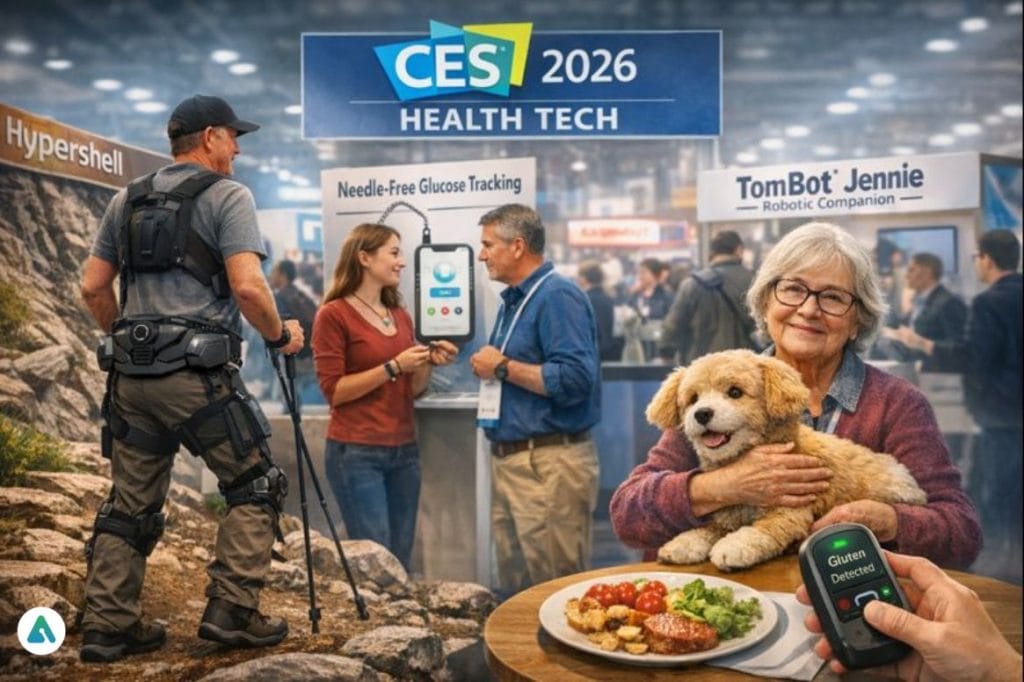
By the second afternoon of CES 2026, the health tech halls already felt heavy. Noise bounced off every wall. Demos looped endlessly. Crowds gathered, dispersed, and gathered again. Every booth promised to change the way people live longer, healthier lives. These goals are ambitious and many products may fall short, but the impact of this tech could be life-changing.
I spoke with Rena Goldman, Editorial Director at Everyday Health, who was navigating the CES chaos in person this year. She spent days walking the floor, sitting through demos, and talking directly with the people behind the devices. Her focus wasn’t on what sounded impressive in a pitch deck. It was on what products had potential in the real world.
What she kept coming back to was practicality. The health tech that worked didn’t scream for attention. It blended into everyday life, acknowledged its limits, and felt built for people who would actually use it—not just talk about it.
Exoskeletons That Finally Felt Wearable
We’ve heard for years about exoskeletons showing up at CES, but they often lived on the edges of the show floor—bulky, complicated, and more aspirational than practical. This year, it honestly felt different.
Devices like Hypershell didn’t look like medical equipment or sci-fi props. They looked wearable. Something you could imagine slipping on without any help.
Rena noticed that there were several companies debuting these devices:
“It’s not about doing the work for you. It’s about helping you go farther while staying active.”
These exoskeletons weren’t trying to replace human effort. They were helping reduce the toll that effort takes over time. On the floor, the use cases were surprisingly ordinary: hikers protecting their knees on long trails or workers who lift or stand for hours. Conversations weren’t about peak performance—they were about sustainability.
Compared to earlier CES appearances, the hardware was lighter and easier to adjust. Fewer straps. Fewer calibration steps. Less explanation needed. Some products were still bulky, especially for someone with mobility issues. They were easy to wear in the booth for a few minutes, but the real test is how they feel out in the real world – when hiking or riding a bike.
This year also highlighted some of the CES 2026 worst-in-show gadgets, showing the contrast between practical and overly ambitious devices.
Needle-Free Glucose Tracking, With Clear Boundaries
There were many different companies showcasing glucose tracking devices, including PreEvnt Isaac, a necklace that was needle-free
Rena was quick to clarify where devices like this fit—and where they don’t:
“These devices have the potential to spot trends, but they’re not substitutes for clinical testing.”
Walking the floor, she saw glucose wearables designed for people with diabetes or designed for lifestyle use. Isaac clearly falls into the lifestyle category. It isn’t meant to diagnose or treat. Its value lies in pattern recognition—how meals affect energy, how sleep changes glucose response, and how activity shifts things throughout the day.
What stood out is the ability to leverage companion apps to access data and trends quickly and over time, resulting in more meaningful interactions with care teams and the ability to use data to manage health conditions.
Robotic Pets That People Didn’t Laugh At

Mental health tech usually arrives at CES through screens—apps, dashboards, AI chat tools. CES 2026 quietly challenged that assumption.
TomBot’s Jennie, a six-pound robotic dog designed for seniors with dementia, didn’t rely on novelty to draw attention. It relied on familiarity.
Rena described what she saw plainly:
“Jennie provides companionship without the responsibilities of a real pet. In care homes, robotic pets are designed to help ease symptoms of depression and anxiety associated with dementia.”
Jennie responds to touch, makes recognizable sounds, and behaves like a real pet in a controlled way. That combination of predictability and “realness” matters in environments like assisted living and memory care, where routine and consistency reduce stress but changes avoid boredom.
On the show floor, the reaction was telling. People didn’t rush past. They slowed down. Watched quietly. Asked about real-world use, not just features. This wasn’t framed as the future of companionship. It was framed as a practical solution for places where live animals aren’t feasible. That grounded positioning made it impossible to dismiss.
Women’s Health Devices That Didn’t Oversell
Women’s health tech was more visible at CES 2026—but not louder. If anything, it was more restrained. Two devices stood out for how little they asked of the user.
Peri, a discreet wearable patch, focuses on perimenopause symptoms like hot flashes, night sweats, and sleep disruptions—issues that are often under-tracked or dismissed entirely. The goal is constant monitoring through a device rather than self-reporting. It’s creating something tangible that patients can bring into clinical conversations.
Petal, a long-term wearable sensor built into a bra, collects heart and hormonal data without demanding frequent interaction.
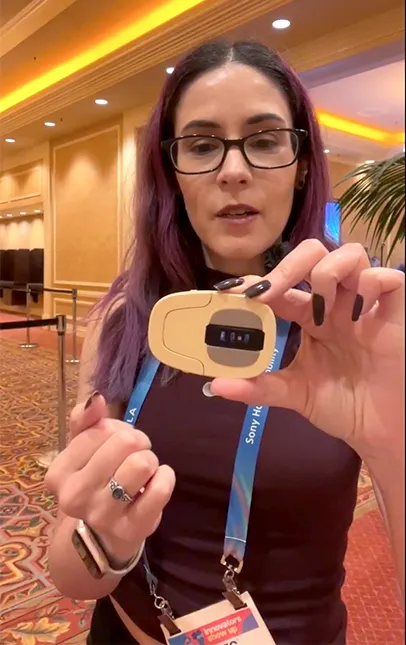
Rena emphasized that what made both work wasn’t complexity. It was subtlety. These devices didn’t ask users to change habits or check dashboards all day. They ran quietly in the background. At CES, that quiet design stood out far more than flashy displays ever could.
Small Tools With Immediate Value
Not every innovation at CES 2026 involved advanced sensors or complex platforms.

Allergen Alert, a handheld tester that detects common food allergens like gluten or dairy, did one thing—and did it quickly. For people with food sensitivities, that speed matters. It turns guesswork into certainty. It has the potential to change how and where people eat. On a show floor full of long explanations, this was a product that barely needed one.
What Stayed After the Noise Faded
By the last day of CES 2026, the halls were thinner. Noise dropped. Conversations slowed. That’s often when differences become clear.
The health tech that lingered wasn’t the most ambitious. It was the most thoughtful. Products that acknowledged limits. Devices that didn’t demand constant attention. Tools designed to support real routines instead of reshaping them entirely.
Rena summed it up this way:
“The best technology isn’t always the flashiest. It’s the kind that quietly makes life easier, safer, and more comfortable—whether that’s a robotic companion or an allergen tester.”
The health tech at CES 2026 wasn’t the biggest spectacle in the venue. It was skewed towards usefulness.
For more on the intersection of AI and health gadgets, check out CES 2026 AI trends in physical devices.
