
Roleplay doesn’t fall apart because the AI is “bad.”
It falls apart when the story finally gets good—and the bot forgets who you are.
If you’ve spent any real time roleplaying with AI, you’ve seen it happen. A strong opening. Consistent dialogue. Emotional momentum. Then suddenly the character contradicts itself, ignores established lore, or shifts into a polite, therapeutic tone that kills the scene instantly.
That frustration is exactly why so many people are searching for the best AI chatbot for roleplay in 2026.
Not the most popular app.
Not the one with the biggest ads.
The one that can hold a scene, remember context, and respond like a co-writer instead of a customer support bot.
This guide is written for experienced roleplayers—not AI tourists. It focuses on the things that actually matter in 2026: memory architecture, narrative awareness, filters, writing quality, and control. You’ll see honest strengths, real trade-offs, and clear recommendations based on how you actually roleplay.
Top AI Roleplay Chatbots for 2026 (Quick Comparison)
| Platform | Best For | Standout 2026 Feature |
|---|---|---|
| DreamGen | Long-form storytelling | Scenario Codex that prevents memory loss in long arcs |
| Nomi.ai | Emotional continuity | Semantic memory with months-long recall |
| Dippy AI | Casual & mobile RP | Best free, mobile-first experience |
| Janitor AI | Unfiltered freedom | Creative control for adult or gray-area RP |
| SillyTavern | Power users | Model swapping (Claude 4.5, Gemini 3 Pro, more) |
What Makes a Great AI Chatbot for Roleplay in 2026?
Most articles rush straight to tool lists. That’s a mistake. If you don’t understand the criteria, every recommendation sounds the same.
In 2026, a good AI roleplay chatbot needs five things.
1. Memory That Goes Beyond a Sliding Window
Most chatbots still rely on sliding context windows—forgetting the beginning of a conversation to make room for the end. That works for casual chat. It destroys roleplay.
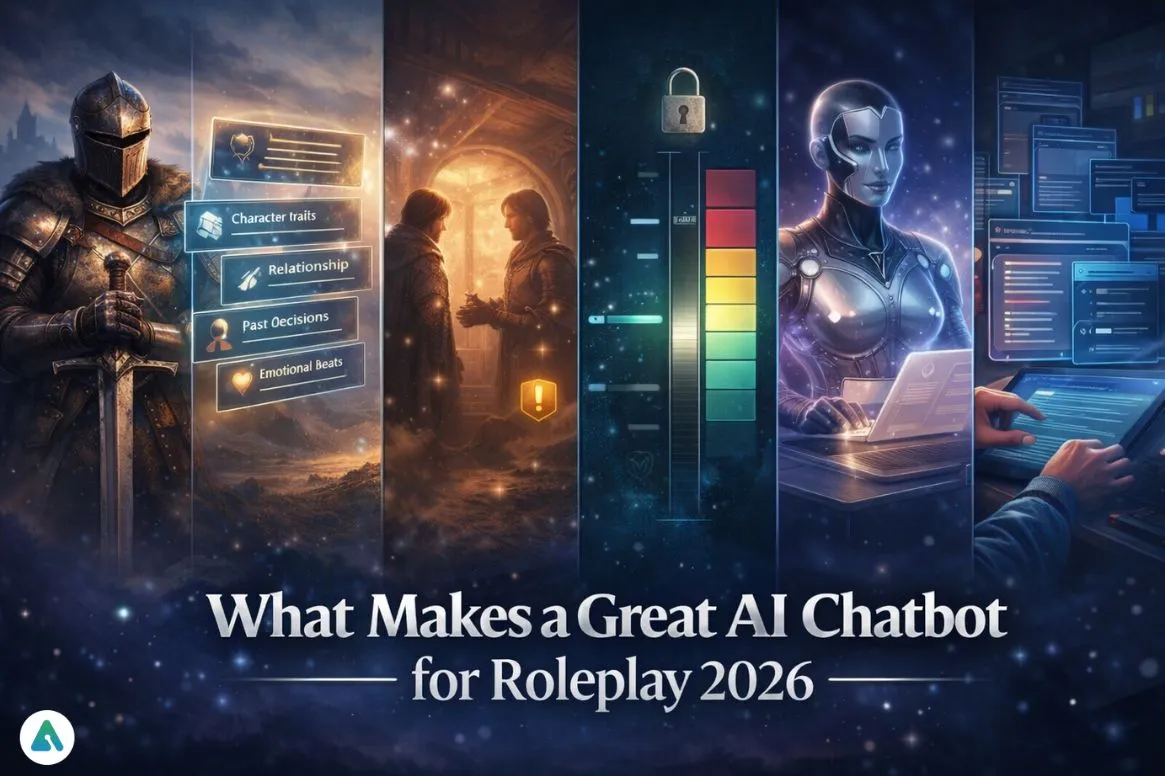
Strong roleplay bots preserve:
Character traits
Relationship dynamics
Past decisions
Emotional beats
Most users don’t notice memory limits until a scene gets good—and then it hurts.
2. Narrative Awareness
Roleplay isn’t just replying. It’s understanding:
Scene progression
Dialogue pacing
Consequences
When not to escalate
Dialogue pacing. Consequences. And not suddenly acting like a therapist mid-scene.
3. Filters With Gradation
Binary filters break immersion. The best platforms let you define boundaries instead of enforcing blanket refusals that interrupt scenes.
4. Writing Quality
You want prose that feels authored, not generated:
Natural dialogue
Varied sentence structure
Descriptive action without repetitive “slop.”
5. User Control
System prompts, author notes, character sheets, and memory tools matter far more than avatars or animations.
Deep Dive: Why These AI Roleplay Tools Win in 2026
DreamGen: The Writer’s Choice
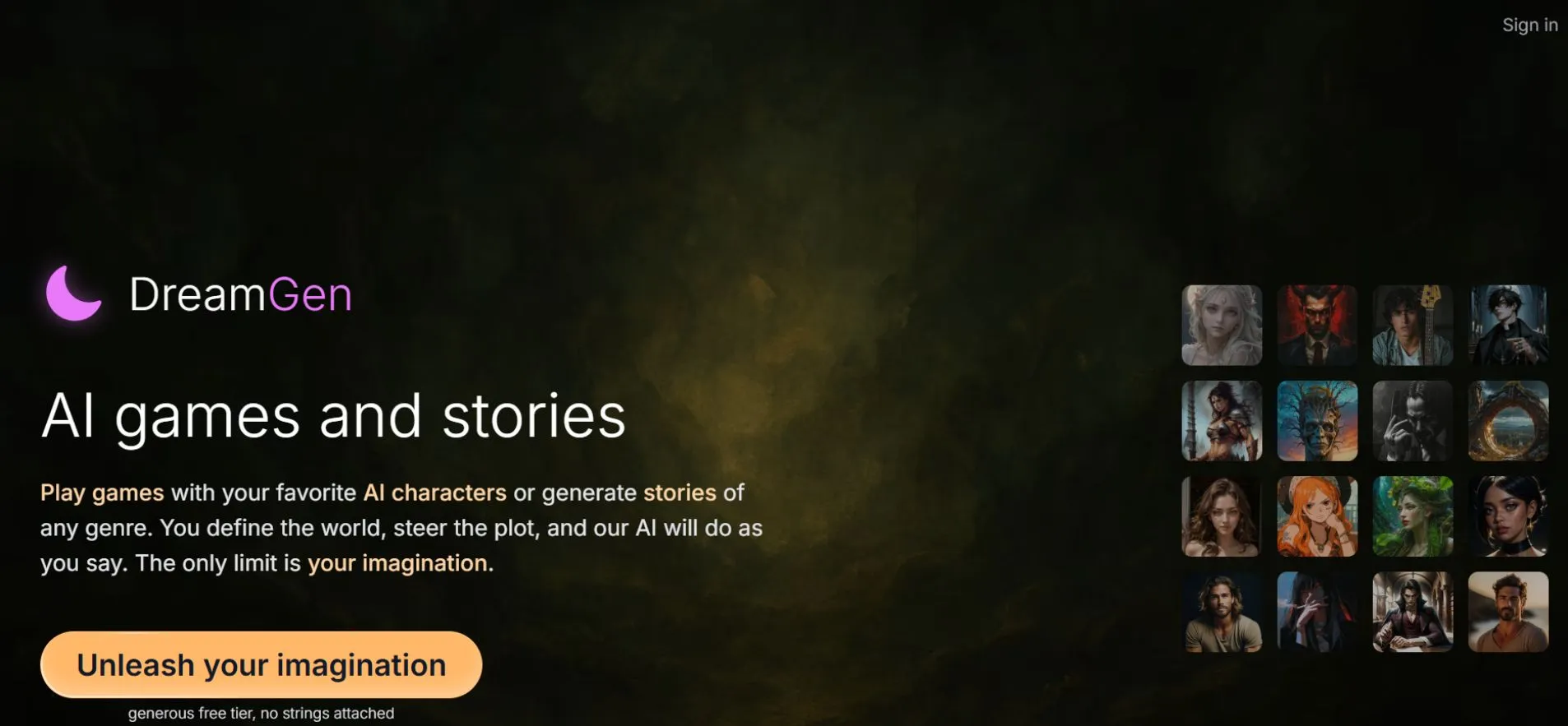
DreamGen has become the go-to platform for people who treat roleplay like co-writing a novel.
What sets it apart
DreamGen offers dual modes: standard chat and a story-writing mode. That distinction matters. Chat models tend to summarize. Story mode actually writes scenes.
The 2026 edge: Scenario Codex
The Scenario Codex functions like a permanent story bible. You can lock in:
World lore
Character fears
Relationship dynamics
Hidden motivations
If your knight is secretly a double agent, the AI doesn’t “forget” that five chapters later.
Yes, it’s popular. No, popularity alone doesn’t guarantee good roleplay—but here, the depth is earned.
Trade-offs
Not fully free
Slight learning curve
Best for: Long fantasy, sci-fi, and complex narrative roleplay
Nomi.ai: The Memory King
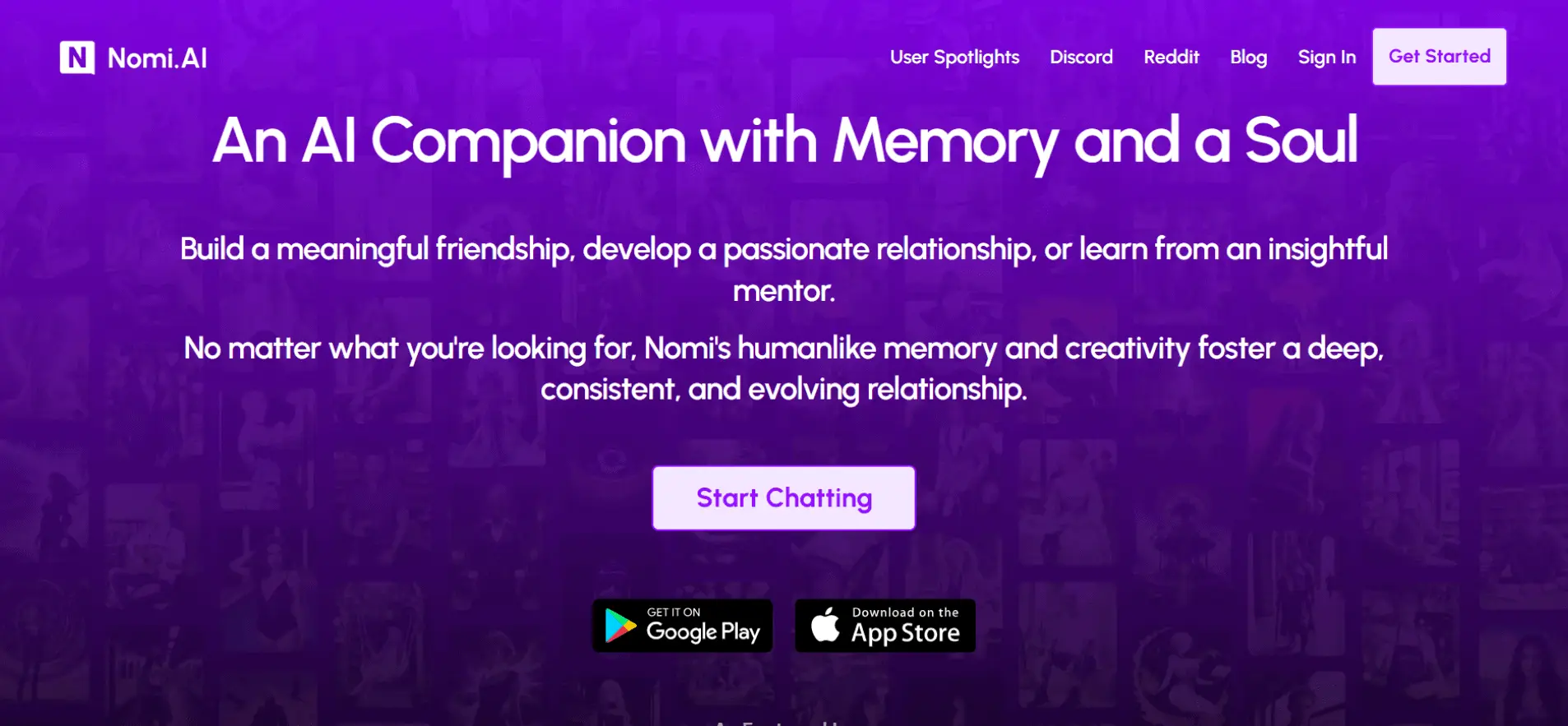
If your main frustration is the infamous “100-message amnesia,” Nomi is built to solve exactly that.
What makes it different
Instead of storing raw chat logs, Nomi uses semantic memory—summarizing and retaining meaning.
Why it matters in 2026
Nomi can reference:
Old emotional moments
Character preferences
Relationship shifts
Users regularly report the AI recalling details from conversations that happened months earlier, which is still rare across the industry.
Trade-offs
Less world-building flexibility than DreamGen
Focused more on emotional continuity than sprawling plots
Best for: Slow-burn RP, character bonding, long-term emotional arcs
Dippy AI: Best Free AI Roleplay Chatbot
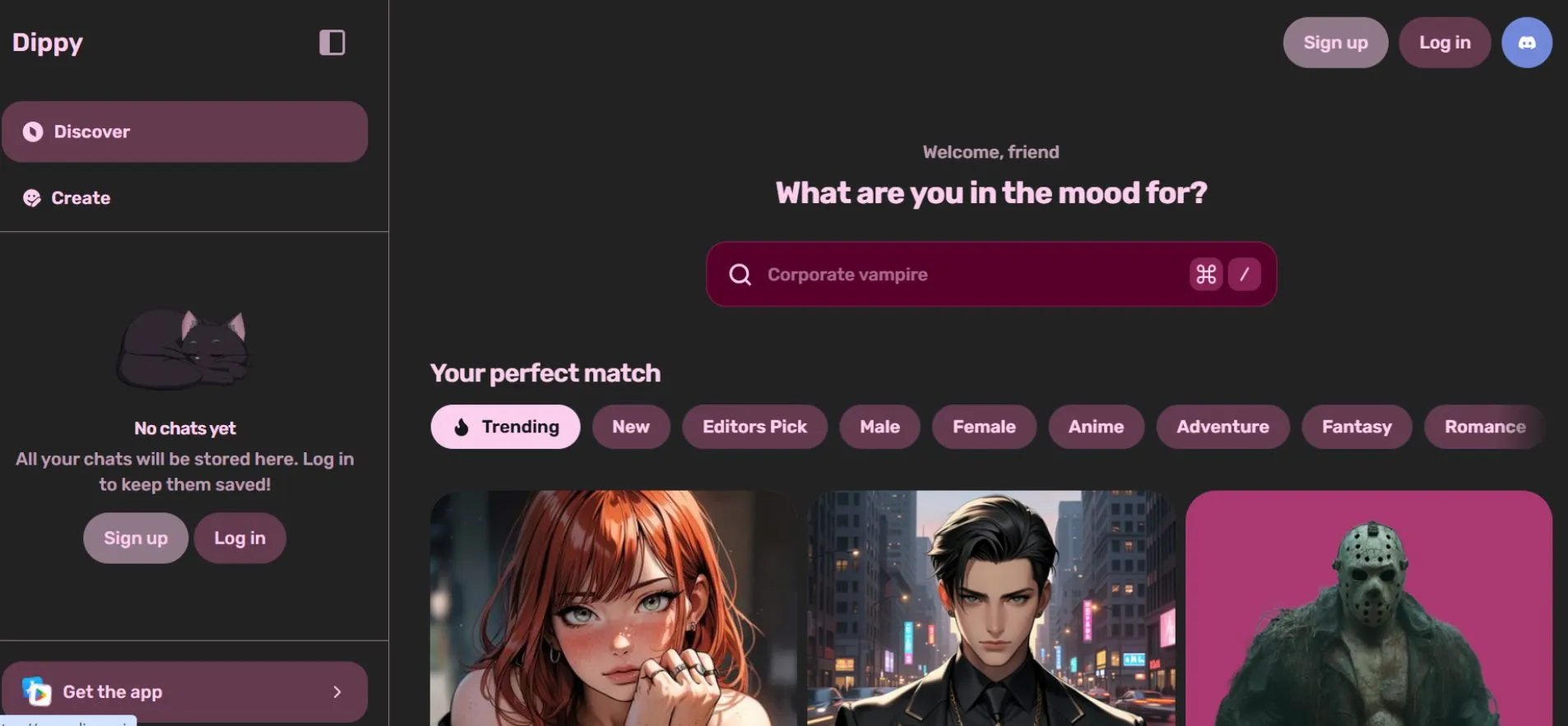
Dippy AI dominates the free, mobile roleplay niche.
Why do people use it
Unlimited free messages
Large community character library
Excellent mobile interface
The 2026 reality
Dippy understands how most people roleplay: short sessions, quick immersion, and fandom characters. It’s optimized for that use case.
Limitations
Memory is slimmer than DreamGen or Nomi
Less fine-grained control
Best for: Casual RP, fandom chat, mobile users
Janitor AI: Unfiltered Creative Freedom
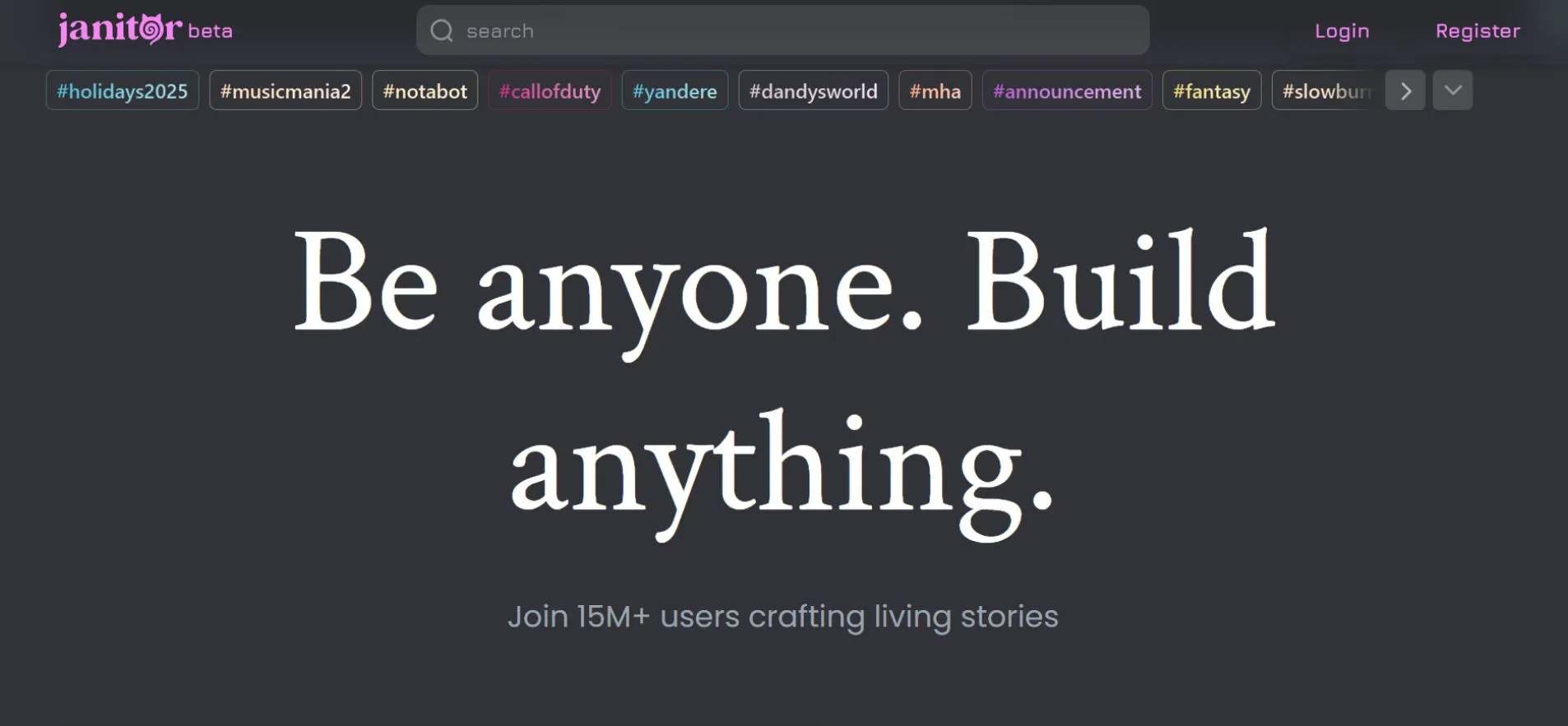
Janitor AI remains popular because it offers something many platforms avoid: creative sovereignty.
What it offers
Minimal filtering
Community-created bots
Support for adult, dark, or morally gray roleplay
Why it still matters in 2026
Janitor AI is one of the easiest ways to create and share uncensored characters for free.
Trade-offs
Memory quality depends heavily on bot design
Writing quality varies widely
Best for: NSFW RP, experimental stories, custom characters
SillyTavern + External APIs: The Power User Setup
If you want the absolute best writing quality, this is the ceiling.
How it works
SillyTavern is an interface. You connect it to AI models via APIs (such as OpenRouter or direct providers).
The 2026 model landscape
Claude 4.5 is widely regarded as the current prose king—excellent subtext, restraint, and dialogue that doesn’t feel overwritten.
Gemini 3 Pro offers massive context windows (over 1–2 million tokens), allowing entire story universes to stay in active memory.
This setup gives you control that no single platform can match.
Trade-offs
Requires setup
API usage costs money
Not beginner-friendly
Best for: Writers, advanced roleplayers, maximum control
The 2026 Roleplay Reality Check
Even the best AI tools can fail if handled poorly.
Nothing kills immersion faster than a medieval duel finally gaining momentum—steel clashing, stakes rising—only for the AI knight to pause and say, “I encourage you to resolve this conflict through peaceful dialogue.”
That moment tells you everything you need to know about the wrong model for roleplay.
Common Mistakes That Break Immersion
The “Slop” Trap
Every model has repeated phrases. In 2026, experienced users actively ban overused words using Author’s Notes.
Weak System Prompts
“Stay in character” is meaningless. Effective prompts look like:
Filter Friction
If the AI constantly lectures during conflict scenes, you’re likely using a generalist model. Narrative-focused models fix this instantly.
A Small Setting That Makes a Big Difference: Temperature
Most platforms never explain this.
0.6–0.8 → Best for consistency and long arcs
0.9–1.1 → More creativity, higher drift risk
Above 1.1 → Fun chaos, poor continuity
If a character suddenly feels “off,” it’s often creativity turned too high—not memory failure.
Verdict: Which AI Chatbot for Roleplay Should You Choose?
Want it to just work on your phone?
→ Dippy AI or Nomi.aiWriting a deep, persistent fantasy world?
→ DreamGenCreating uncensored bots for free?
→ Janitor AIChasing the best possible prose and control?
→ SillyTavern with Claude 4.5
Good roleplay doesn’t feel impressive. It feels effortless.
FAQs
Q. What is the best AI chatbot for roleplay in 2026?
The best AI chatbot for roleplay in 2026 depends on your style. DreamGen is best for long-form storytelling, Nomi.ai excels at long-term emotional memory, Dippy AI is the best free option, and SillyTavern, paired with Claude 4.5 offers the highest writing quality and control for advanced users.
Q. Which AI roleplay chatbot has the best memory?
Nomi.ai currently offers the best long-term memory for roleplay. It uses semantic memory instead of raw chat logs, allowing it to remember character traits, emotional moments, and relationship dynamics across conversations lasting weeks or months.
Q. Is there a free AI chatbot for roleplay?
Yes, Dippy AI and Janitor AI both offer free AI roleplay options. Dippy AI is best for casual and mobile-friendly roleplay, while Janitor AI provides more creative freedom and fewer content restrictions, especially for custom or adult roleplay scenarios.
Q. What AI model is best for roleplay writing quality?
As of 2026, Claude 4.5 is widely considered the best AI model for roleplay writing quality. It produces more natural dialogue, better pacing, and stronger emotional subtext compared to most general-purpose models, especially when used through platforms like SillyTavern.
Q. Why do AI roleplay chatbots break character?
AI roleplay chatbots usually break character due to limited memory, overly strict content filters, or high creativity settings (temperature). Using structured character prompts, lower temperature settings, and platforms with persistent memory significantly reduces character drift.
Final Thoughts
There is no perfect, unlimited, free AI roleplay chatbot in 2026.
What does exist are tools that excel at specific styles of roleplay—if you choose them honestly. The best experiences come from matching the platform to your intent, understanding memory limits, and taking control of prompts and settings.
The future of AI roleplay isn’t about chatting with a bot.
It’s about writing with a co-author who remembers.
Related: Janitor AI Alternatives (2026): Best Memory & No Drift
| Disclaimer: This article is for informational purposes only. AI Insights News is not affiliated with, sponsored by, or endorsed by any of the platforms mentioned. All product names and trademarks belong to their respective owners. Features and behavior of AI tools may change over time, and user experiences may vary. |
