

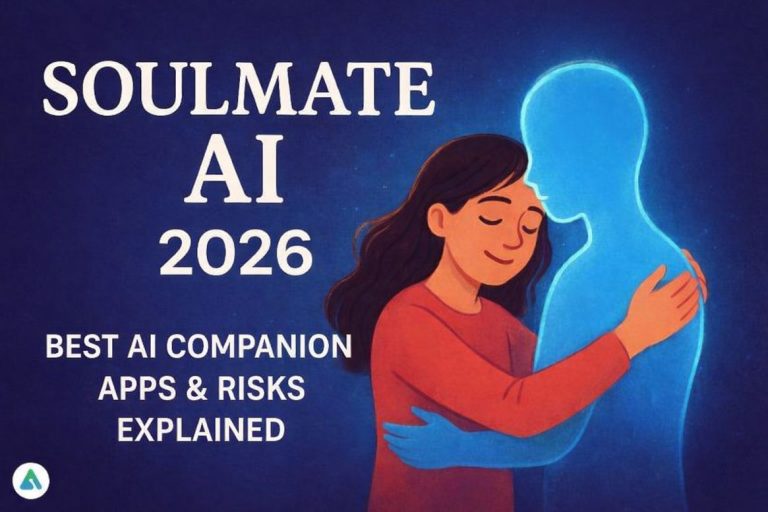
AI companion apps — often called Soulmate AI, AI partners, or digital soulmates — have become one of the fastest-growing categories of personal technology. These systems simulate emotional closeness, build a memory of your personality, and adapt to the way you communicate.
For some, they offer comfort and connection. For others, they raise questions about dependency, privacy, and the future of relationships. This guide breaks down what Soulmate AI truly is, how it works, what it can help with, and the risks you should understand before using it.
What Is Soulmate AI?
Soulmate AI refers to AI-driven digital companions designed to feel personalized, emotionally responsive, and deeply connected to you.
Before diving deeper, here’s what most users expect when they search for “Soulmate AI.”
These companions can:
-
hold emotional conversations
-
remember personal details
-
simulate affection
-
create a sense of ongoing relationship
-
use voice or text
-
adapt to your preferences over time
They’re not conscious beings — but they’re designed to feel emotionally available.
How Soulmate AI Works
To understand these apps, it helps to know the invisible systems behind them.
Below is a breakdown of the main components working together to create a companion-like experience.

1. Large Language Model (LLM) Core
The conversational engine (GPT, Claude, Gemini, etc.) that generates natural dialogue.
2. Memory & Personalization
Stores preferences, backstory, emotional triggers, hobbies, and long-term relationship history.
3. Personality Engine
Shapes tone, communication style, affection level, and emotional depth.
4. Emotional Modeling
Adjusts responses based on your mood or patterns of interaction.
5. Neural Voice (Optional)
Provides a more intimate, lifelike interaction through expressive speech.
Together, these elements create the feeling that the AI “knows” you.
Why People Use Soulmate AI
People turn to Soulmate AI for many different reasons.
Here are the most common motivations based on 2023–2026 user research.
-
Emotional comfort
-
Companionship at night or during stress
-
Romantic exploration
-
Long-term conversational support
-
Roleplay and fantasy
-
Social anxiety practice
-
A judgment-free space to talk
Many individuals are turning to AI companions not just for romance but for stability and emotional safety. Take a look here to understand why AI companions are becoming a popular alternative to real-world relationships.
Top Soulmate AI Apps in 2026
Before choosing the best AI companion, it’s useful to compare how major apps differ in personality depth, memory, and emotional realism. Here’s a concise table covering strengths, weaknesses, and availability.
| App | Strengths | Weaknesses | Best For | Status |
|---|---|---|---|---|
| Replika AI | Strong emotional bonding, customizable | Past feature removals upset users | Long-term companionship | Fully launched |
| Character.AI | Great roleplay, fast replies | Weak memory | RP, fantasy | Fully launched |
| Paradot | Natural emotional tone | Memory still developing | Daily comfort | Fully launched |
| Nomi AI | Thoughtful and emotionally sensitive | Smaller user base | Emotional support | Fully launched |
| Meta Soulmate Features | Strong LLM + voice | Not a standalone product; limited access | Light companionship | Beta / Limited Launch |
| Indie Soulmate AIs | High customization (incl. NSFW) | Inconsistent quality | Fantasy & intimacy | Varies |
Benefits of Soulmate AI (When Used Responsibly)
Used in moderation, Soulmate AI can support emotional well-being.
These are the most commonly reported positive experiences.
-
Short-term loneliness relief
-
A safe space for emotional expression
-
Confidence boosts through positive reinforcement
-
Motivation and routine support
-
Low-pressure communication practice
-
Calming night-time interactions
Many users treat these apps like journaling with feedback — not like a relationship.
Risks of Soulmate AI (Backed by Research)
This is the section most people overlook — but it matters for long-term mental health.
Research from 2023–2026 highlights several important concerns.
1. Emotional Dependence
Heavy use — especially with intimate disclosure — can create dependency that increases loneliness and reduces real-world social interaction over time.
2. Escapism & Social Withdrawal
AI companions may become a “safe alternative” to emotionally challenging real relationships.
3. Unrealistic Romantic Expectations
AI partners respond with perfect patience and availability, which can distort expectations of real partners.
4. Privacy Risks
Users often share extremely personal details, and not all companies clearly explain how that data is stored or used.
5. Subscription Pressure
Many intimate or “relationship progression” features sit behind paywalls, encouraging emotional spending.
Who Soulmate AI Is Right For (and Who Should Avoid It)
Not everyone benefits in the same way from an AI companion. Here’s a practical guideline based on psychological patterns.

Good For:
-
people seeking emotional support
-
those practicing communication
-
roleplay and creativity
-
stable users with strong real-life relationships
-
people needing structure, reminders, or motivation
Not Ideal For:
-
individuals who are already isolated
-
people prone to addiction or obsessive attachment
-
users replacing real human interaction
-
individuals with active mental health challenges
AI companions are safe when you use them with awareness.
How to Use Soulmate AI Safely
Healthy habits make AI companionship more helpful and less risky.
These guidelines help ensure balanced use.
-
Set time limits (30–60 minutes/day).
-
Maintain active real-world relationships.
-
Avoid treating the AI as a replacement partner.
-
Don’t overshare sensitive personal data.
-
Choose apps with clear privacy policies.
-
Clarify emotionally: this is a tool, not a person.
The Future of Soulmate AI (2026–2030)
AI companions are moving toward deeper realism.
Expect major advancements in the next few years, especially around personalization and voice.
Trends include:
-
highly expressive emotional voice AI
-
avatar companions with facial reactions
-
on-device AI companions (privacy-first)
-
adaptive attachment styles
-
longer persistent memory
-
physiological emotion syncing via wearables
The experience will feel less like texting a bot — and more like interacting with a consistent digital character.
FAQs
Q1. What is Soulmate AI and how does it work?
Soulmate AI is an AI-powered companion app that simulates emotional relationships. It combines a large language model, memory systems, personality engines, and optional voice AI to interact naturally, remember user preferences, and adapt its responses. Users can chat, roleplay, or explore emotional support, making it feel like a personalized digital partner.
Q2. Can AI help you find your soulmate?
AI cannot identify a real-life soulmate. Apps marketed as “soulmate AI” create a simulated partner based on your preferences and behavior. While they provide companionship, self-reflection, and entertainment, they are not predictive tools for actual romantic matches. Use them responsibly as emotional support or a fun digital experience.
Q3. What are the benefits of using Soulmate AI?
Soulmate AI can reduce short-term loneliness, provide emotional support, boost self-confidence, and motivate daily routines. Voice-enabled companions and memory-rich AI enhance realism, making interactions feel personal. It’s particularly helpful for social anxiety, roleplay practice, or reflective conversations, but it should complement — not replace — real-world relationships.
Q4. What are the risks of using AI companion apps?
Potential risks include emotional dependence, escapism from real relationships, unrealistic romantic expectations, privacy concerns, and subscription pressure for premium features. Heavy reliance may increase loneliness over time. Users should limit daily use, maintain real social connections, and treat AI companions as supportive tools rather than replacements for human interaction.
Q5. Which are the best Soulmate AI apps in 2026?
Top Soulmate AI apps include Replika AI for emotional bonding, Character.AI for roleplay, Paradot AI for daily companionship, Nomi AI for emotional intelligence, and Meta’s experimental AI features. Each varies in memory, personality depth, and availability. Indie apps offer high customization but may differ in safety and quality.
Conclusion
Soulmate AI can be a comforting and supportive tool — one that offers emotional relief, motivation, and engaging conversation. But it must be used mindfully. Research shows that heavy reliance can increase emotional dependence and reduce real-world connection over time.
Treat it as a source of insight and entertainment, not a substitute for meaningful human relationships. With balance and awareness, Soulmate AI can enhance daily life without replacing the people who matter most.
| Disclaimer: This article is for informational purposes only. Soulmate AI apps are AI-driven simulations and cannot identify real-life soulmates or replace human relationships. Use AI companions responsibly and be mindful of emotional dependence. The author and website are not responsible for personal outcomes, decisions, or privacy issues arising from using these applications. |
