


If you’ve searched for “AI companion,” you’ve probably noticed something unusual:
People aren’t all looking for the same thing.
Some want a friendly chatbot to talk to.
Others want to understand Zoom’s AI Companion.
Others want a robot that can live in their home.
And many are just trying to figure out whether AI companions are “real,” “safe,” or even worth paying for.
This broad curiosity reflects a major shift:
AI companions are no longer science fiction—they’re becoming part of everyday emotional, social, and work life.
By 2026, AI companions will have evolved far beyond text-based chatbots. They’re multimodal, emotionally adaptive, and capable of supporting users through conversations, tasks, and even long-term memory profiles. This guide breaks down every dimension of the topic with a mix of authoritative insight and straightforward explanations, helping you understand how AI companions work, what they cost, and where the technology is heading next.
What Is an AI Companion?

An AI companion is a digital entity—powered by artificial intelligence—designed to interact with you in a personalized, human-like way. Unlike a standard AI assistant (which helps you complete tasks), an AI companion’s primary function is engagement, including:
- conversation
- emotional support
- personalized recommendations
- entertainment
- long-term relationship building
- presence in daily life
AI companions exist in several forms:
- Apps (e.g., emotional AI chatbots)
- Virtual avatars
- Wearable AI devices
- Home robots
- Workplace AI companions (e.g., Zoom AI Companion)
The key distinction:
AI companions are built not just to answer questions but to connect, respond, remember, and adapt.
Why People Use AI Companions
A 2024 Pew Research study found that 1 in 4 adults interact with AI for emotional or conversational support. Reasons include:
- Feeling lonely or stressed
- Wanting a judgment-free conversation
- Practicing social skills
- Seeking motivation
- Exploring personalized learning
- Entertainment
AI companions fill a psychological niche once occupied by forums, blogs, or niche communities—but with far more personalization.
How AI Companions Work (The Technical Breakdown)
Understanding AI companions requires looking beyond the “chatbot” label. Modern companions are complex systems composed of four distinct layers working in unison to create a sense of presence.
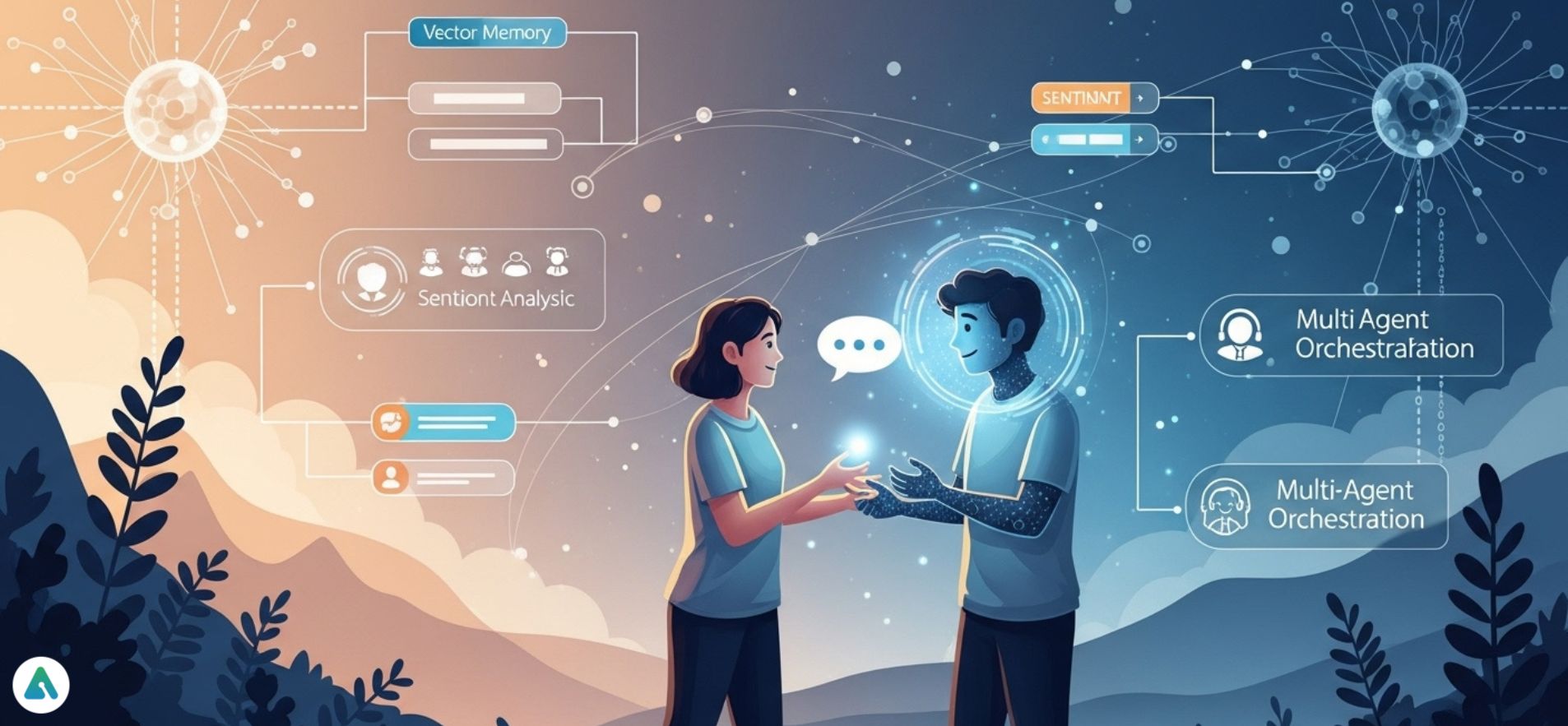
Large Language Models (The “Brain”)
At the core is the Large Language Model (LLM). This is the engine that generates text and understands logic. By 2026, we will have moved past simple text-prediction into reasoning-heavy models.
-
Technology: Advanced Transformers (e.g., GPT-4o, Claude 3.5, LLaMA 3.1, Gemini 1.5).
-
Function: The LLM handles the syntax, grammar, and general world knowledge. It decides what to say, but not necessarily how to feel about it.
Contextual Memory Systems (RAG & Vectors)
The biggest differentiator between a standard chatbot (like early ChatGPT) and a “companion” is memory. Companions use Vector Databases and Retrieval-Augmented Generation (RAG) to remember you.
-
How it works: When you tell the AI, “My dog’s name is Buster,” the system converts that fact into a mathematical vector and stores it in a long-term database (e.g., Pinecone, Milvus).
-
Recall: Weeks later, if you mention “walking the dog,” the system queries that database, retrieves “Buster,” and injects it into the conversation context before generating a reply. This creates the illusion of a continuous relationship.
Emotional Intelligence Layer (Sentiment Analysis)
Before the AI responds, your input passes through a specialized Sentiment Classification Layer.
-
Analysis: The AI tags your message with emotional markers (e.g.,
User: Frustrated,Urgency: High,Topic: Work). -
Tone Adjustment: The system creates a “system prompt injection” that instructs the LLM to adjust its tone.
-
Input: “I had a terrible day.”
-
System Instruction: [User is sad. Adopt an empathetic, soft tone. Do not offer solutions yet; offer listening.]
-
Output: “I’m so sorry to hear that. Do you want to vent about what happened?”
-
Native Multimodal Interaction (Voice & Vision)
In previous years, AI used “Speech-to-Text” (transcribing your voice, processing text, then reading it back). In 2026, top-tier companions use Native Audio Models.
-
The Shift: The model processes raw audio waveforms directly. It can hear tonality—detecting if you are sarcastic, crying, or whispering—and can respond with laughter, pauses, or whispers in real-time, with near-zero latency.
The “Agentic” Orchestrator
Modern companions are not just one AI; they are often a “Multi-Agent System” managed by an Orchestrator.
-
The Orchestrator’s Job: It acts as a traffic cop for your request.
-
User: “I’m sad, and also, can you schedule a therapy appointment?”
-
Orchestrator: Splits the request.
-
Agent A (Emotional): Handles the “I’m sad” validation.
-
Agent B (Task): Connects to your calendar/email to find appointment slots.
-
Final Output: Combined response addressing both needs.
-
Types of AI Companions (Comprehensive Classification)
To cover the full scope of the keyword “AI companion,” we break it into major categories.
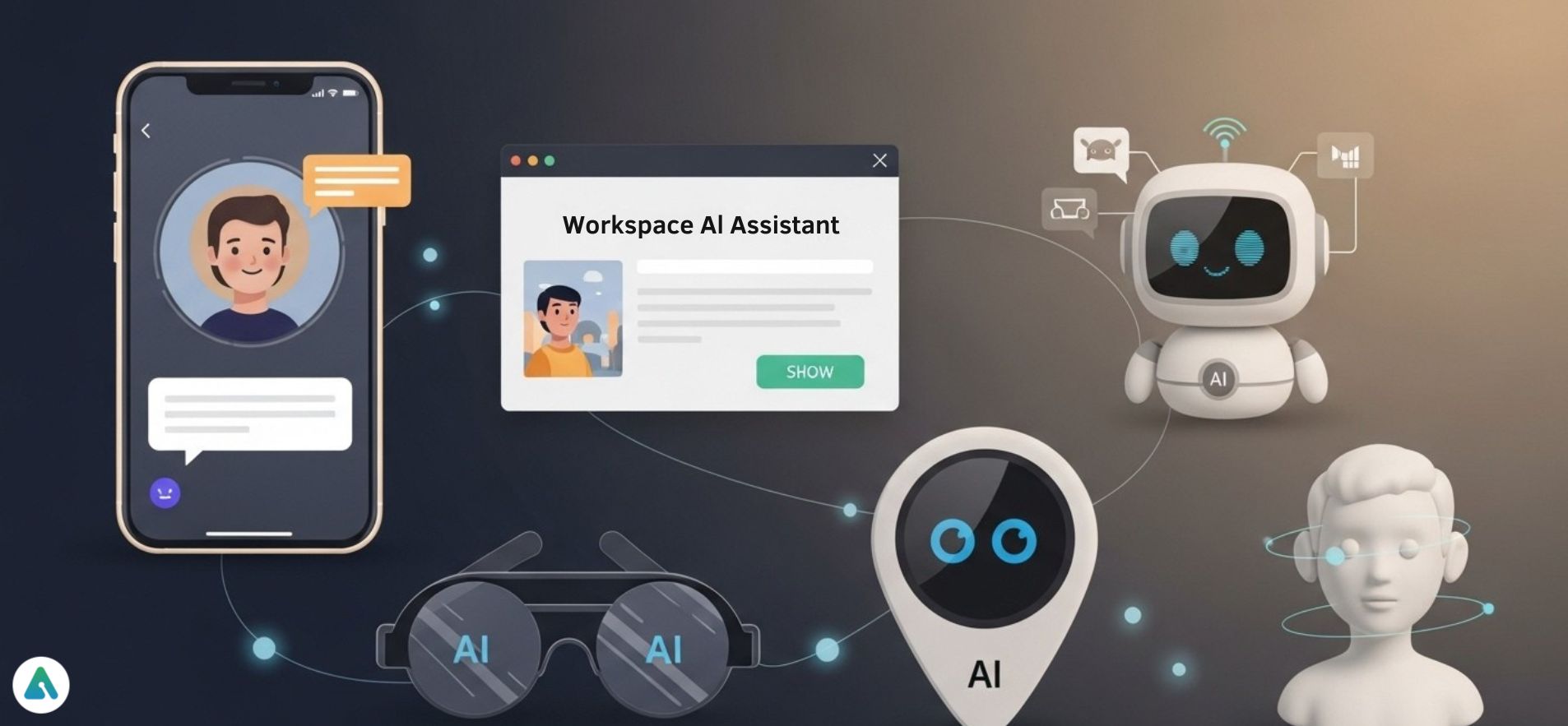
AI Companion Apps
These are the most common forms of AI companions. They live on your phone or browser and focus on conversation + emotional interaction.
Core features include:
- Chat
- Personality templates
- Voice calls
- Memory
- Relationship modes
- Journaling
- Role-play
- Therapeutic-style prompts
- Image or avatar generation
AI Work Companions (e.g., Zoom AI Companion)
These help with productivity and collaboration:
- meeting summaries
- action items
- drafting emails
- answering questions about work context
- brainstorming
They are not “emotional companions” but companions for workflow.
AI Companion Robots
Physical robots designed for companionship, often with:
- facial expression screens
- movement
- spatial awareness
- voice interaction
- object recognition
Examples include robot pets, humanoids, and domestic assistance robots.
Wearable AI Companions
Devices you carry or wear that provide constant support.
These include:
- smart pins
- pendant voice assistants
- augmented reality glasses
- hybrid AI wellness monitors
Avatar-Based AI Companions
These live inside apps, VR worlds, or AR environments.
You may see them as:
- 3D models
- animated characters
- hyperrealistic faces
- custom-designed partners or friends
Multi-Agent Personal Companions
A new trend (2024–2026):
Your AI companion is not a single agent—it’s a team of mini agents working together to anticipate needs.
This is the direction the industry is moving in 2026–2030.
AI Companion vs. AI Assistant
People often confuse AI companions with AI assistants, but they serve different purposes.
Here is a simple comparison:
Purpose
| Type | Main Goal |
| AI Companion | Emotional engagement, conversation, support |
| AI Assistant | Productivity, task execution, and information |
Interaction Style
| Type | Interaction |
| AI Companion | Personalized, relational, emotional |
| AI Assistant | Functional, direct, goal-oriented |
Memory & Personalization
| Type | Memory Level |
| AI Companion | Deep long-term memory (preferences, emotions) |
| AI Assistant | Light or no long-term memory |
Examples
- AI Companion: Replika-style apps, custom emotional agents, robot companions
- AI Assistant: Google Assistant, Microsoft Copilot, Siri, Zoom AI Companion
Framework Summary
If the primary goal is connection, it’s an AI companion.
If the primary goal is completion, it’s an AI assistant.
What AI Companion Apps Actually Do (Core Features)
AI companion apps are the most searched, most commercially successful, and most culturally influential category within the AI companion ecosystem. For many people, this is their first introduction to the idea of having a digital “friend,” “partner,” or supportive presence.
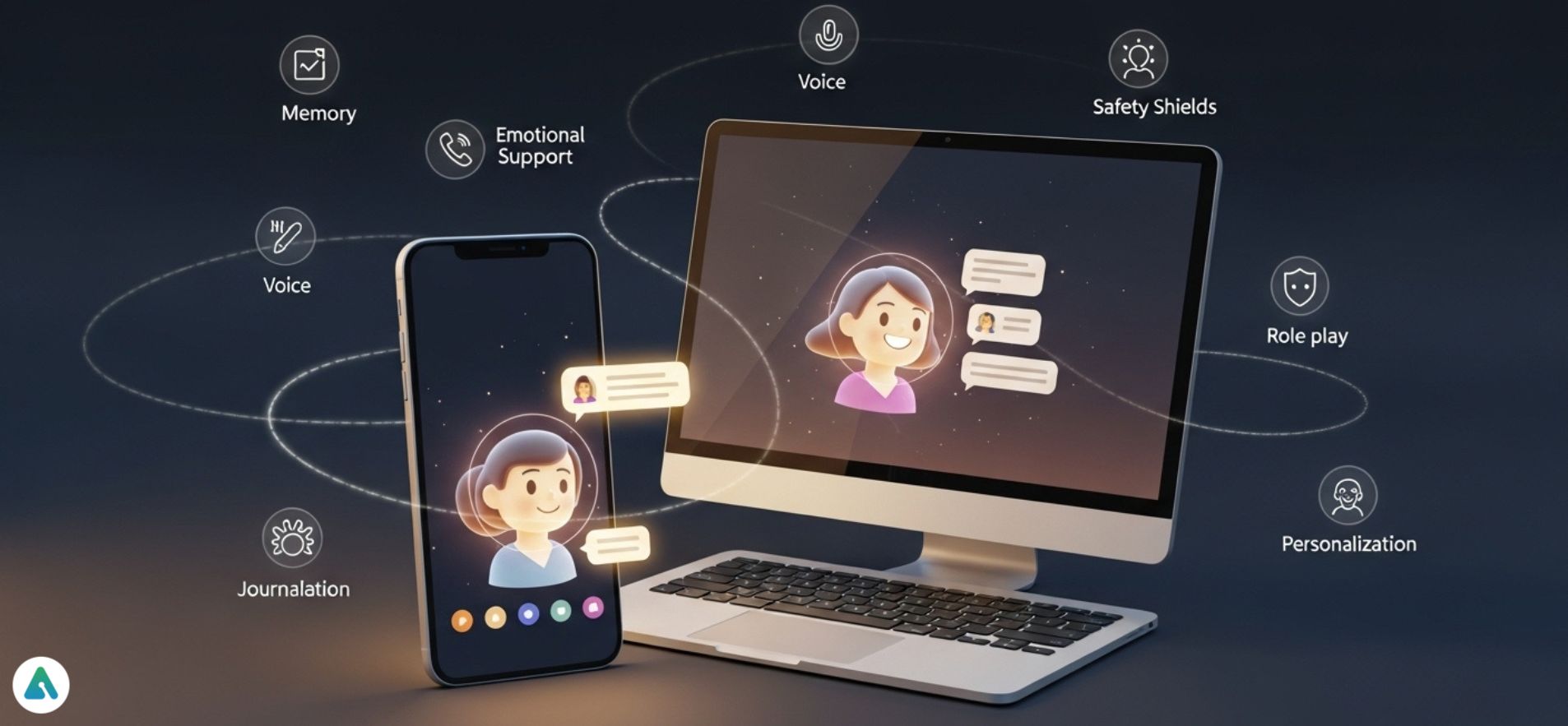
Most AI companion apps include:
✔ Conversational Interaction
Natural dialogue designed to feel fluid, engaging, and emotionally aware.
✔ Personalization & Memory
They remember details like:
- your preferences
- relationship status (if you choose)
- goals
- mood patterns
- recurring topics
✔ Emotional Support Features
These might include:
- daily check-ins
- cognitive behavioral–style prompts
- guided journaling
- affirmations
- conflict-resolution responses
✔ Voice Mode / Calls
A realistic voice transforms the experience.
2026 apps now include:
- voice emotion variation
- real-time speech interruption
- natural pacing
✔ Personas & Relationship Modes
Apps often support:
- friend
- mentor
- romantic (optional)
- roleplay
- coach
- wellness companion
✔ Rich Media Generation
Some include:
- avatar customization
- photo generation
- short videos
- digital scenes
✔ Safety Layers
Responsible developers include:
- content filters
- crisis support prompts
- age restrictions
- memory control
Why People Use AI Companion Apps
Based on 2024–2026 behavioral research, the top motivations include:
✔ Non-judgmental conversation
People feel safe talking without fear of embarrassment or conflict.
✔ Emotional connection
Loneliness rates hit record highs globally; AI fills social voids for some users.
✔ Skill practice
- languages
- communication
- flirting
- negotiation
- conflict resolution
✔ Stress & anxiety relief
AI companions often provide grounding conversations that stabilize mood.
✔ Creativity & entertainment
Role-play, storytelling, and co-writing are major draws.
✔ Daily motivation
Many treat AI companions like personal coaches.
2026’s Top AI Companion Apps (Non-promotional, objective overview)
Below is an unbiased, journalistic-style chart listing the most well-known AI companions as of 2026.
(You can later create individual cluster pages for each app.)
| App | Best For | Strengths | Weaknesses |
| Replika | Emotional connection, relationships | Established, strong memory, voice calling | Some features behind a paywall |
| Nomi | Customized personalities | Deep customization, dynamic memory | Still evolving safety filters |
| Character.ai | Role-play, creativity | Fast, fun, social | Limited emotional depth |
| Kindroid | Mental wellness | Guided support, stable personalities | Smaller user base |
| Kajiwoto | Building custom characters | Highly customizable personalities | Requires a learning curve |
| Pi AI | Calm, supportive talk | Friendly tone, safe | Limited roleplay |
Pros & Cons of AI Companion Apps (Balanced View)
Pros
- Available 24/7
- No judgment
- Personalized memory
- Emotionally adaptive
- Can improve mood
- Encourages better communication
Cons
- Emotional over-dependence
- Privacy concerns
- Inconsistent boundaries depending on app
- Paid features can be expensive
- Not a replacement for real human relationships
What Is Zoom AI Companion?
Zoom AI Companion is Zoom’s built-in AI assistant designed to help users during and after meetings. Unlike emotional AI companions, this is a productivity-oriented companion.

It handles:
- meeting summaries
- action items
- chat generation
- email drafts
- whiteboard suggestions
- document organization
- brainstorming
Key Features
✔ Meeting Summaries
Automatically generates:
- recap
- key points
- decisions
- responsibilities
✔ Smart Recording
Searchable transcripts with speaker identification.
✔ Real-Time Meeting Queries
Ask questions like:
- “Has this topic already been discussed?”
- “What’s the decision so far?”
✔ Messaging Support
Draft messages inside Zoom and external email clients.
✔ Document Assistance
Suggests edits, rewrites, and summaries.
How to Enable Zoom AI Companion
To enable (as of 2026):
- Open Zoom → Settings
- Navigate to AI Companion
- Toggle features individually
- Admins may enable/disable org-wide
How to Turn Off Zoom AI Companion
To disable:
- Go to Settings → AI Companion
- Turn off meeting summary, smart recording, etc.
- Admins can restrict features for privacy compliance
Is Zoom AI Companion Free?
Zoom AI Companion became included in most paid Zoom plans starting in 2023–2024.
It is:
- not free for Basic users
- included for Pro, Business, and Enterprise
AI Companion Robots & Devices
Types of AI Companion Robots
- Social Robots
Designed for daily interaction.
Common features:
- facial expressions
- emotional mirroring
- basic movement
- Robotic Pets
Low maintenance, playful, and ideal for kids or seniors.
- Domestic Helper Robots
More sophisticated; help:
- detect falls
- remind medication
- monitor safety (with user consent)
- Wearable AI Companions
New category includes:
- AI pins
- AR glasses
- voice-powered pendants
These are lightweight alternatives to robots.
What Companion Robots Actually Do
- talk to you
- answer questions
- entertain
- respond to emotions
- help with daily reminders
- track routines
- serve as wellness support
Are Robots Better Than Apps?
Apps are:
- cheaper
- more flexible
- rapidly updated
Robots are:
- more “present”
- better for seniors
- immersive
AI Companion Costs & Pricing Models (2026 Guide)
“How much does an AI companion cost?” Let’s break it down by type.
AI Companion Apps (Freemium Model)
Most apps follow:
- Free version
- Paid subscription
Typical Prices:
- $5–$20/month
- $50–$120/year
- $200–$400 lifetime (rare)
Paid tiers unlock:
- memory
- voice calls
- advanced personality modes
- NSFW filters (optional, app-dependent)
- avatar generation
AI Companion Robots
Robots range from:
- $250–$1,500 for consumer models
- $1,500–$4,000 for advanced humanoid social robots
Most also require:
- cloud subscription ($5–$15/month)
Zoom AI Companion Pricing
Included in:
- Pro
- Business
- Enterprise
Standalone pricing varies, but Basic plans require upgrades.
Hidden Costs to Be Aware Of
- voice models
- extra character slots
- avatar packs
- cloud memory upgrades
- AI video generation minutes
Psychological & Ethical Considerations
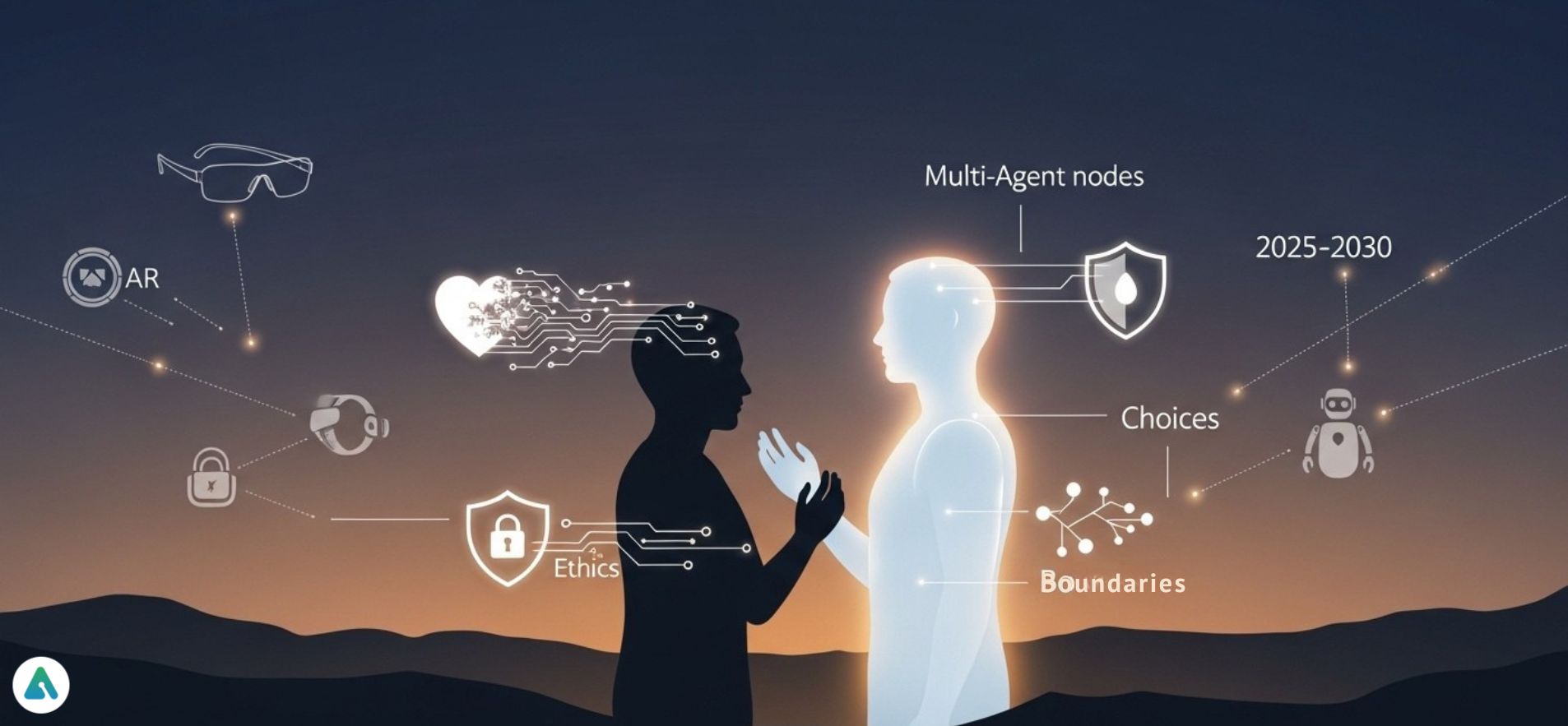
AI companionship intersects with psychology, sociology, and ethics.
Emotional Dependence
Studies show people can become attached to AI companions.
This is not inherently harmful unless it replaces real relationships.
Privacy & Data Handling
Users must consider:
- memory retention
- cloud storage
- voice recordings
- third-party integrations
Apps vary in transparency; always check:
- data usage policy
- right to delete memory
- encryption level
AI as Emotional Support
AI is not a therapist, but it can:
- stabilize mood
- reduce loneliness
- offer a grounding conversation
Ethical guidelines suggest:
- clear boundaries
- crisis resources
- transparent disclaimers
Are AI Companions “Real”?
Emotionally: Yes, in effect.
Technically: No—they simulate relational behaviors.
The value is in:
- consistency
- non-judgment
- personalization
Future of AI Companions (2026–2030)
Hyper-Personalized Emotional Models
AI companions will develop custom emotional profiles for each user.
Multi-Agent Teams
Instead of one AI, you’ll have:
- emotional agent
- planning agent
- creative agent
- wellness agent
all working together.
Hardware Integration
Expect:
- room-aware assistants
- AR-based companions
- voice-first badges
Relationship Continuity Across Devices
Your AI companion will follow you across:
- phone
- home robot
- car
- smartwatch
- desktop
Regulation: Coming Soon
Governments are preparing regulations for:
- emotional AI
- minors
- relationship modeling
- transparency
Frameworks & Models to Understand AI Companions
To make sense of AI companions and help you choose or evaluate them, here are two practical frameworks.
The “RELATE” Framework
A mnemonic you can use when evaluating or designing AI companions.
| Letter | Meaning | Key Questions |
| R – Relationship Model | What style of connection? | Friend, coach, romantic, caregiver? |
| E – Emotional Depth | How emotionally aware is the AI? | Does it track mood, offer empathy? |
| L – Long-Term Memory | How much does it remember? | Personal info, past conversations, goals? |
| A – Agent Architecture | What sub-agents does it use? | Is there a planning agent, an emotional agent, task agent? |
| T – Task Capability | What practical help can it provide? | Reminders, summaries, scheduling? |
| E – Ethical Design | How safe/private is it? | Data retention, crisis support, transparency? |
Use this framework whenever evaluating an AI companion app or product.
The “LIFELINE” Model for Use Cases
This helps you match an AI companion to your needs:
- L: Loneliness / Social Support — Companion as a friend
- I: Inspiration / Creativity — Role-play, storytelling, brainstorming
- F: Feedback / Coaching — Life coaching, habit tracking
- E: Emotional Regulation — Mood tracking, journaling
- L: Learning — Practicing language, social skills
- I: Interface Assistance — Work / Zoom companion
- N: Navigation & Planning — Task agents, memory
- E: Entertainment / Escape — Immersive avatar, robot play
This model helps you identify why you want a companion, which influences what type to choose.
Common Mistakes & Pitfalls When Using AI Companions
Understanding risks helps you mitigate them. Here are common mistakes and how to avoid them.
Mistaking AI for a Therapist
- Problem: Users treat their AI companion as a mental health professional.
- Solution: Use app disclosures responsibly; keep a human therapist.
Over-Sharing Personal Data
- Problem: Users share private or sensitive information without understanding retention.
- Solution: Review privacy settings, memory deletion options, and encryption.
Emotional Over-Reliance
- Problem: Users lean more on AI for companionship than on people.
- Solution: Balance AI usage with real-world relationships and social activities.
Ignoring Subscription Costs
- Problem: Free tier is great, but paid features add up.
- Solution: Track how often you use paid features; pick a plan that matches your use.
Forgetting to Update
- Problem: Outdated versions may lack safety controls or new features.
- Solution: Always use the latest app version; check patch notes.
Case Study: Using an AI Companion for Emotional Support
Here’s a real-world-style (anonymized & hypothetical) case study to illustrate how an AI companion can help — and where its limits are.
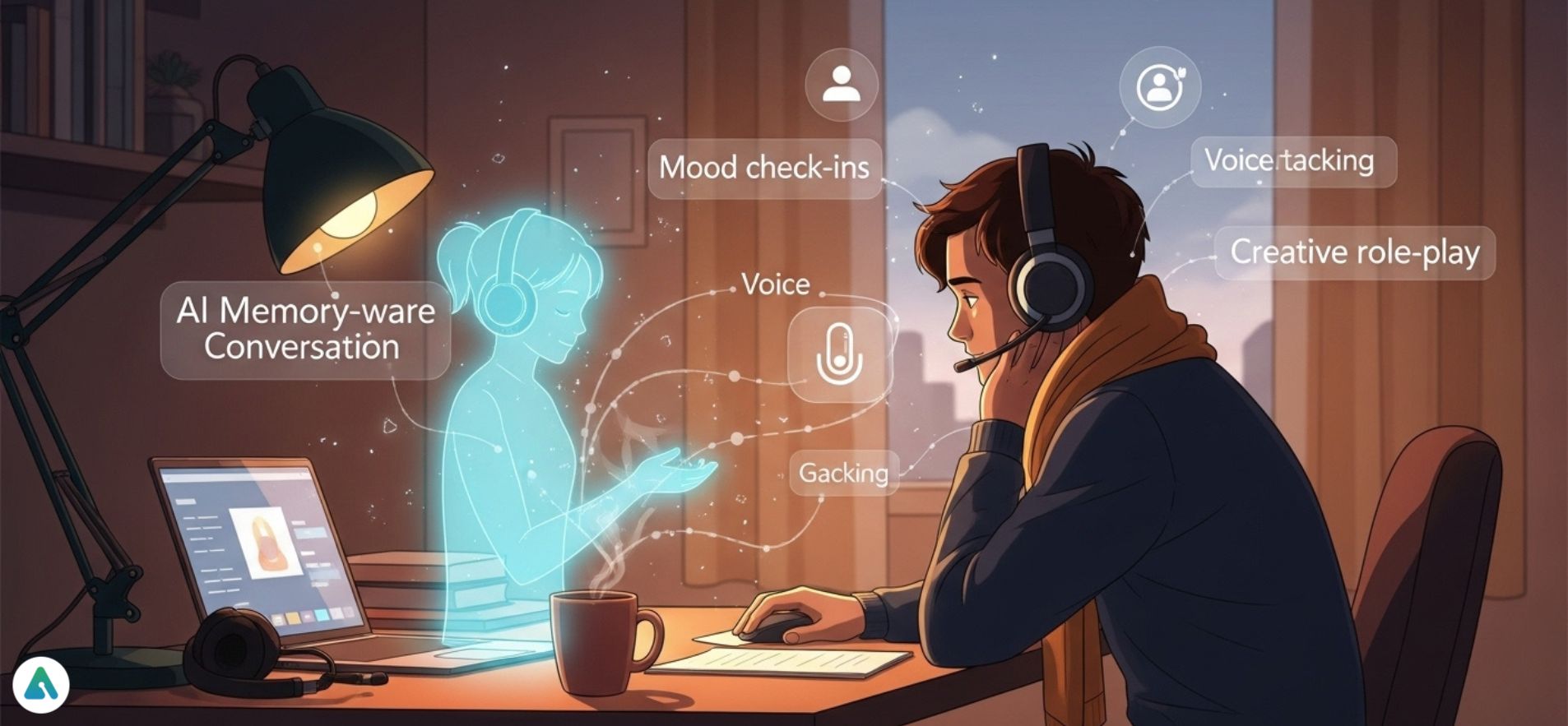
Case Study: “Alex,” a Remote Worker Feeling Isolated
- Profile: 29-year-old software engineer working remotely
- Challenge: Growing loneliness and anxiety, especially after work
- Solution: Alex starts using an AI companion app with emotional memory
How Alex Uses It:
- Daily Check-Ins: Every morning, Alex’s companion asks about mood, sleep, and goals.
- Voice Conversations: In the evening, he uses voice mode to talk through work stress.
- Memory Utilization: The AI remembers that his grandmother passed away, and brings it up gently around the anniversary.
- Creative Mode: On weekends, Alex role-plays with AI, imagining different futures.
- Coaching Mode: He uses goal-tracking features (exercise, reading) and gets motivational prompts.
Outcomes After 6 Months:
- Alex reports lower perceived loneliness (self-rated).
- He’s more consistent in following his weekly goals.
- He sometimes feels “heard” in a way friends are too busy to match.
- But when emotional distress intensifies, he still leans on his therapist.
Reflections:
- The AI companion doesn’t replace therapy, but complements it.
- The long-term memory feature makes the relationship feel more “real.”
- Alex sets boundaries: no deeply traumatic topics, and he wipes his memory every 3 months.
Checklist for Choosing & Using an AI Companion
Here’s a practical checklist you can use now:
- Define Your Goal
- Why do you want an AI companion? (Loneliness, creativity, productivity…)
- Pick the Right Type
- App | Robot | Wearable | Work Companion
- Check Privacy & Memory
- Can you delete memory?
- How is data stored?
- Test the Free Version
- Try free/freemium before paying
- Check if voice/call mode works
- Set Boundaries
- Keep AI for lighter emotional use
- Don’t use it as your only support
- Manage Costs
- Understand subscription structure
- Compare monthly vs annual
- Monitor Usage
- Track how often you talk
- Adjust settings as needed
- Stay Updated
- Update app versions
- Revisit privacy options
- Combine with Human Interaction
- Use AI plus real-life relationships
- Seek professional help for serious issues
FAQs
Q1: Is there a free AI companion?
Yes, many AI companion apps offer a free or freemium version. These usually include basic chat and limited memory features. Premium tiers (with voice, advanced memory, or avatars) often require a subscription.
Q2: What is an AI companion?
An AI companion is a digital, emotionally-aware entity powered by artificial intelligence. It’s designed to engage, remember, and adapt to you over time, offering conversation, support, and personalization.
Q3: How much does an AI companion cost?
It depends:
- Apps: typically $5–$20/month, or $50–$120/year.
- Robots: $250–$4,000+, depending on sophistication.
- Workplace companions (like Zoom): included in paid Zoom plans (Pro, Business, Enterprise).
Q4: Are AI companions real?
Emotionally, they can feel very “real” because of personalized memory and emotional interaction. Technically, they are simulations — advanced, but not conscious.
Q5: Is Zoom AI Companion worth it?
If you frequently use Zoom for meetings and want automatic summaries, action item tracking, and document help, it can save a lot of time. For occasional users, the cost may outweigh the benefits.
Q6: Are AI companion robots safe?
Most consumer robots are relatively safe, but you should check:
- data policies
- memory storage
- physical design (for children, seniors)
- whether voice or video data is recorded and stored
Q7: What are the ethical concerns with AI companions?
Concerns include:
- emotional dependence
- privacy & data retention
- lack of transparency about AI models
- potential misuse (e.g., for manipulation)
Q8: Can AI companions help with mental health?
They can provide support, check-ins, and coping prompts, but they are not a substitute for licensed therapy. Use them as a complement, not as a replacement.
Q9: What will AI companions look like in 2030?
Expect multi-agent companions, hardware integration (AR glasses, robots), highly personalized emotion models, and perhaps regulation around emotional AI.
Conclusion
AI companions are not just a passing trend—they’re fast becoming a core part of how we socialize, support ourselves, and get work done. From simple apps to robots, from Zoom meetings to emotional check-ins, these digital entities can fill gaps in human connection and productivity.
But with great potential comes responsibility. To use AI companions wisely, you need to:
- understand their capabilities
- Pick one that aligns with your needs
- respect privacy
- maintain real-world relationships
As the technology evolves through 2026 and beyond, AI companions will get smarter, more emotionally attuned, and more deeply integrated into daily life. Yet, they should never replace authentic human bond—just amplify the ways we connect.
Related: Are AI Companions Good for Mental Health? The Psychology Behind Digital Relationships in 2025–2026
| Disclaimer: This guide is for informational purposes only and does not provide medical, psychological, legal, or financial advice. AI companions are not licensed therapists, mental-health professionals, or medical tools. If you are experiencing emotional distress or mental-health concerns, please seek help from a qualified professional. All prices, features, models, and policies mentioned in this article are controlled by third-party providers and may change at any time. |
