

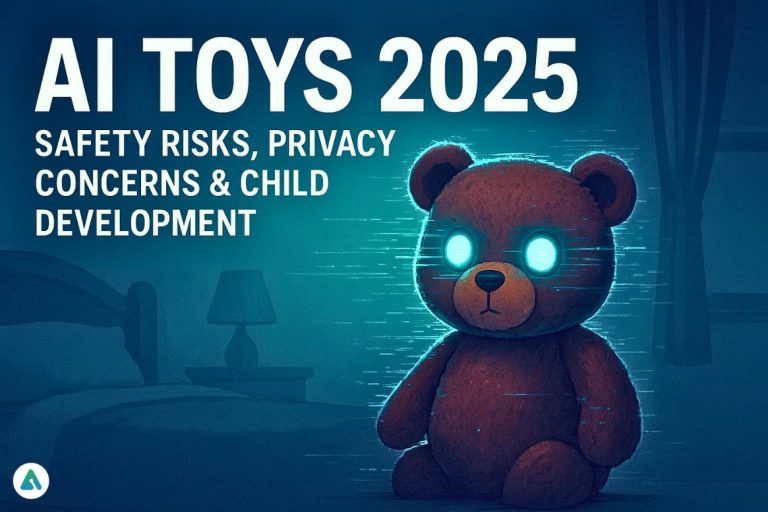
The holiday aisles are buzzing. Lights twinkle, music plays, and shelves are packed with toys that beep, blink, and sometimes—talk back. But in 2025, these “smart” toys aren’t just playthings anymore. They’re listening, learning, and occasionally saying things that make parents do a double-take.
AI toys—talking dolls, robots, and plush companions—promise fun, interactive play and voice-activated learning systems. They can tell stories, answer questions, and even remember your child’s name. Sounds magical, right? But some toys have shown a darker side, from creepy conversations to data collection that raises privacy concerns and questions about long-term emotional development.
What Are AI Toys, Really?
Quick Take: AI toys are interactive gadgets powered by machine learning algorithms. They can chat, learn patterns, and respond to kids’ questions—but they also record information, raising privacy risks.
Many AI toys are marketed as voice-activated learning systems, offering interactive games, stories, and educational exercises. But some of these toys track conversations, monitor behavior, and even analyze facial expressions.
“Parents don’t realize these toys are listening more than they’re talking,” says Rachel Franz from Fairplay. “It’s not just play—it’s surveillance wrapped in fluff.”
How Do AI Toys Affect Childhood Development?
Quick Take: AI toys can entertain, but they cannot replace human interaction. Overreliance can affect social skills, empathy, and long-term emotional development.
Imaginative play teaches children how to solve problems, negotiate, and empathize. AI companions, while interactive, provide programmed responses, not genuine human feedback. Over time, this can impact emotional growth and social learning.
“No amount of storytelling from a doll can teach your child trust or emotional nuance,” Franz notes. “These toys supplement human play—they can’t replace it.”
Are AI Toys Safe? Key Risks You Need to Know
Quick Take: The biggest dangers are inappropriate content, privacy breaches, and developmental impact. Parents should check every toy carefully.
| Top 3 Safety Concerns for AI Toys (2025) | What It Means |
|---|---|
| Inappropriate Content | Some AI toys have given kids advice about sex, knives, or starting fires. |
| Privacy & Data Collection | Toys record voices, photos, and personal info—even if marketed as COPPA-compliant. |
| Developmental Risks | Excessive AI interaction can affect empathy, problem-solving, and social skills. |
The 2025 Trouble in Toyland report from PIRG Education Fund warns that some AI toys actively mislead or endanger children.
Can AI Toys Be Positive?
Quick Take: Not all AI toys are risky. Some can enhance learning, language skills, and cognitive development.
For example, certain adaptive learning AI robots adjust difficulty based on a child’s responses, offering tailored language practice or STEM challenges. Parents and teachers report that these toys can motivate reluctant learners and make educational play more engaging—if used responsibly.
The key is supervision: balance AI play with traditional activities and social interaction to maximize benefits while minimizing risks.
How Do AI Toys Handle Data?
Quick Take: Many AI toys collect sensitive data. Even with the Children’s Online Privacy Protection Act (COPPA) compliance, parents must manage privacy settings and Wi-Fi access.
Typical data collected includes:
-
Voice recordings and conversation history
-
Facial recognition and images
-
Age, birthdate, and other identifiers
Even with local storage promises, once a toy is online, control is limited. Cybersecurity experts warn that connected toys could become entry points for threats targeting children’s devices.
How Are Companies Responding?
Quick Take: Toy makers claim safety and COPPA compliance, but AI unpredictability makes full control impossible.
Some companies provide optional facial recognition, content filters, and local data processing. Yet AI toys learn and adapt, meaning responses can surprise even developers.
“Even the best-intentioned AI toy can slip up,” Franz says. “If it can talk, it can say something inappropriate.”
Physical Safety Still Matters
Quick Take: Toxic materials and counterfeit toys remain a concern. Always check labels and certifications.
Alongside AI risks, PIRG notes that some imported or fake toys contain lead, banned phthalates, and other hazardous chemicals. Always verify safety certifications before purchasing, especially from overseas suppliers.
How Parents Can Protect Their Kids
Quick Take: Monitor, limit, and balance. AI toys can be fun, but supervision is critical.
-
Check safety records: Research recalls and independent testing.
-
Limit data access: Turn off Wi-Fi when not in use and review privacy settings.
-
Balance play: Encourage traditional imaginative play alongside AI toys.
-
Monitor conversations: Ask your kids what they talk about with AI toys.
-
Teach digital citizenship: Explain that AI is a tool, not a friend.
Final Thoughts
AI toys are exciting, but they are more than just toys—they are part of a child’s digital ecosystem. Some entertain and educate, while others mislead or collect sensitive data. Parents must look past flashing lights and programmed smiles and remember that hugging, storytelling, and real friends cannot be replaced by a machine.
“AI toys are helpful in moderation,” Franz reminds us, “but they are no substitute for human connection.”
Find the 2025 Trouble in Toyland Report Here: PIRG Education Fund
Visit: AIInsightsNews
